Buritis at the outer femoral bone projection – Step 1
Rehabilitation starts with the exercises in Step 1. When the exercises can be performed without pain, rehabilitation starts on the next step.
How often and for how long should I train? Training frequency and duration are individual. Start with about 3 repetitions per workout. exercise and at least 3 times a week. Slowly increase the number of repetitions and load without exceeding the pain threshold
Do I have to do the whole program every time? No, you can divide the exercises into different days. The most important thing is to exercise regularly and gradually increase the intensity
The time in minutes indicates the time distribution between stretching, balance and strength if you train for one hour. Whether you train for one hour or 10 minutes, for example, is adapted to your starting point – and can be increased over time.
This rehabilitation guide for pain on the outside of the hip has been produced in collaboration with Dr Marie Bagger Bohn, PhD, Senior Researcher at Horsens Regional Hospital, and Dr Jeppe Lange, PhD, Head of Research and Consultant at the Department of Orthopaedic Surgery, Horsens Regional Hospital, and Deputy Head of the Department of Clinical Medicine, Aarhus University. Jeppe Lange, PhD, Head of Research, Department of Orthopaedic Surgery, Horsens Regional Hospital, and Deputy Head of the Department of Clinical Medicine, Aarhus University.
Condition
Unlimited: Swimming
Stretching
5 minutes of each training session
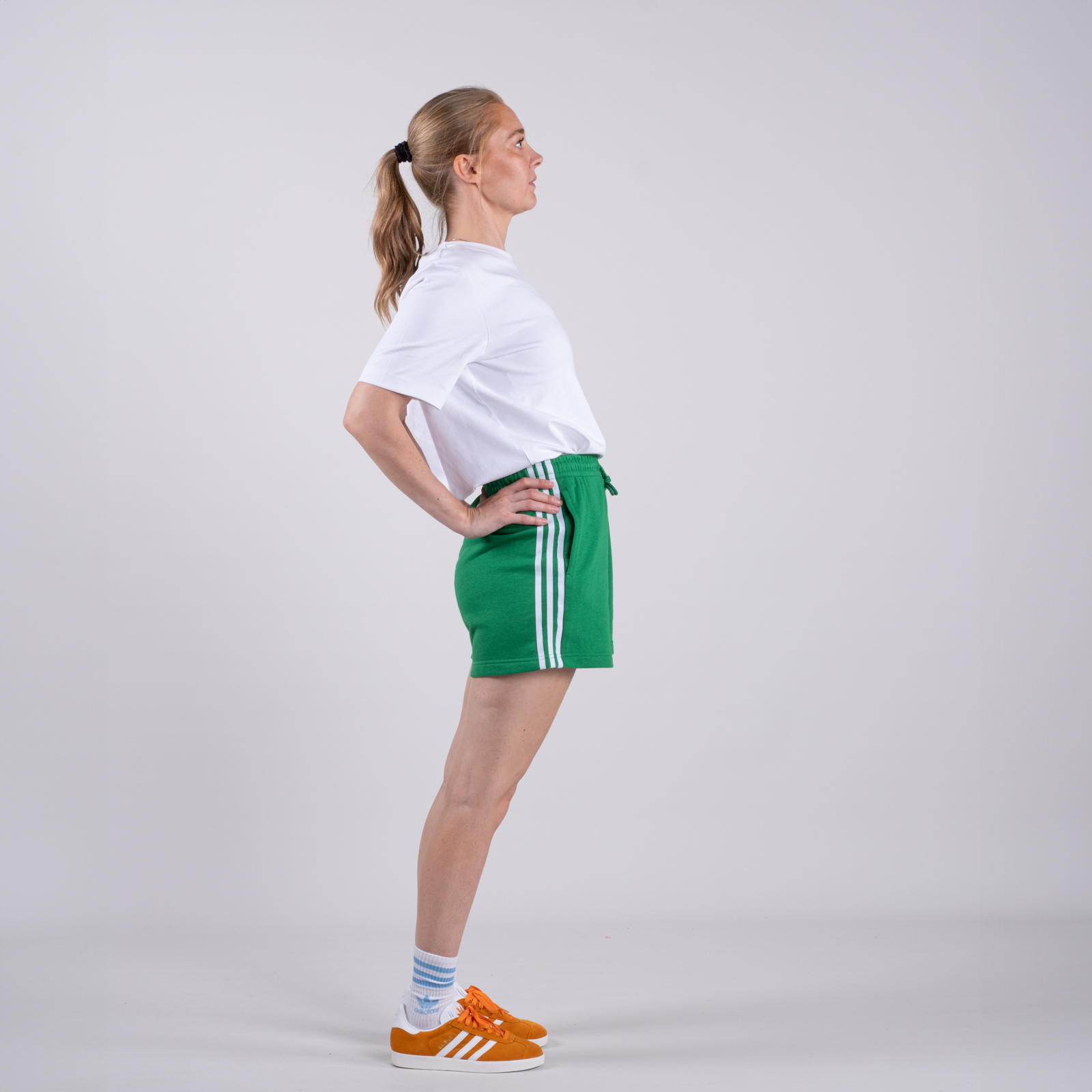
Stand up straight with your hands on your hips. Gently arch your back and press down slightly with your hands to deepen the arch, so that you feel a gradual stretch in your abdominal muscles. Hold the position for 20 seconds. Relax for 20 seconds
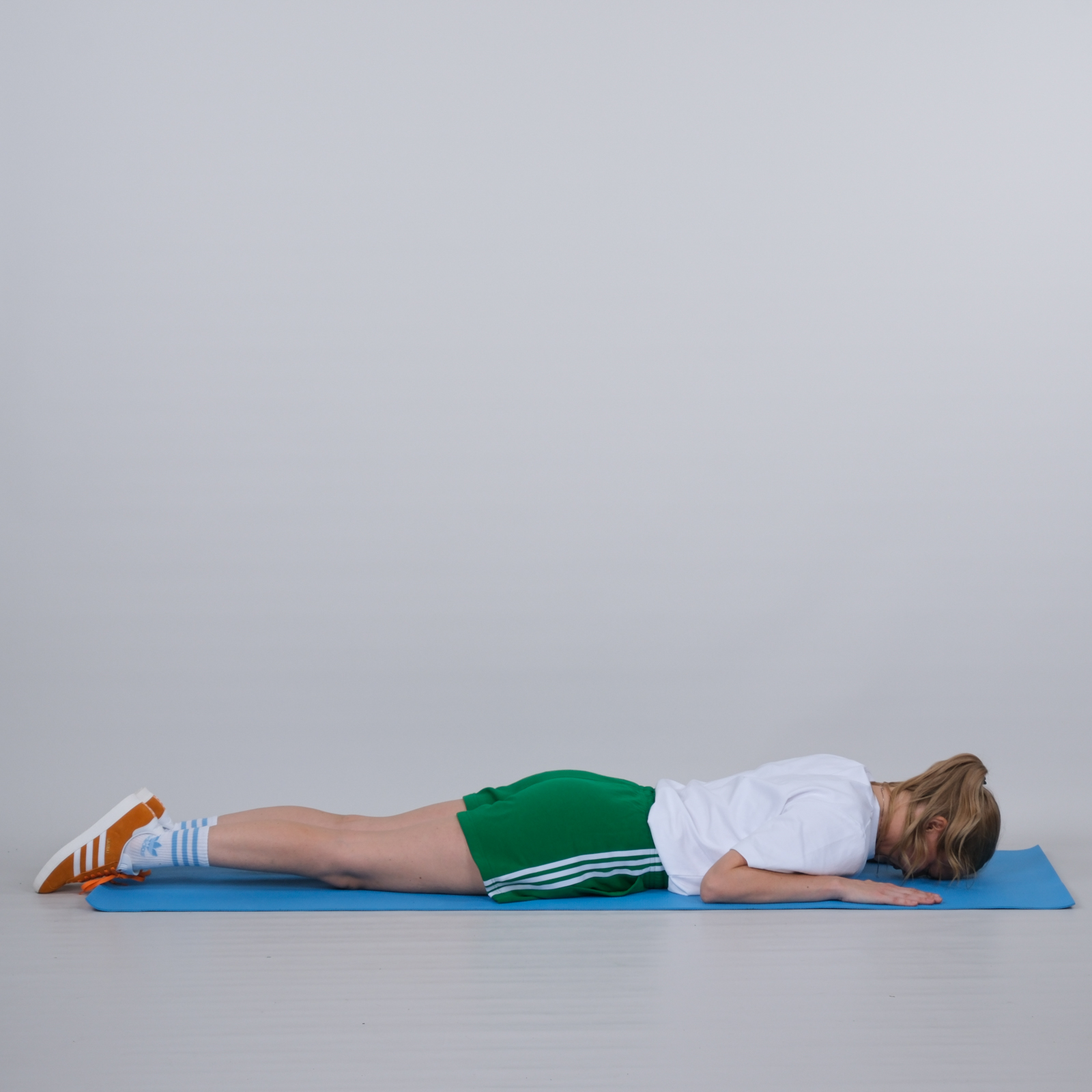
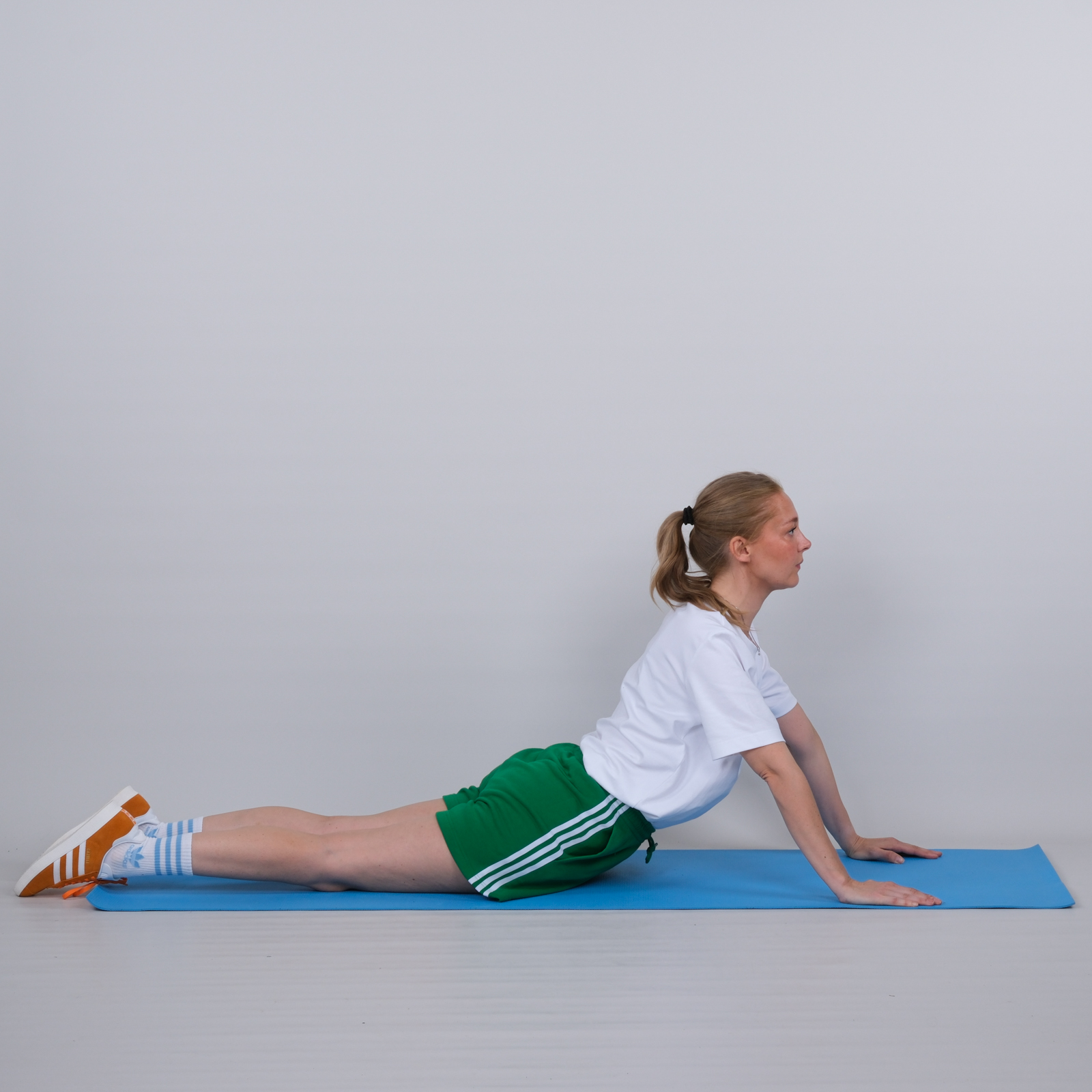
Lie on your stomach with your arms out to the sides and your elbows bent at a 90-degree angle, so that your palms are next to your head. Straighten your arms so that your back arches backwards, whilst keeping your pelvis on the floor. Hold the stretch for 15 seconds and slowly return to the starting position.
Coordination
5 minutes of each training session
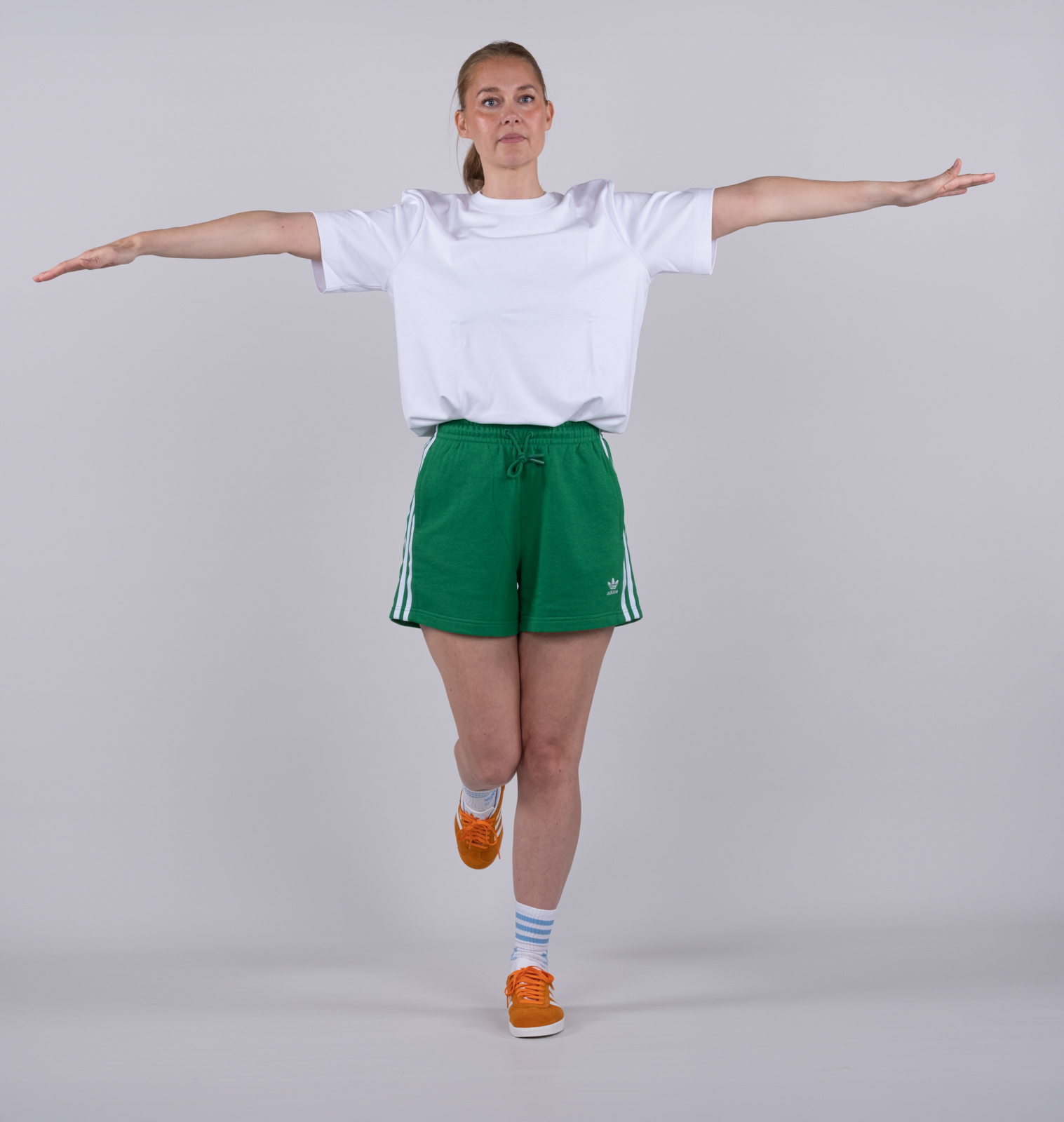
Stand on one leg on the floor. Look straight ahead and keep your knee slightly bent. If necessary, use your hand to steady yourself against the wall at first. Later, make the exercise more challenging by closing your eyes
Strength
50 minutes of each training session
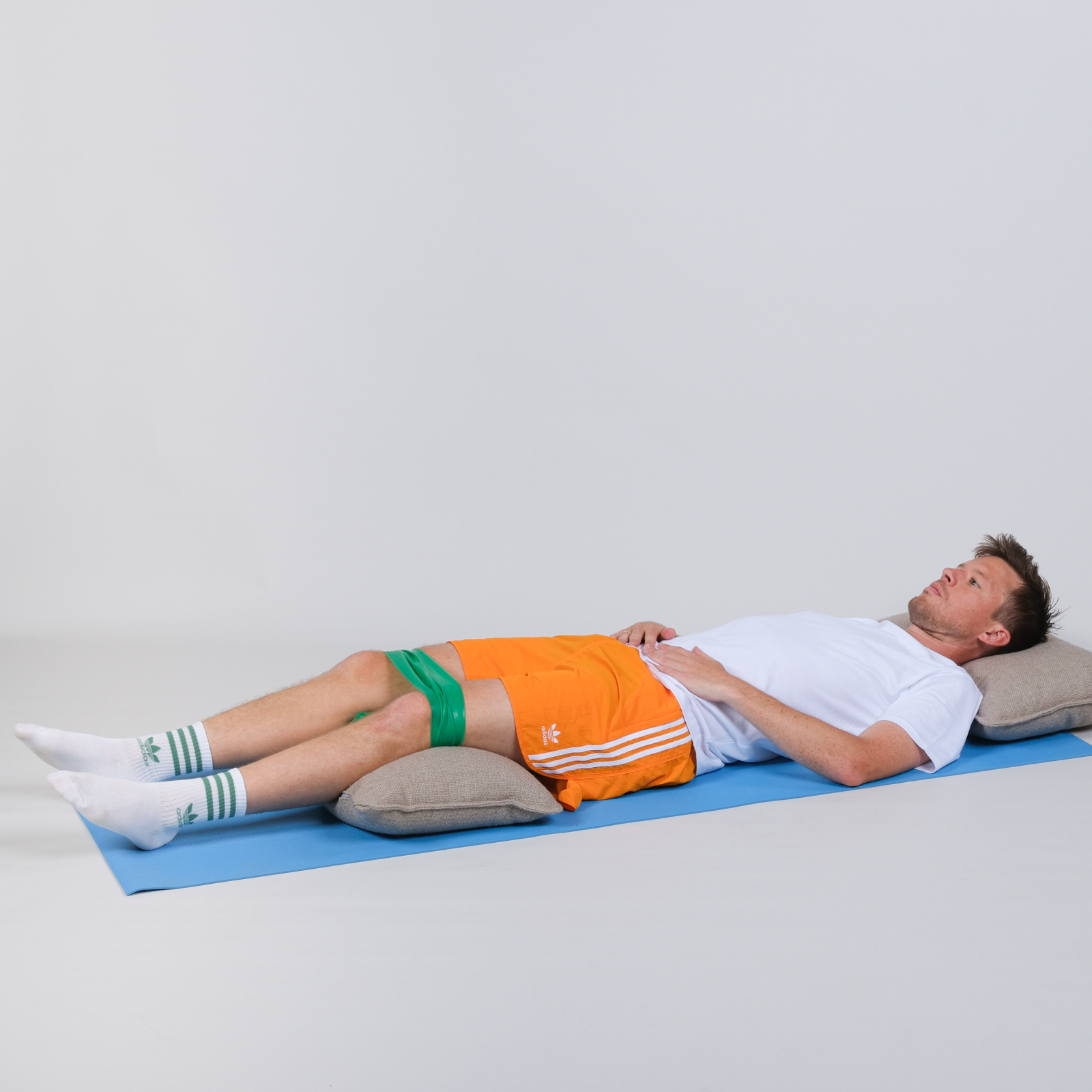
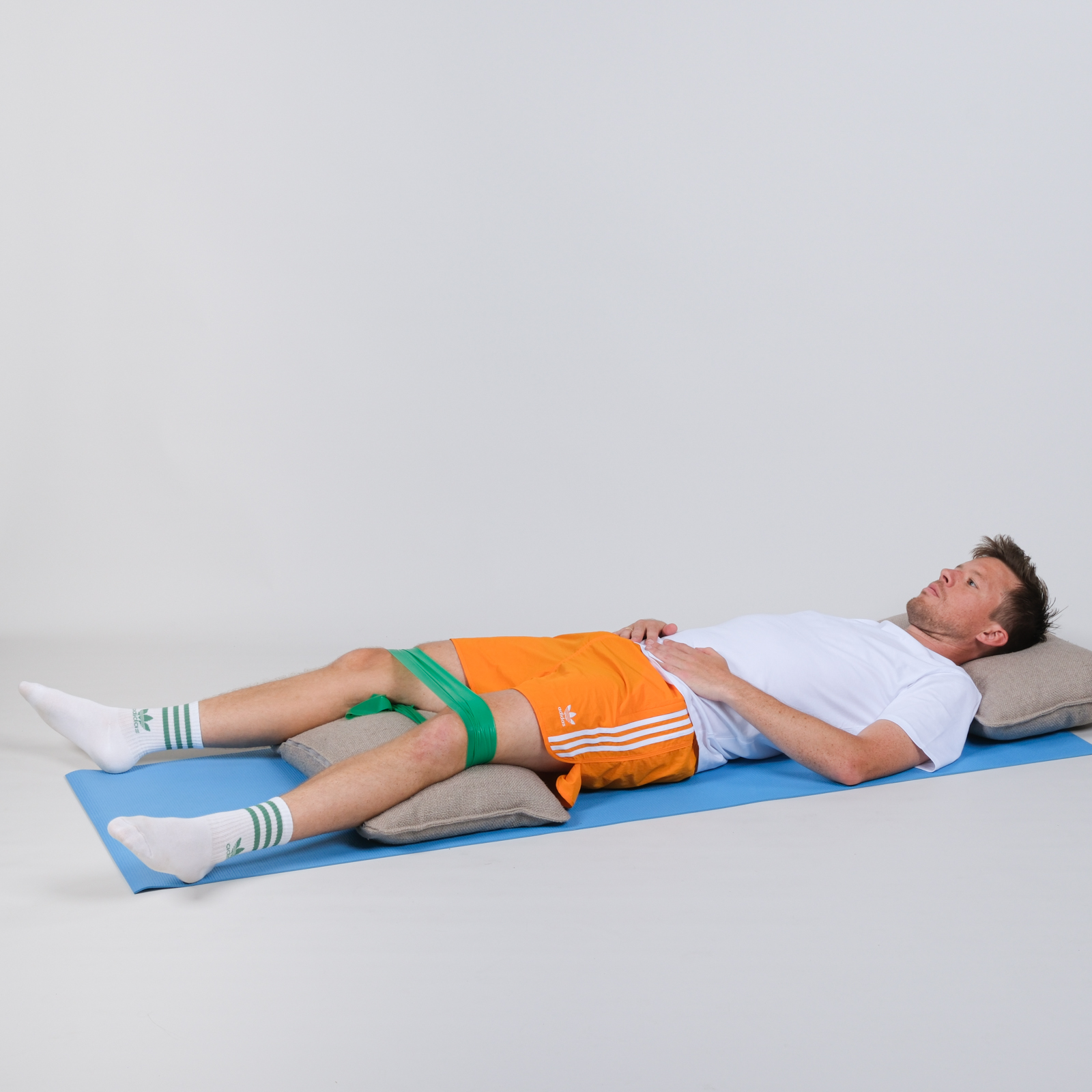
Lie on your back with your legs straight. Place an exercise band around your legs just above the knees. Push your legs as far apart as possible so that the band tightens. Hold this position for a few seconds, then bring your legs back together to the starting position.
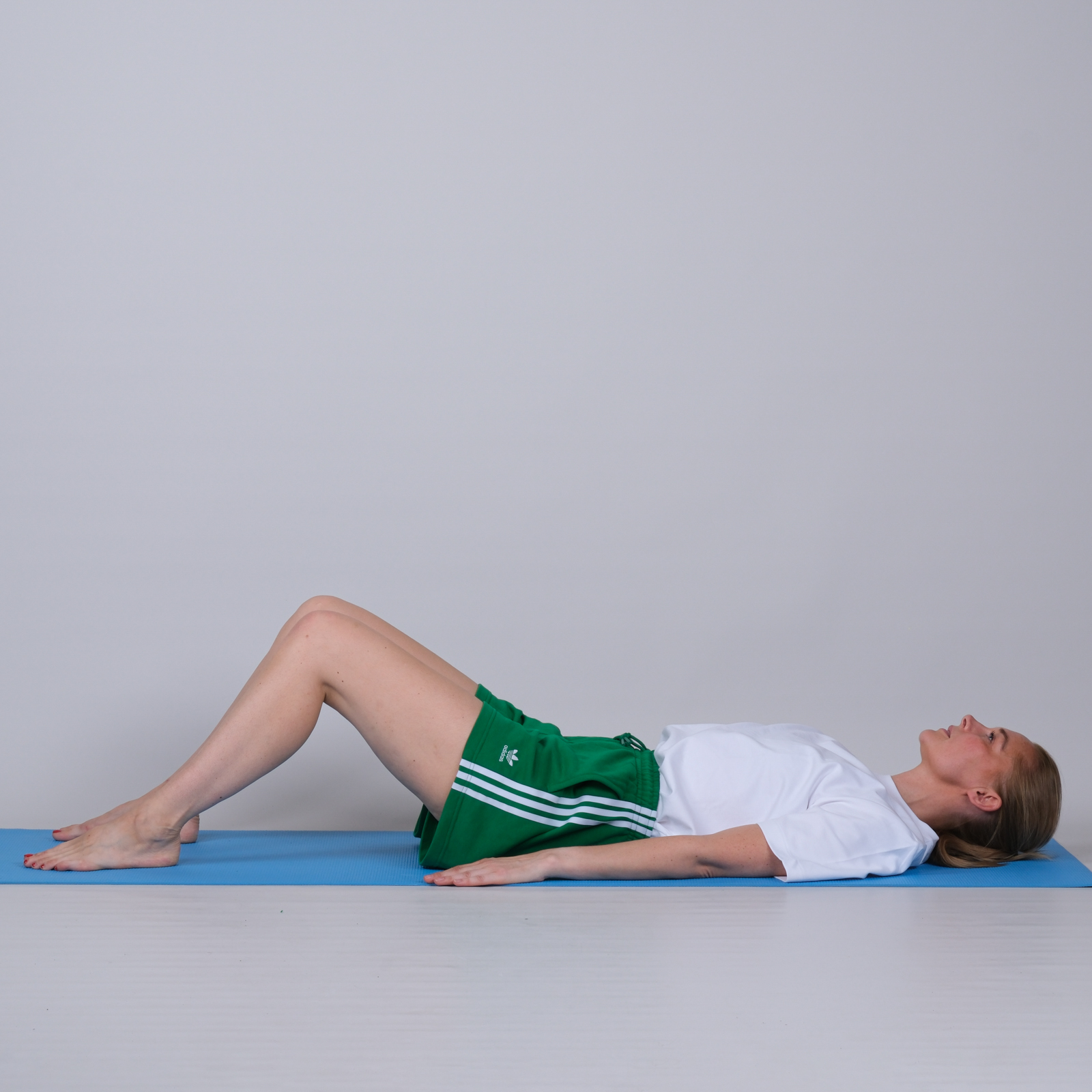
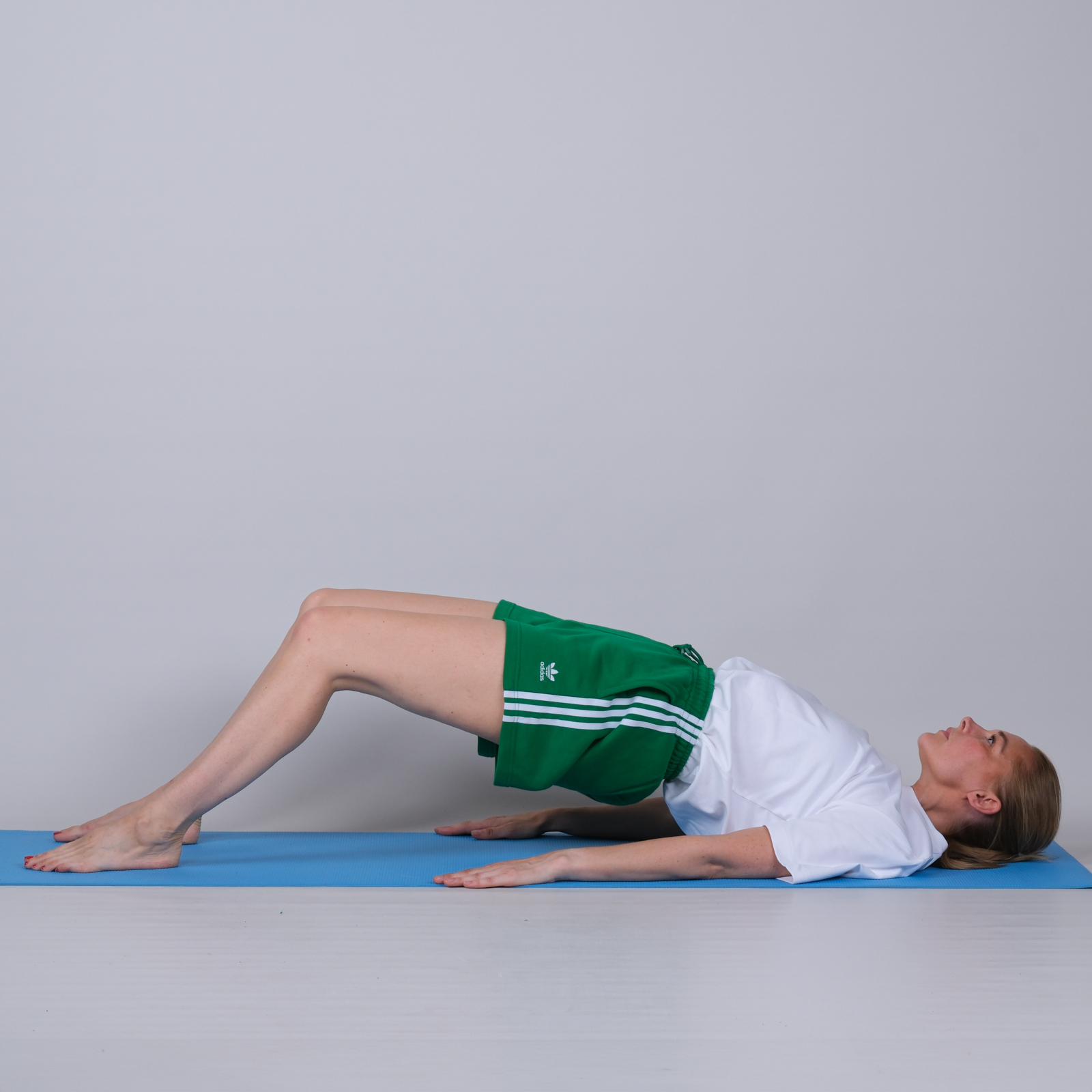
“Lying pelvic lift”. Lie on your back with your knees bent and the soles of your feet flat on the floor. Slowly lift your pelvis and lower back off the floor and hold the position for a few seconds. Your back and thighs should be in a straight line. Slowly lower your pelvis back down.
Stand with your feet about 40 cm apart. Take one step to the side and bring your feet back together (but keep them 40 cm apart). Continue taking several steps to the side. Then switch to the opposite direction.
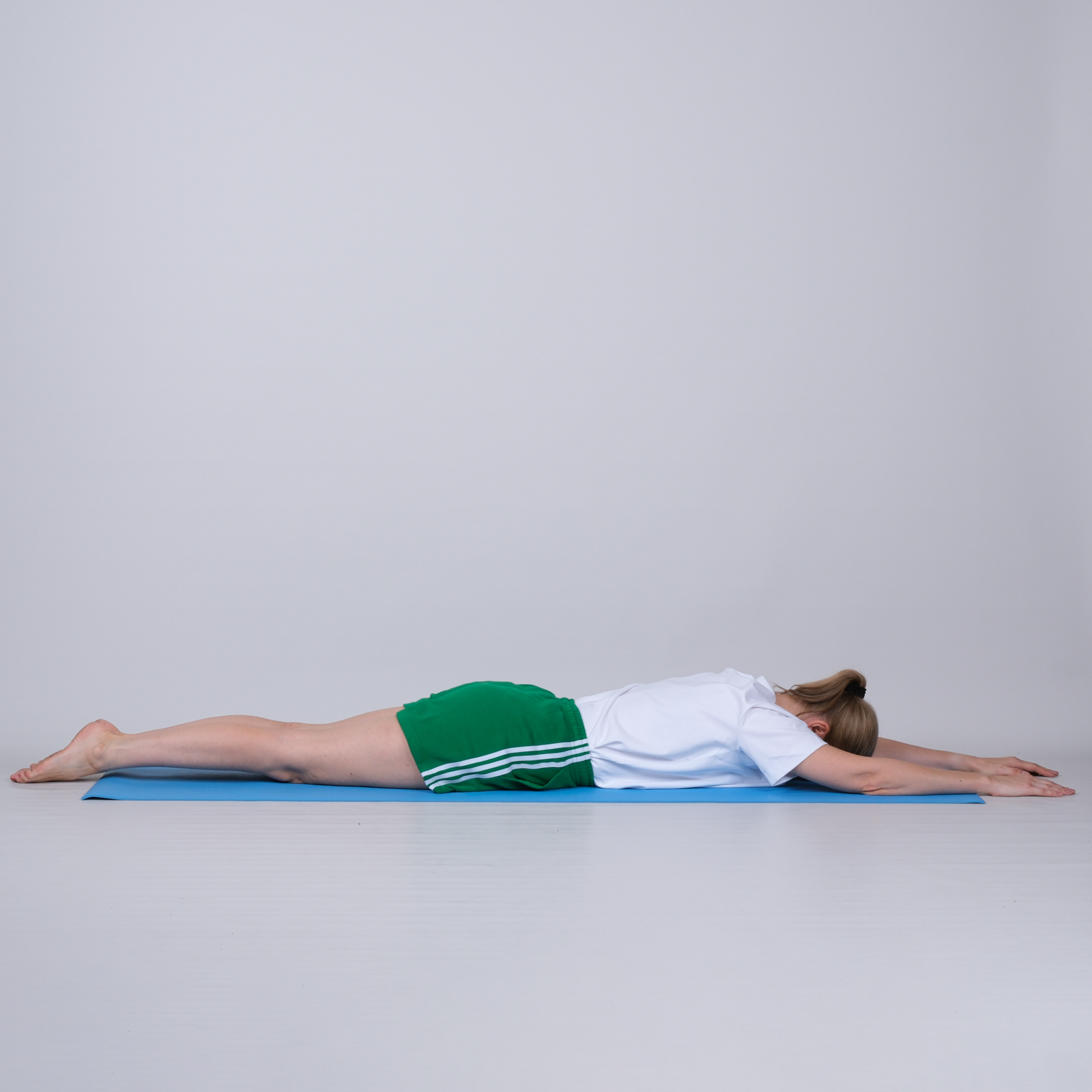
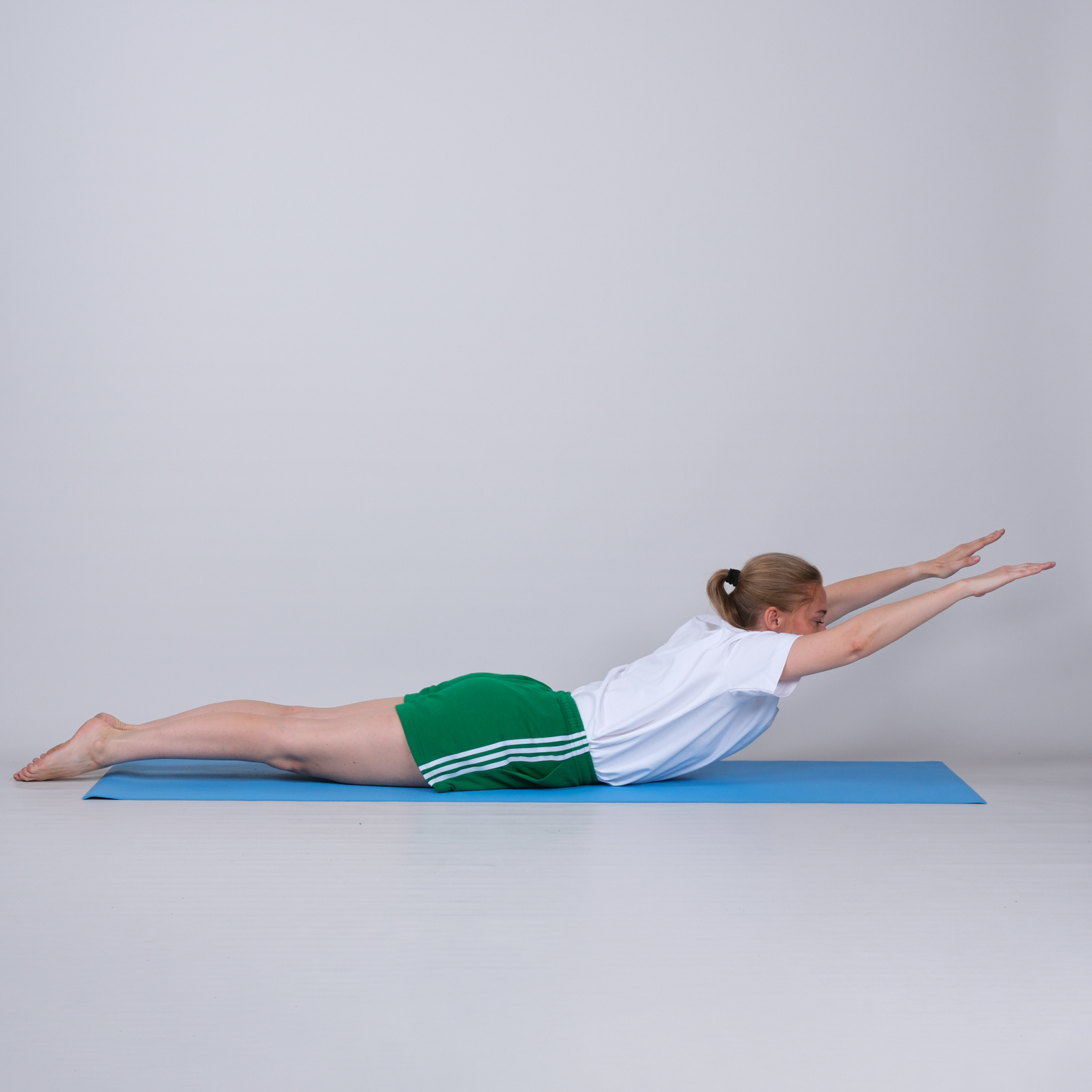
Lie on your stomach with your legs straight and both arms stretched above your head. Lift your upper body and arms. Hold the position for a few seconds. Slowly lower your upper body and arms again.
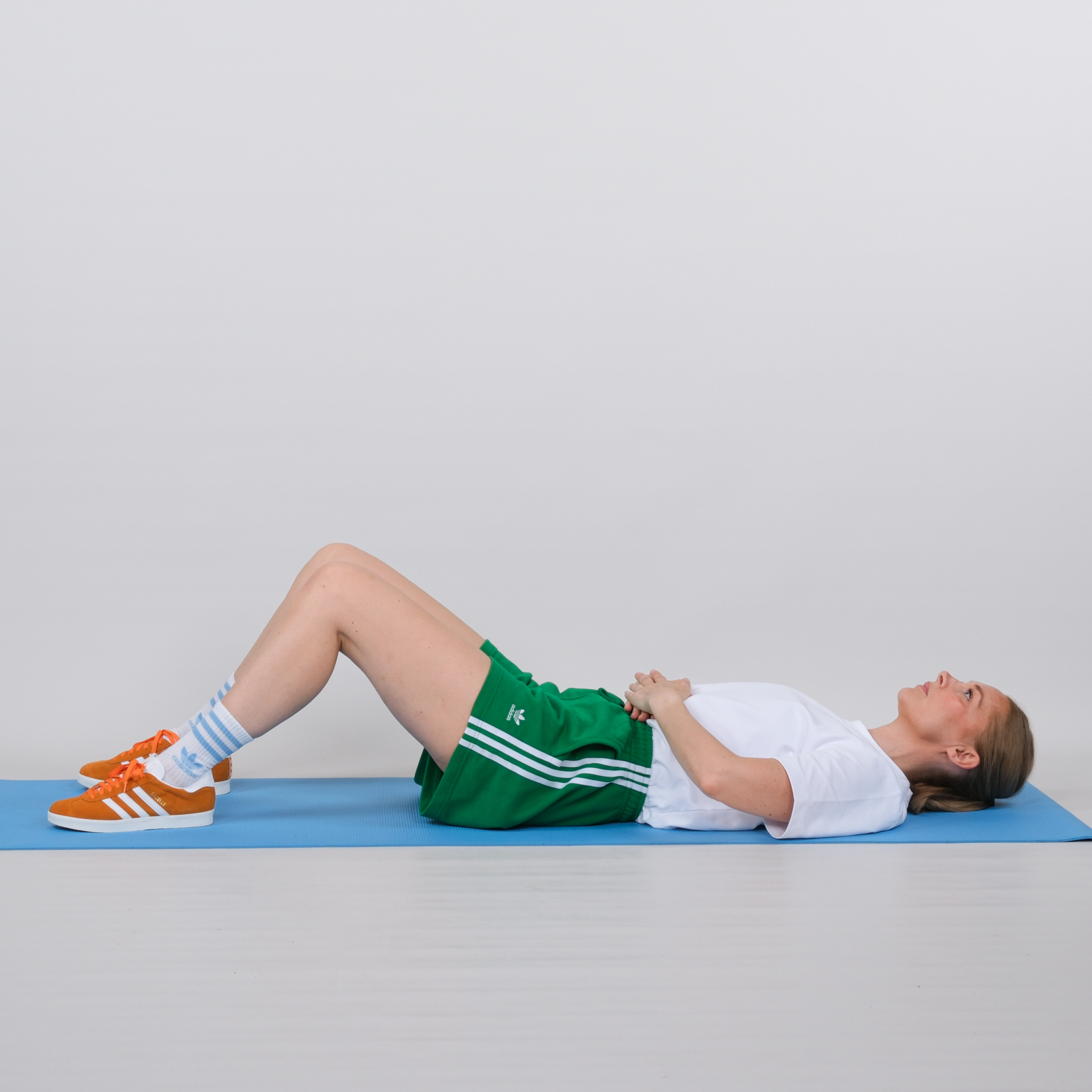
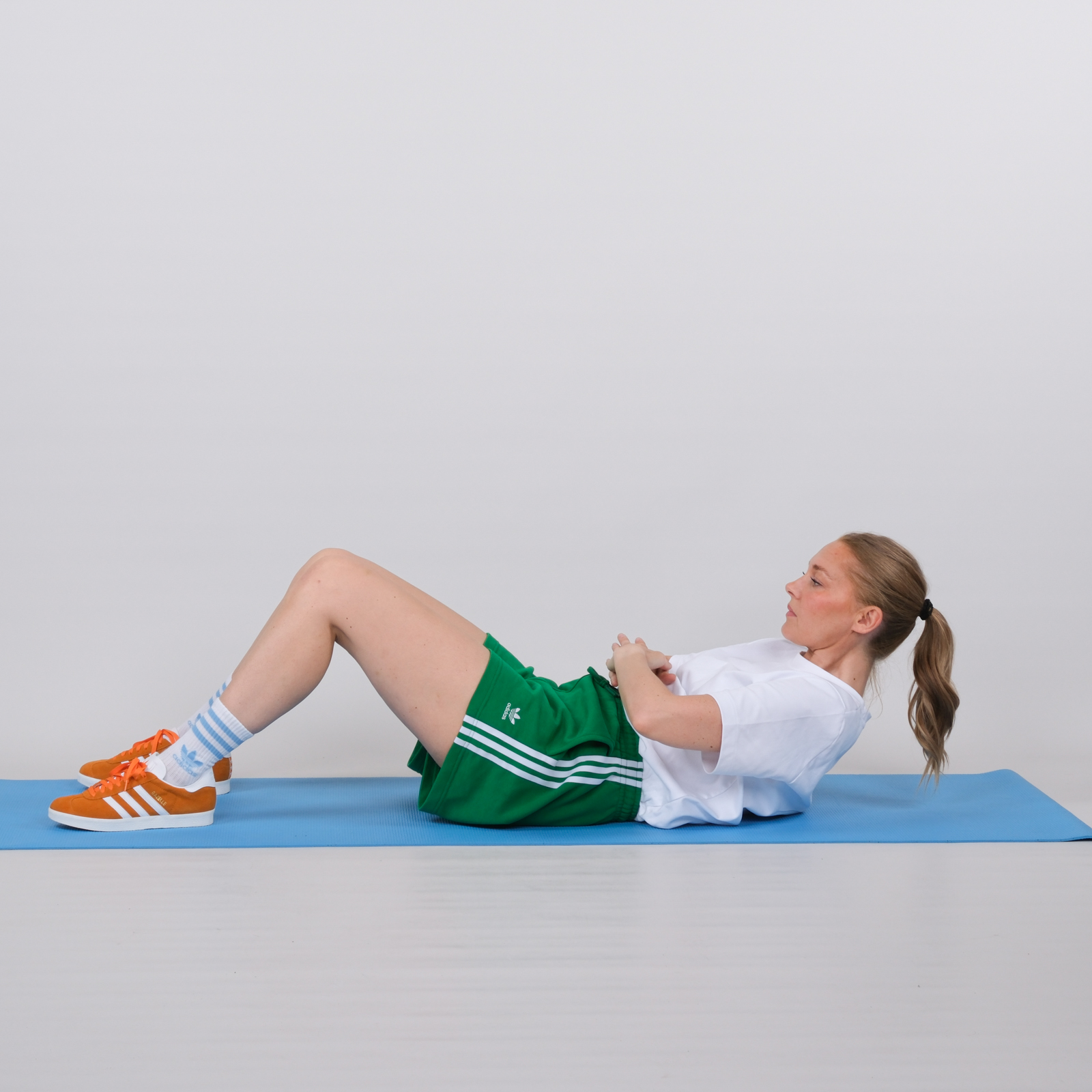
Lie on your back with your hands on your chest. Bend your knees. Lift your upper body off the floor. Hold the position for a few seconds, then slowly lower your upper body back down. Keep your lower back pressed against the floor throughout the exercise.