Rehabilitation starts with the exercises in Step 1. When the exercises can be performed without pain, rehabilitation starts on the next step.
How often and for how long should I train? Training frequency and duration are individual. Start with about 3 repetitions per workout. exercise and at least 3 times a week. Slowly increase the number of repetitions and load without exceeding the pain threshold
Do I have to do the whole program every time? No, you can divide the exercises into different days. The most important thing is to exercise regularly and gradually increase the intensity
The time in minutes indicates the time distribution between stretching, balance and strength if you train for one hour. Whether you train for one hour or 10 minutes, for example, is adapted to your starting point – and can be increased over time.
If you have undergone surgery for an injury to your labrumand any of the exercises below contradict the recommendations of the surgeon who operated on you, you should follow the advice of the doctor who examined/surgered you.
Condition
Unlimited: Cycling. Swimming. Running on soft surfaces.
Stretching
10 minutes of each training session
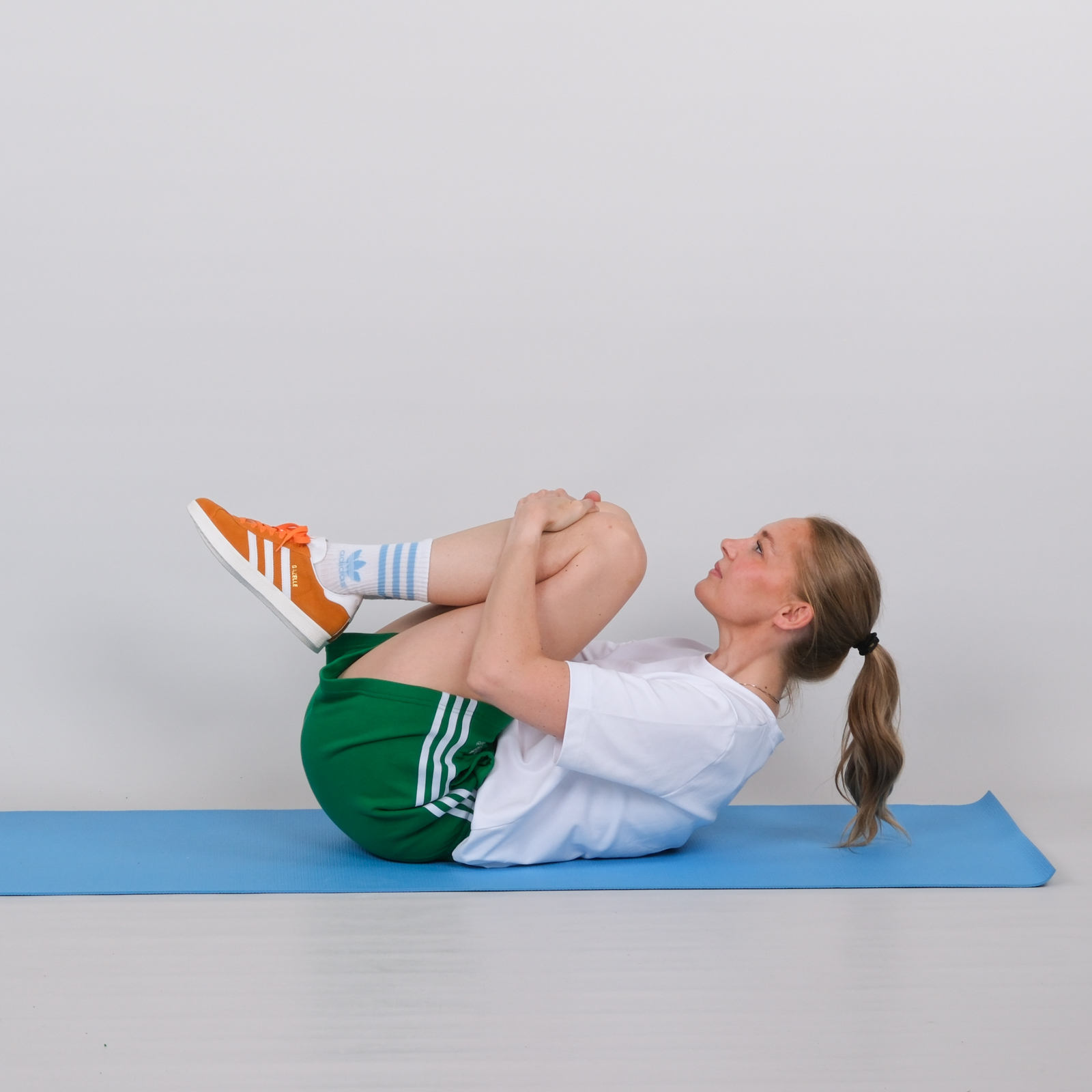
Lie on your back. Bend your hips and knees. Wrap your hands around your shins and press your knees towards your head, lifting your head at the same time to gradually stretch your back. Hold the position for 20 seconds. Relax for 20 seconds.
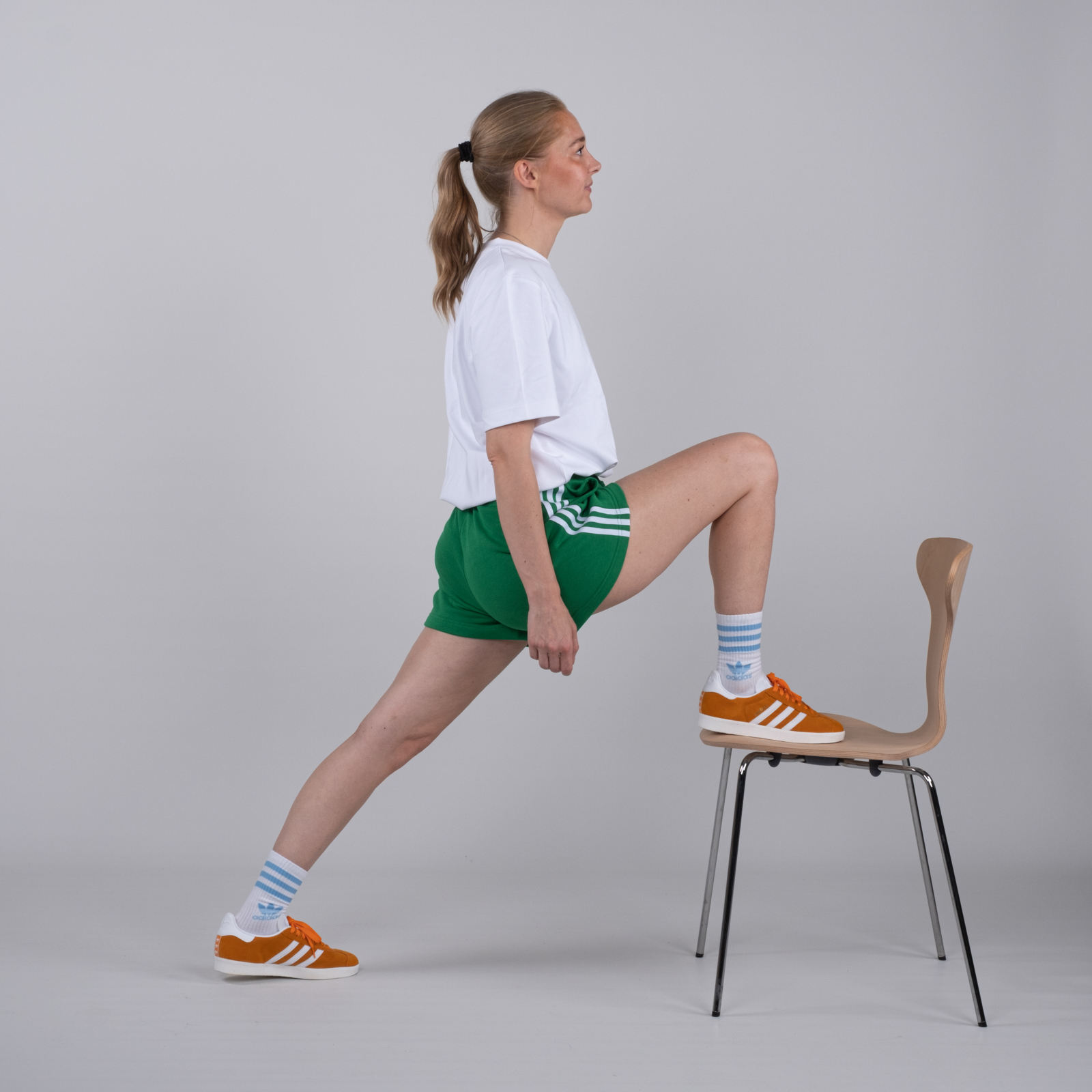
Stand with one foot on a chair and the other leg stretched out behind you. Shift your weight forwards so that you feel a gradual stretch at the front of your hip. Hold the stretch for 20 seconds. Repeat the exercise on the other leg.
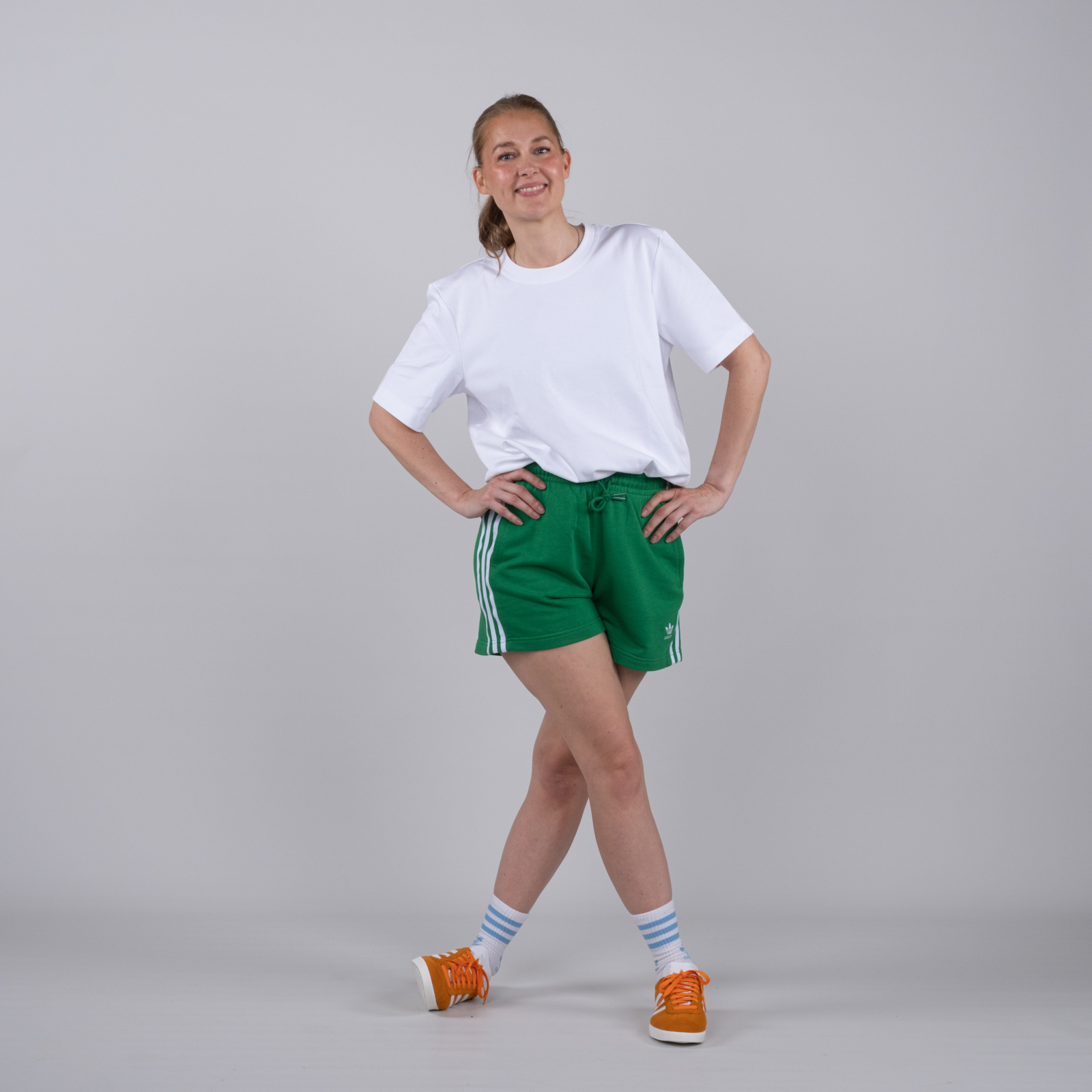
Stand by crossing the training leg straight behind the support leg while bending out to the side over the training leg so that there is an increasing stretching of the outer thigh. Hold stretching for 20 seconds. Repeat exercise alternately on right and left leg
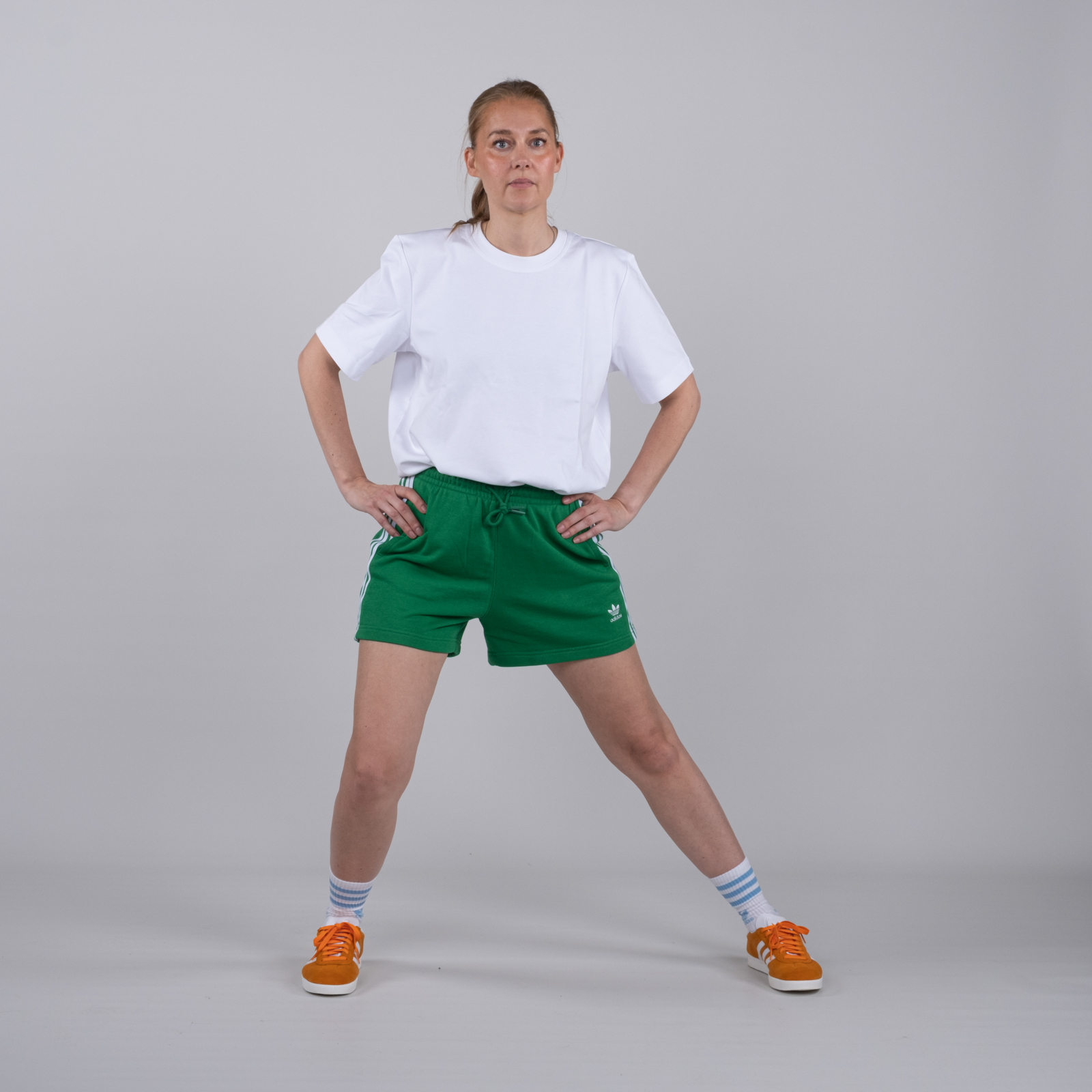
Stand with your legs apart. Keep one leg straight and the other slightly bent. Shift your weight to the side onto your bent leg, so that you feel a gradual stretch on the inside of the opposite thigh. Hold the stretch for 20 seconds. Repeat the exercise on the other leg.
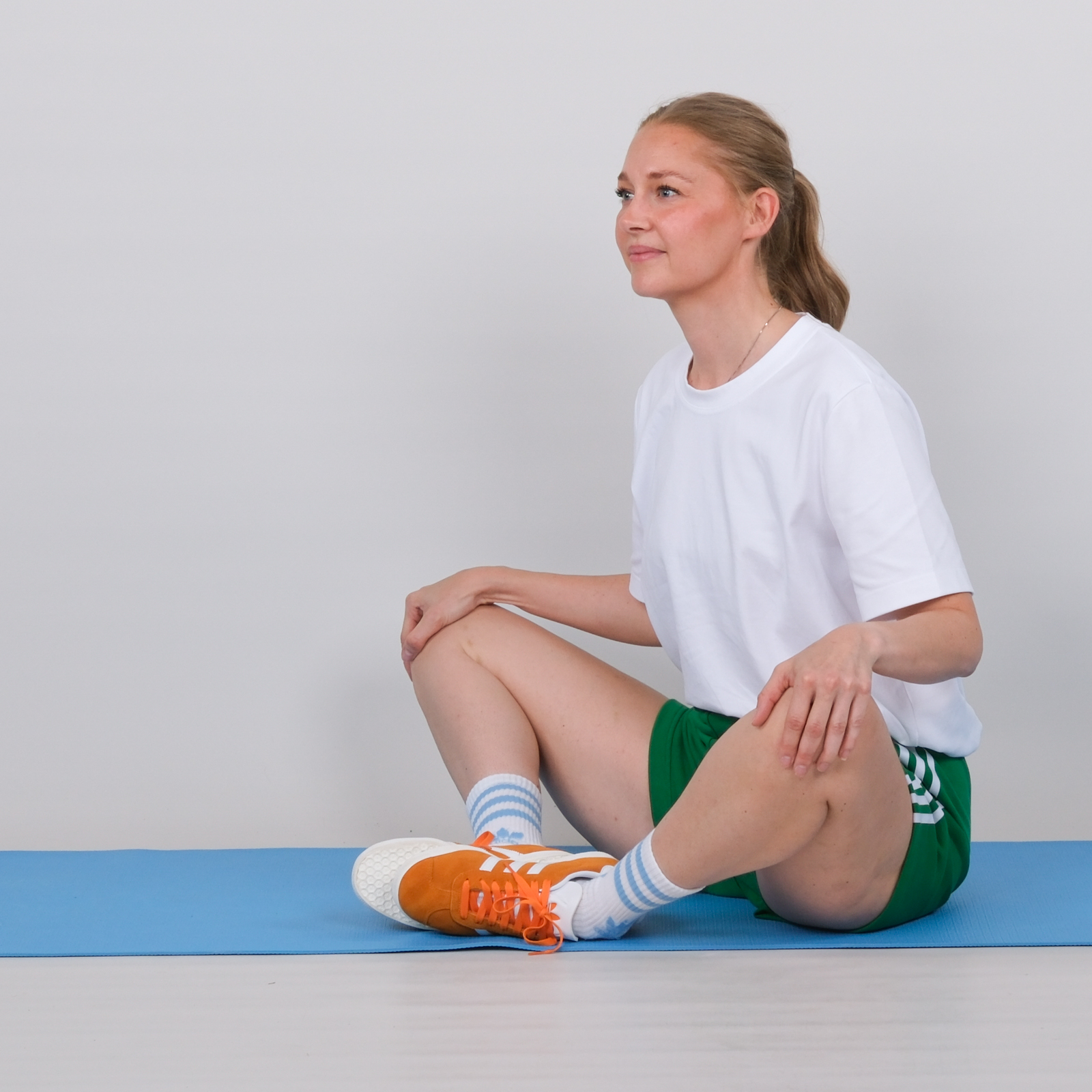
Sit with your knees bent and the soles of your feet touching. Place your hands on both knees and slowly push your knees apart, so that you feel a gradual stretch in your groin. Hold the stretch for 20 seconds. Relax for 20 seconds.
Coordination
5 minutes of each training session
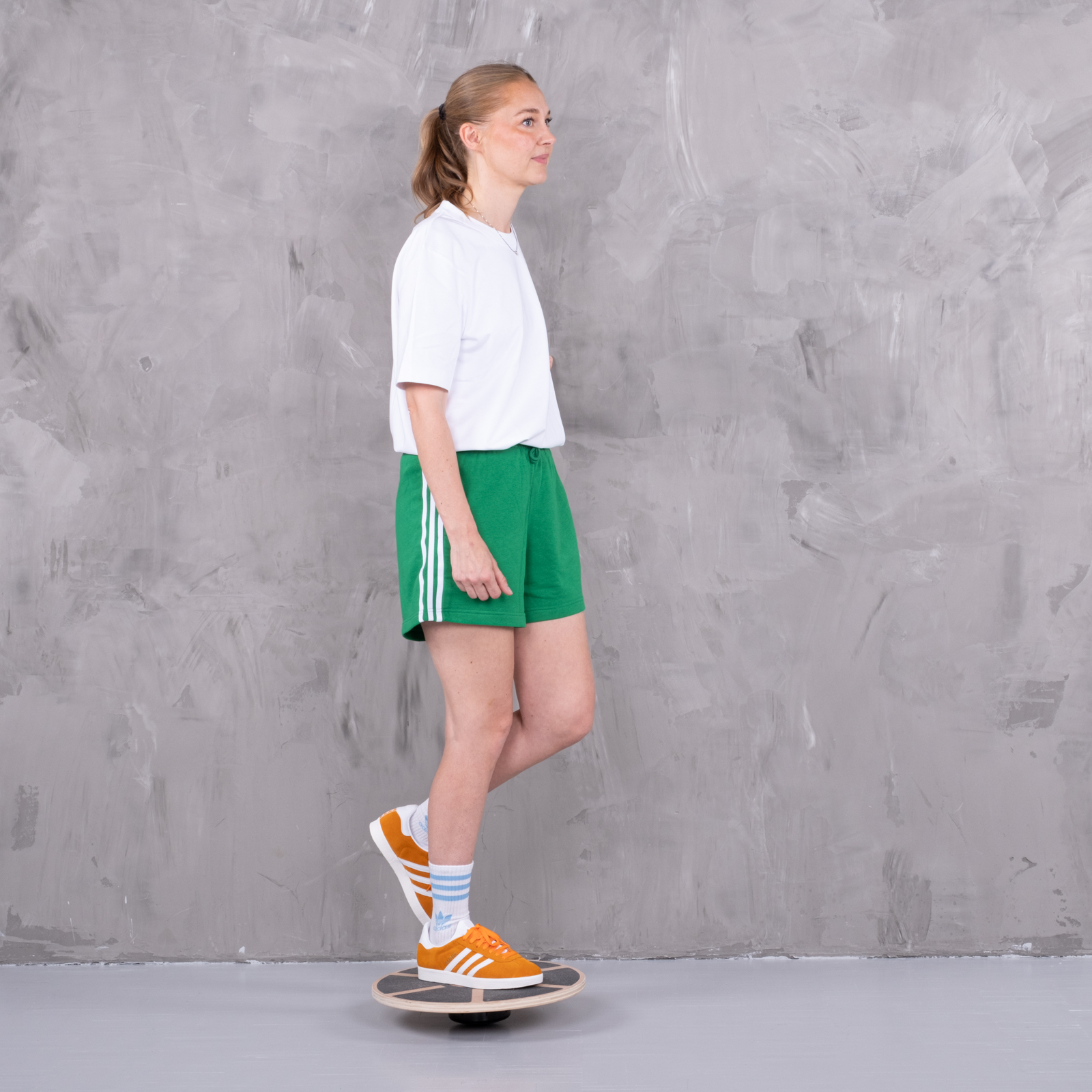
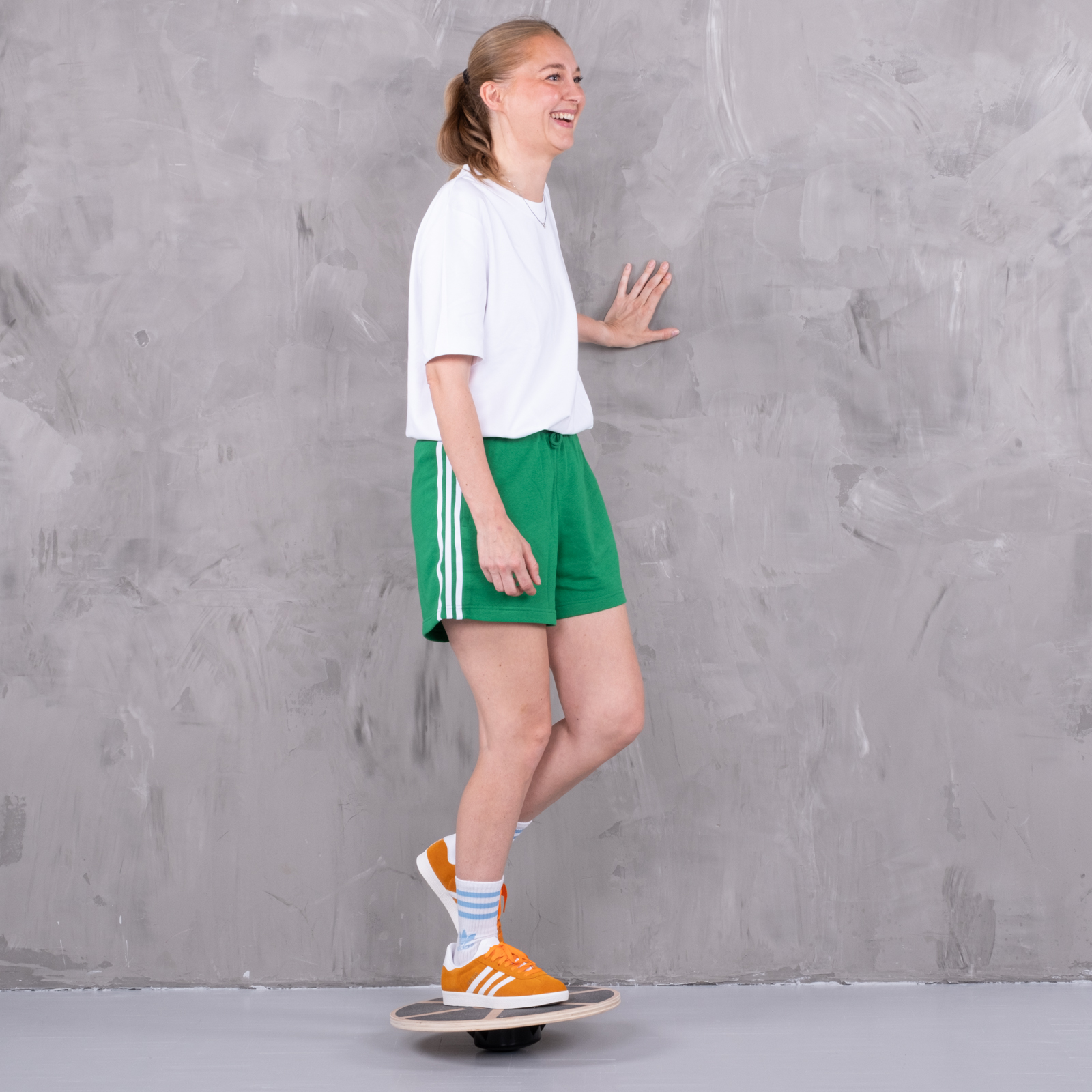
Balance on two feet on the balance board. To begin with, use your hand to support yourself against the wall. Later, balance on one foot without support. Try holding it later balance with your eyes closed.
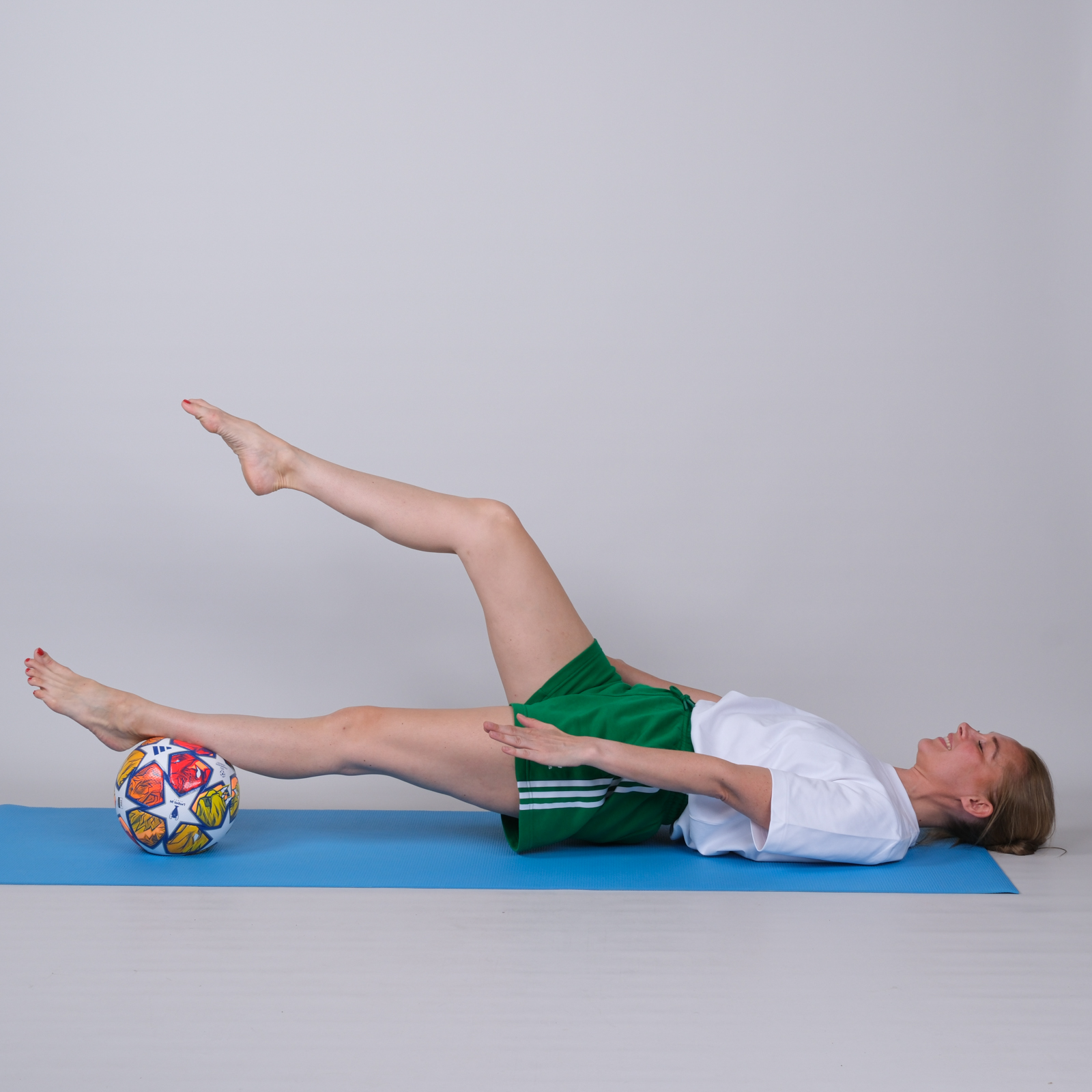
Lie on your back with the ball under the training leg. Lift your hip off the floor and stretch your healthy leg. Hold the position for 10 seconds. Repeat the exercise alternately with the right and left leg.
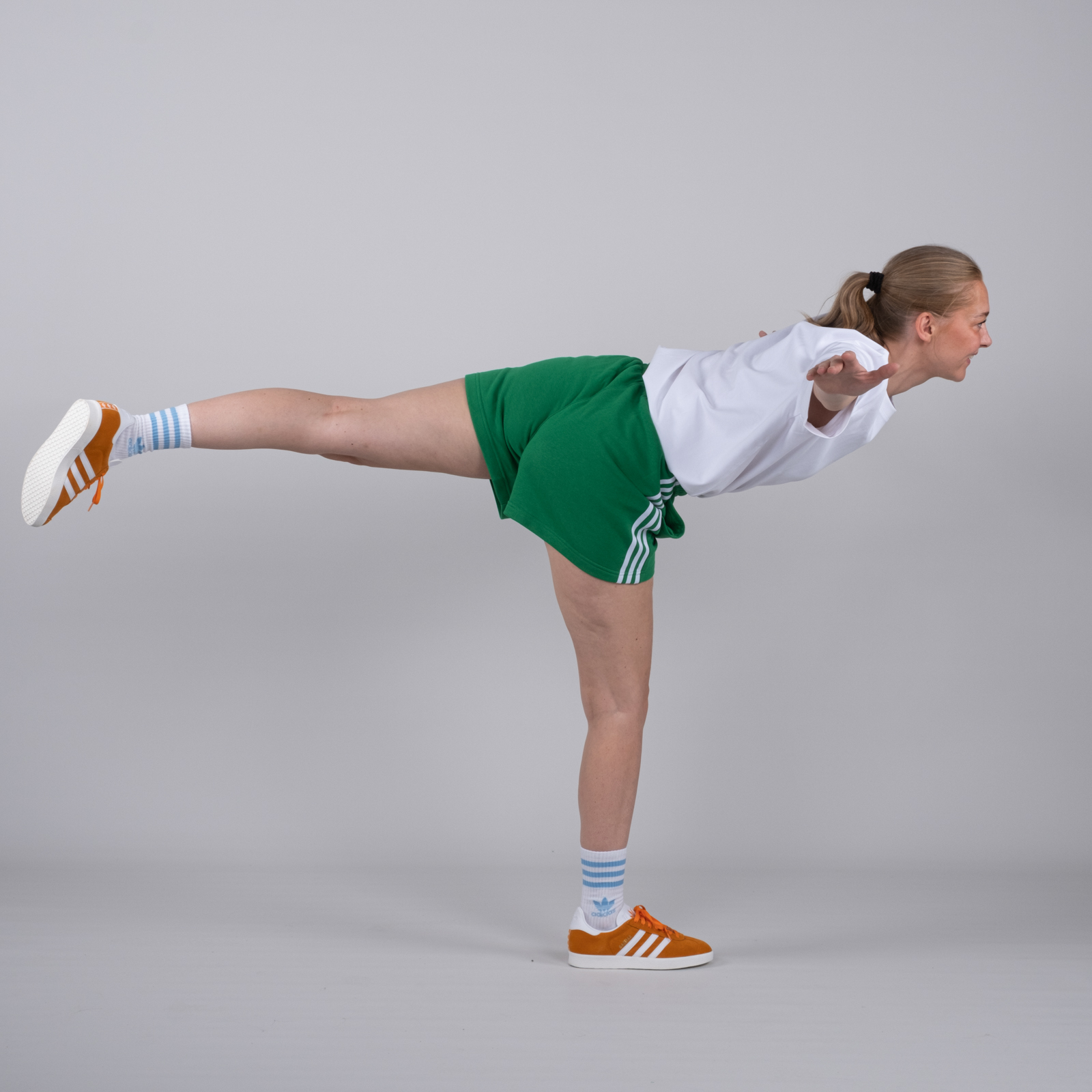
“The Runner”. Stand on your training leg with your knee straight. Bend your body forwards at a 90-degree angle and lift your good leg straight backwards and the opposite arm straight forwards. Maintain your balance on the supporting leg for as long as possible. If necessary, use one hand to support yourself against the wall at the start. Once you feel confident, you can make the exercise more challenging by closing your eyes.
Strength
45 minutes of each training session
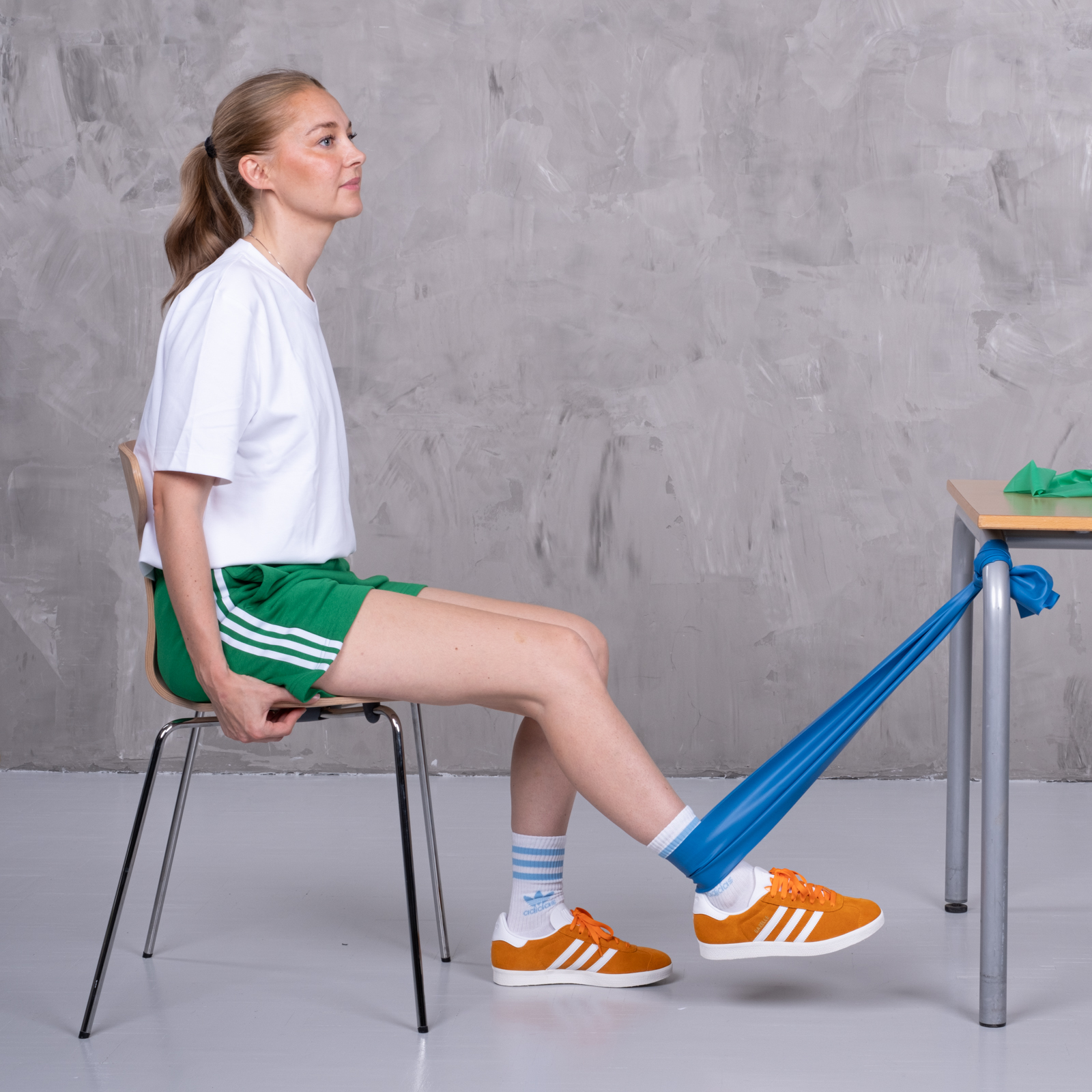
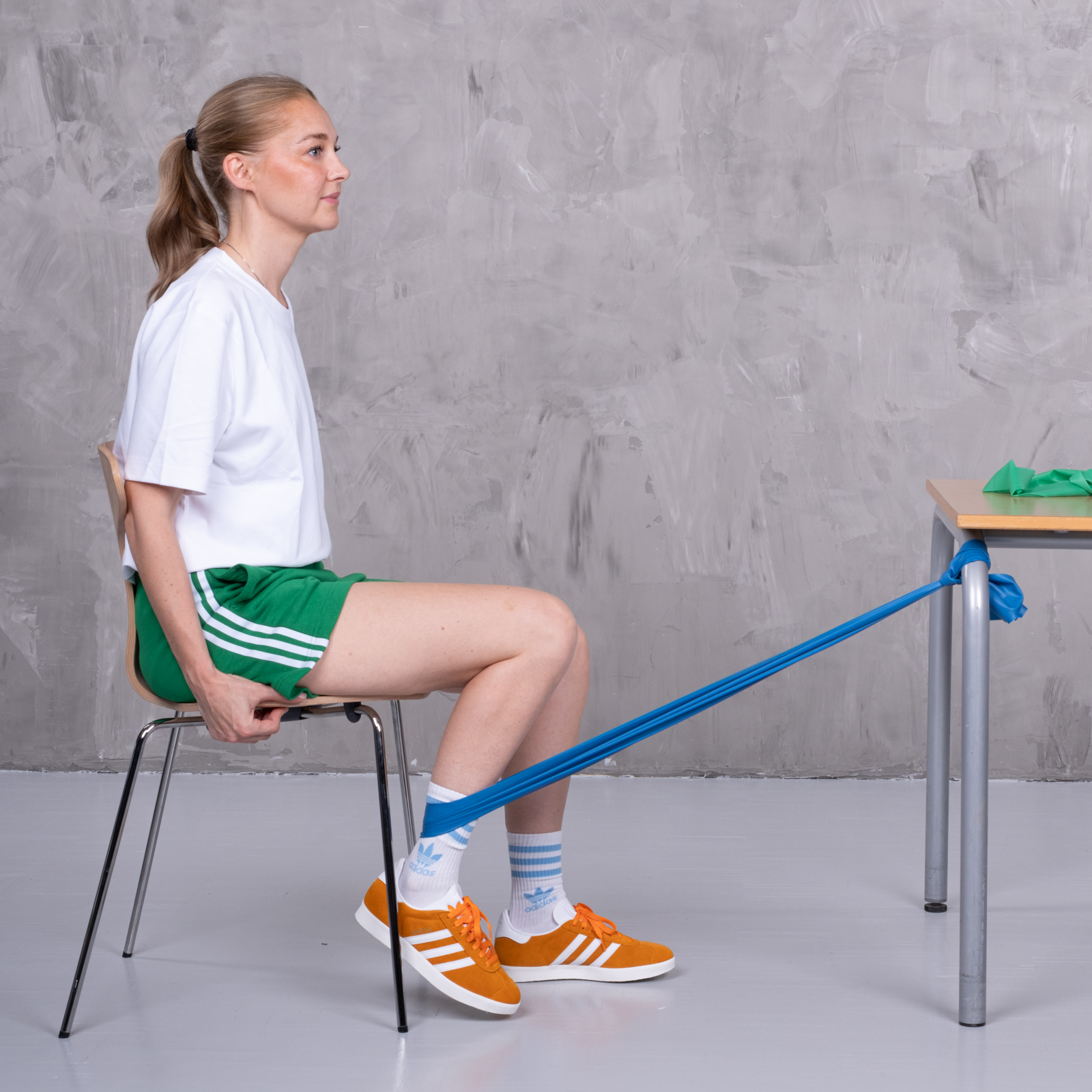
Secure an exercise band at hip height in front of you. Sit on a chair facing the exercise band. Loop the exercise band around your ankle. Lift and extend your leg. Then slowly bend your knee so that the exercise band tightens. Hold the tension for a few seconds and slowly straighten your knee again.
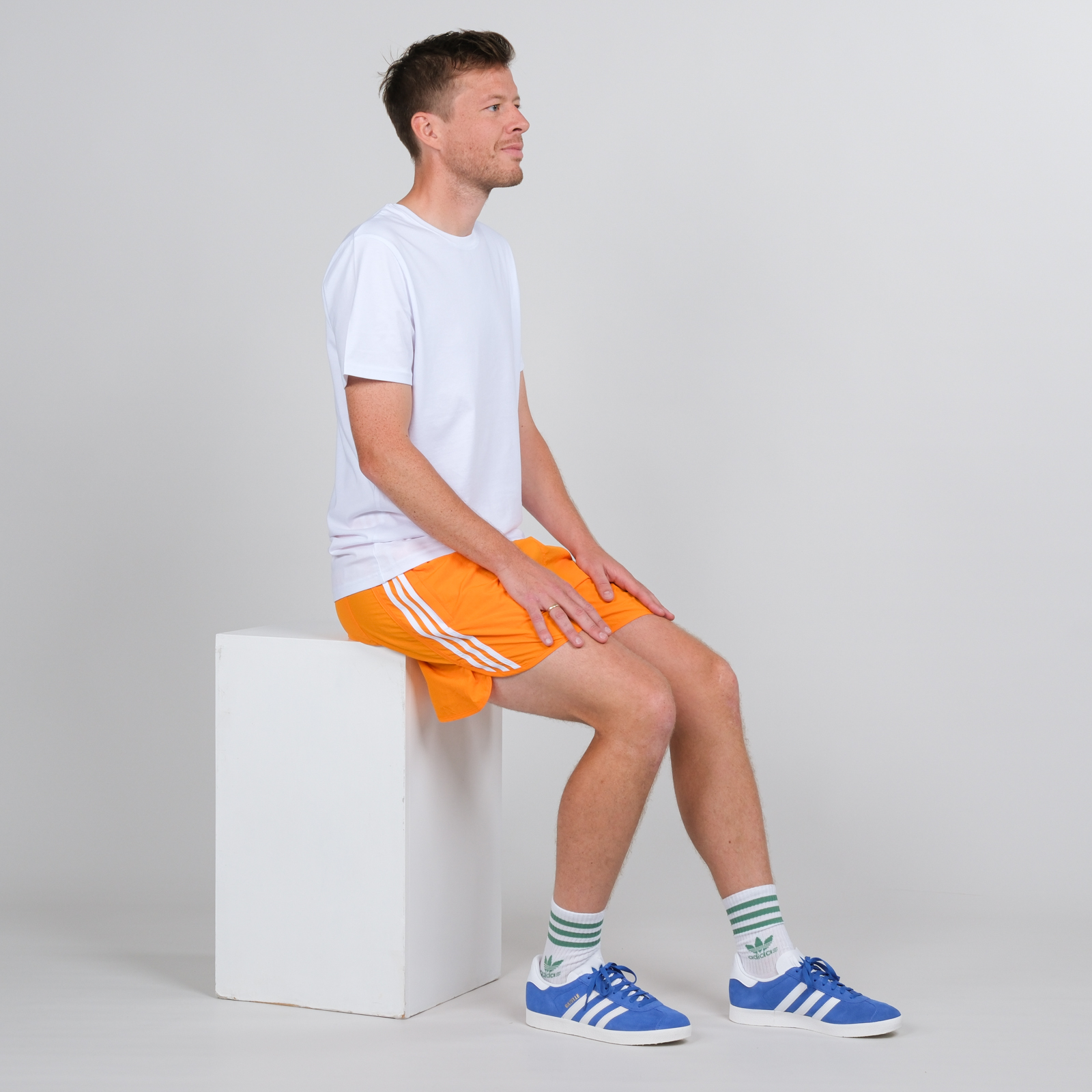
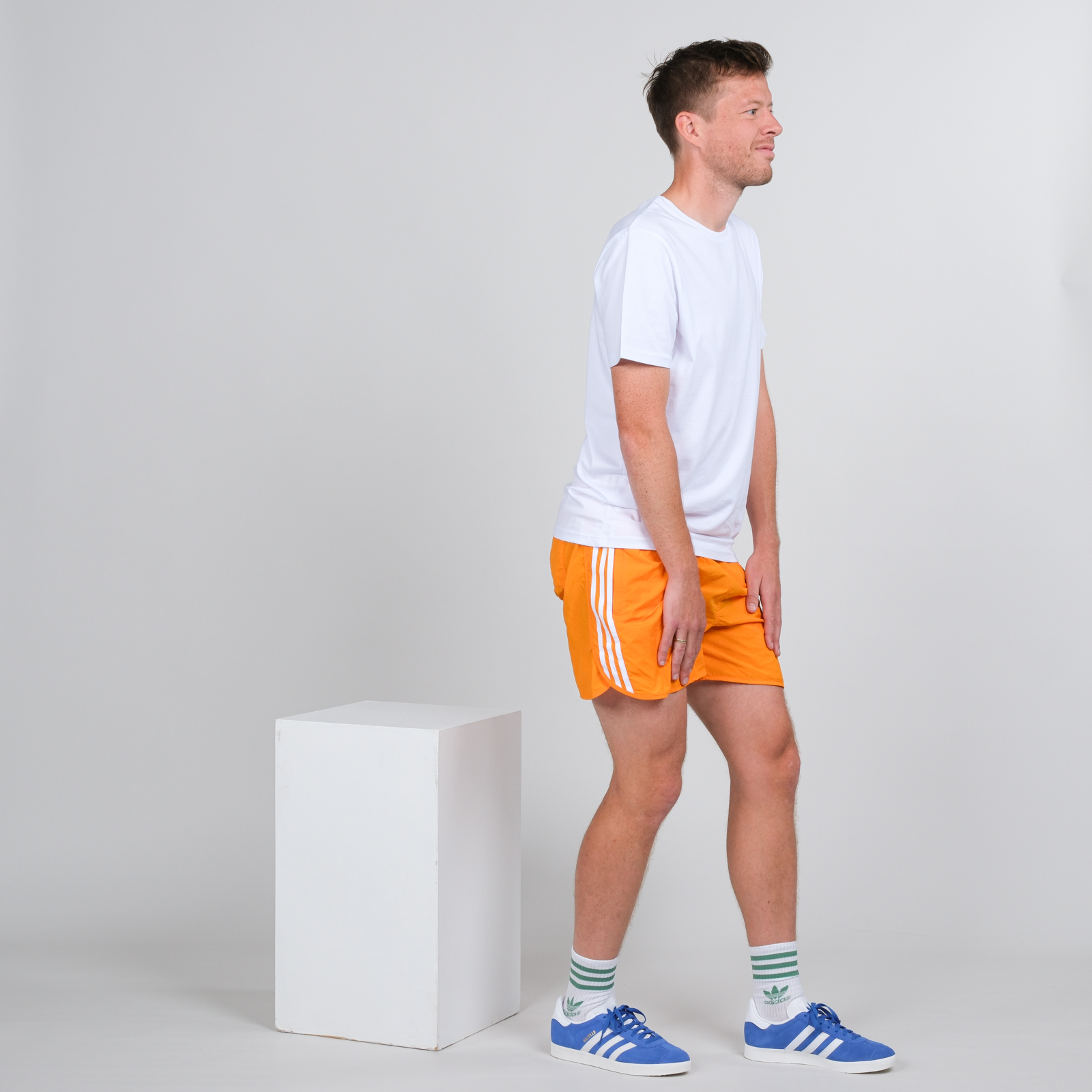
Sit on a chair. Keep your working leg slightly in front of the other. Stand up, gradually shifting your weight onto your working leg
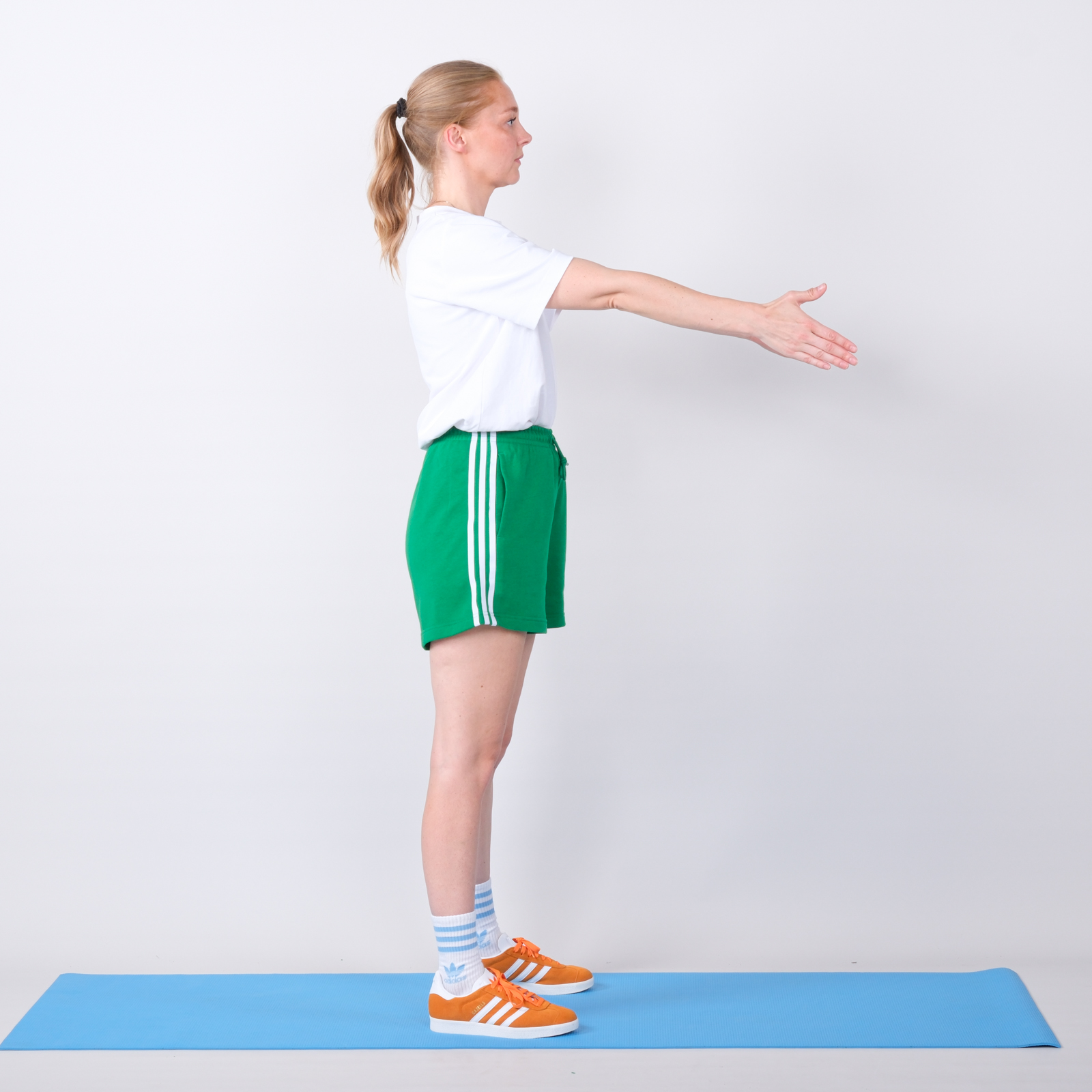
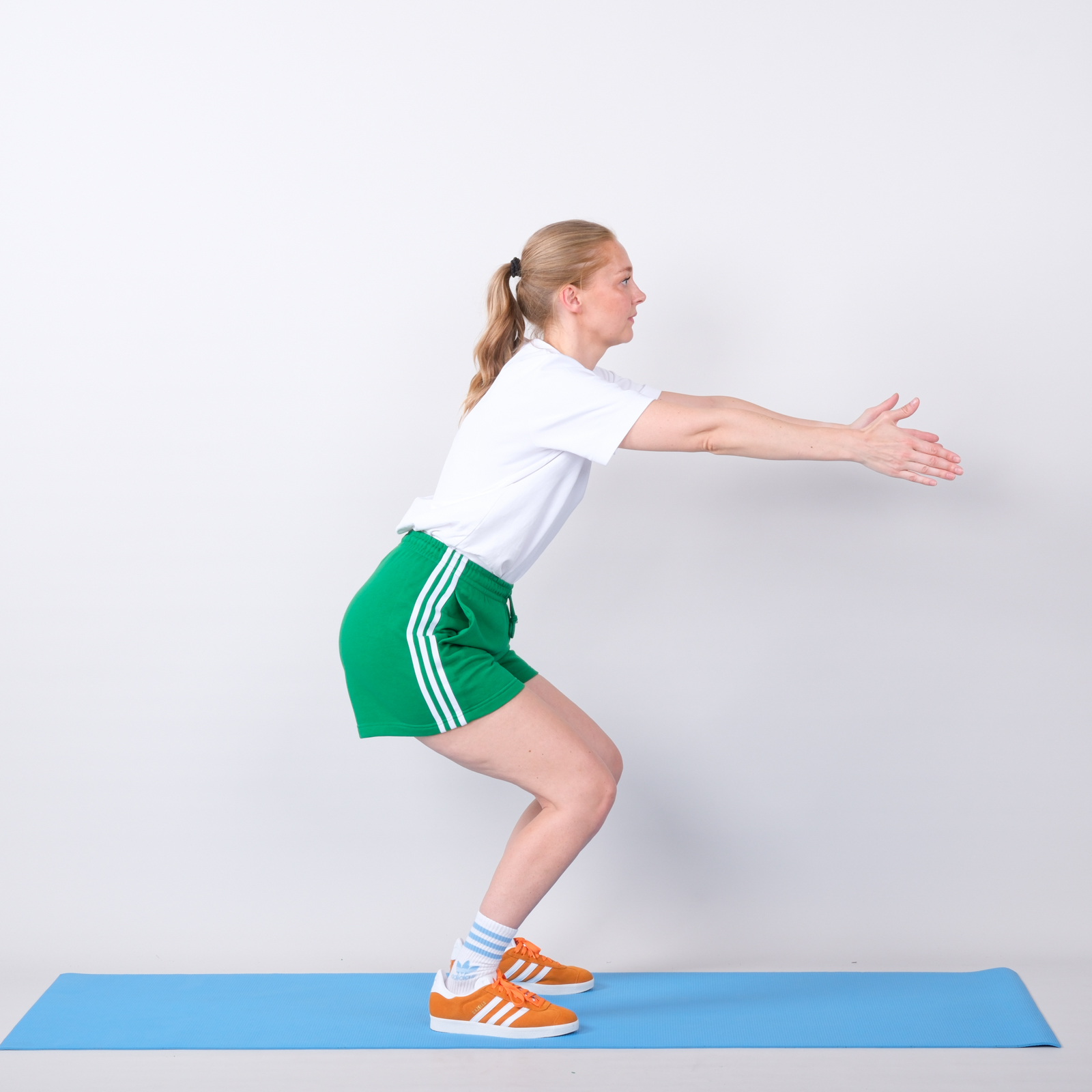
‘Squat. Stand up straight. Keep your hands together. Slowly bend your knees and hips (max until the ball is at table level). Your knees should point straight ahead over your toes. Hold the position for 5 seconds and slowly stand up to the starting position.
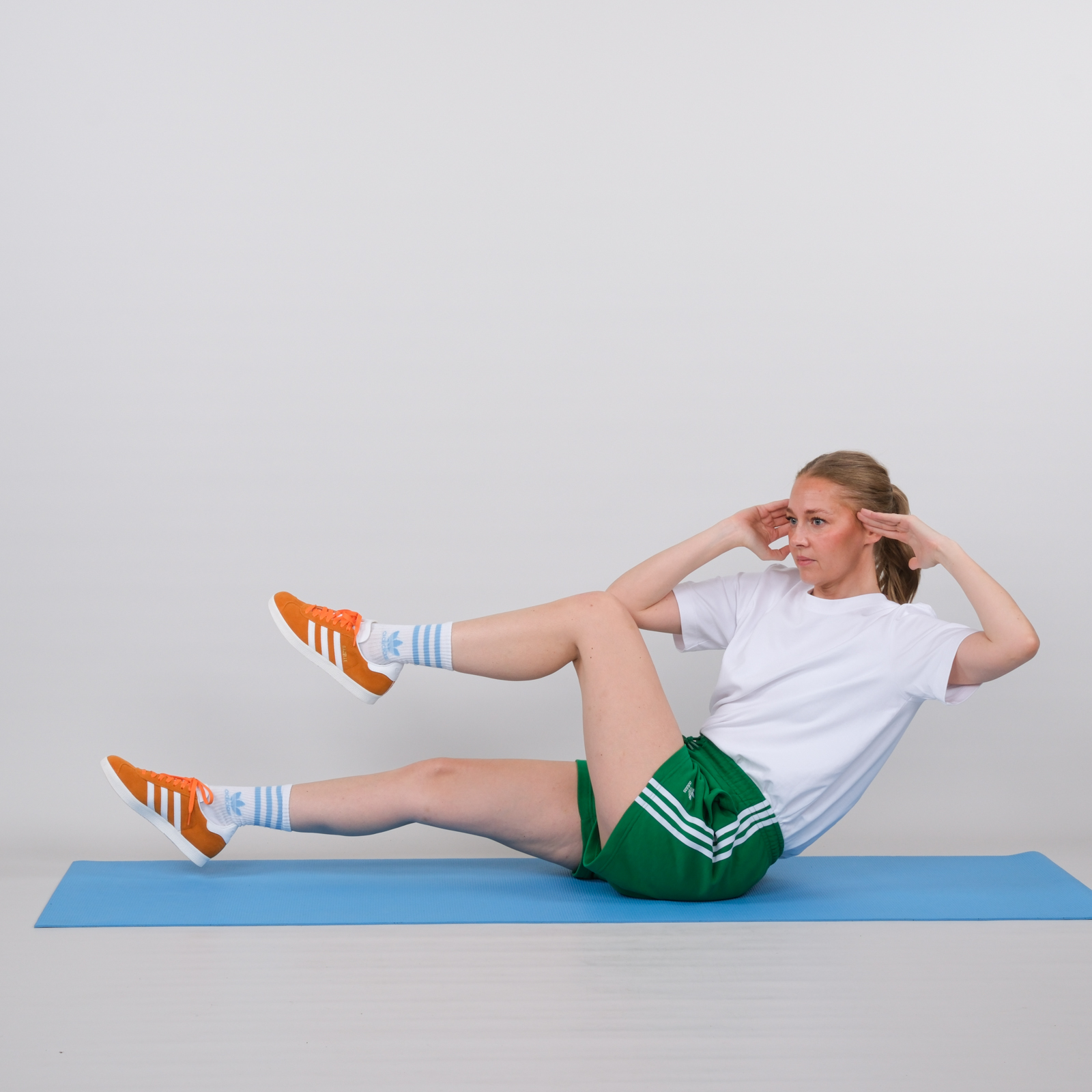
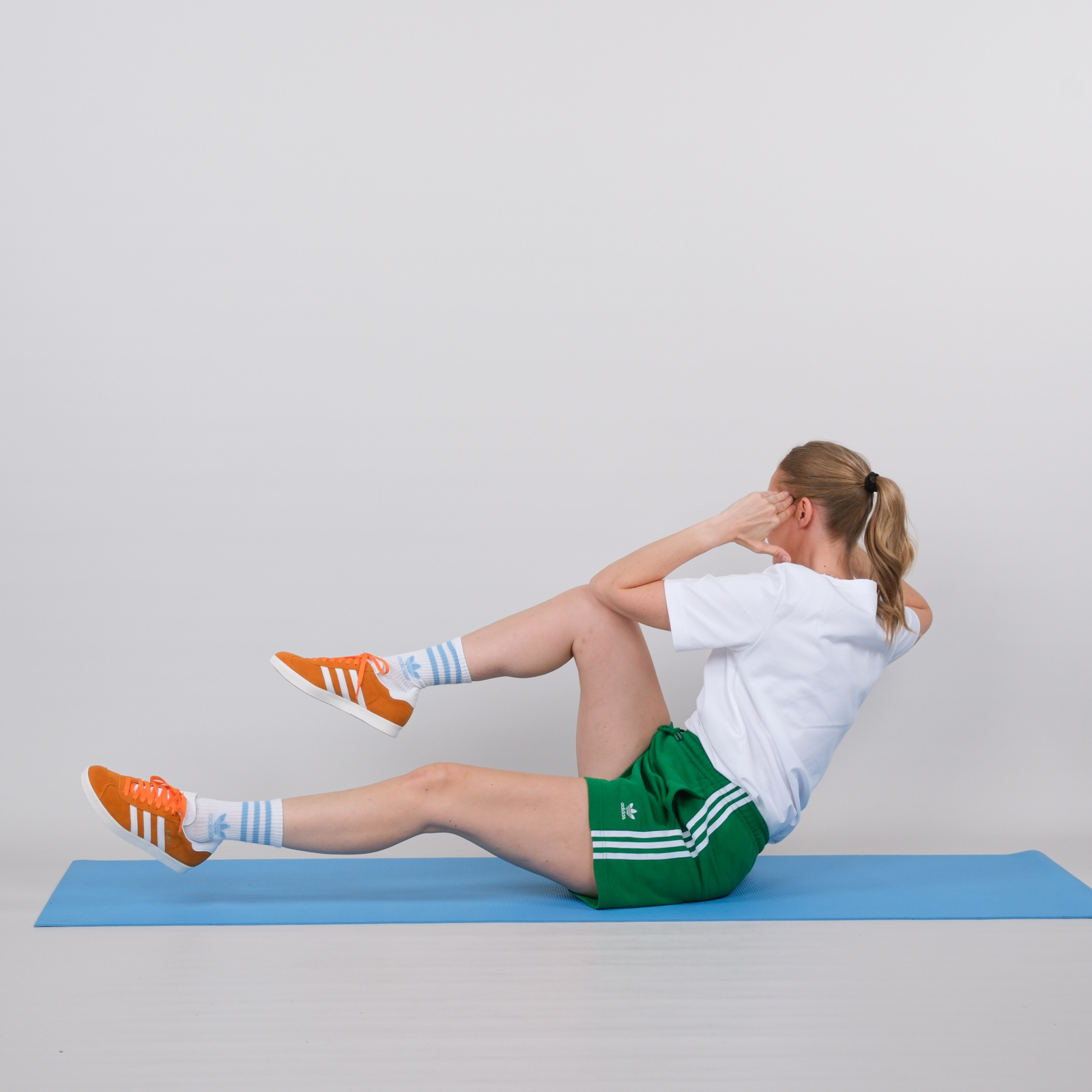
“Bicycle crunch”. Lie on your back. Place your hands behind your head. Make cycling movements with your legs and bring your right elbow towards your left knee and your left elbow towards your right knee in turn. Fully extend the leg that is raised.
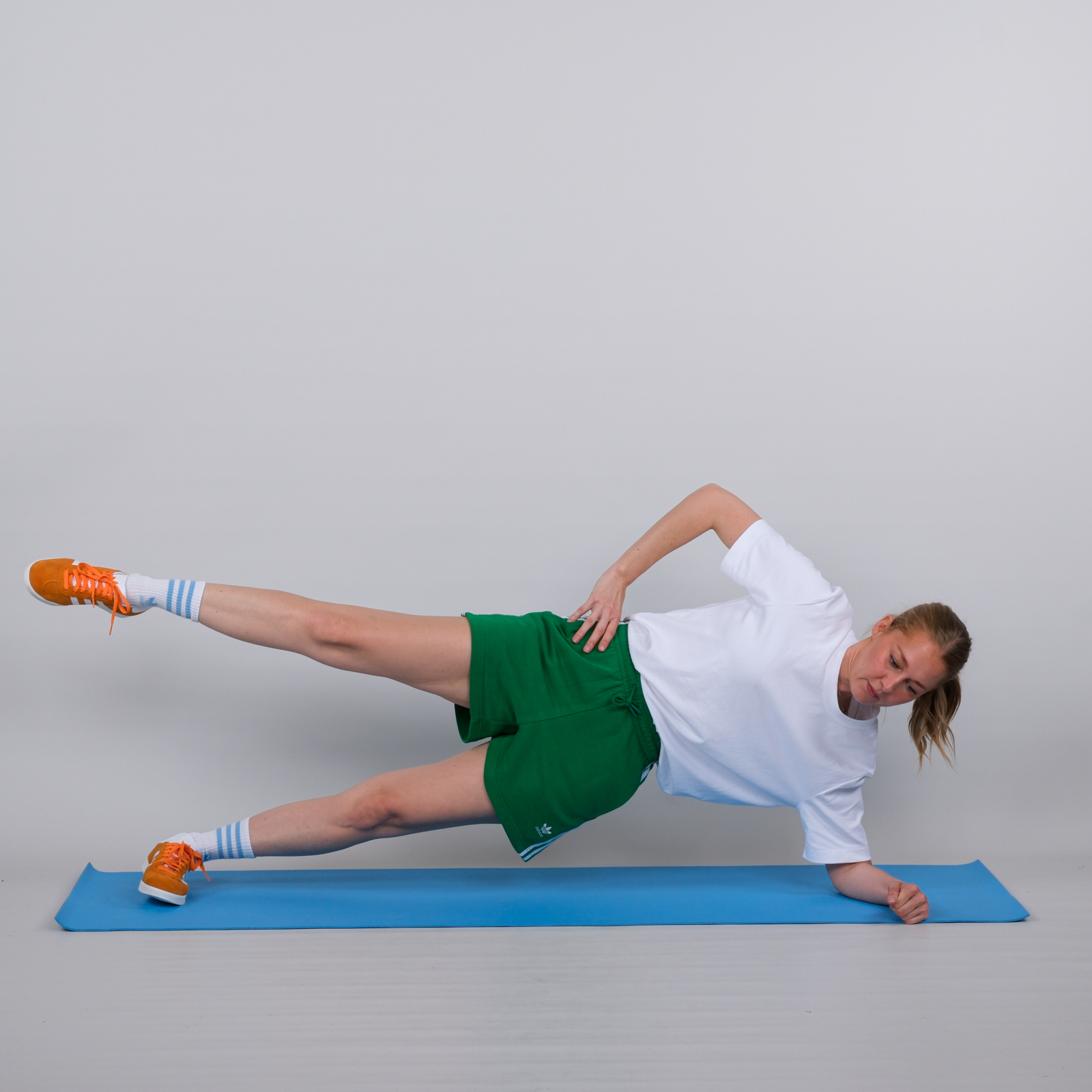
Lie on your side, supporting yourself on your forearm and foot, with your legs stretched out and the leg you are working on at the top. Lift your hips so that your body is straight. Lift your top leg, keeping it straight, as high as possible. Hold the position for as long as possible, then lower your leg and hips back to the starting position.
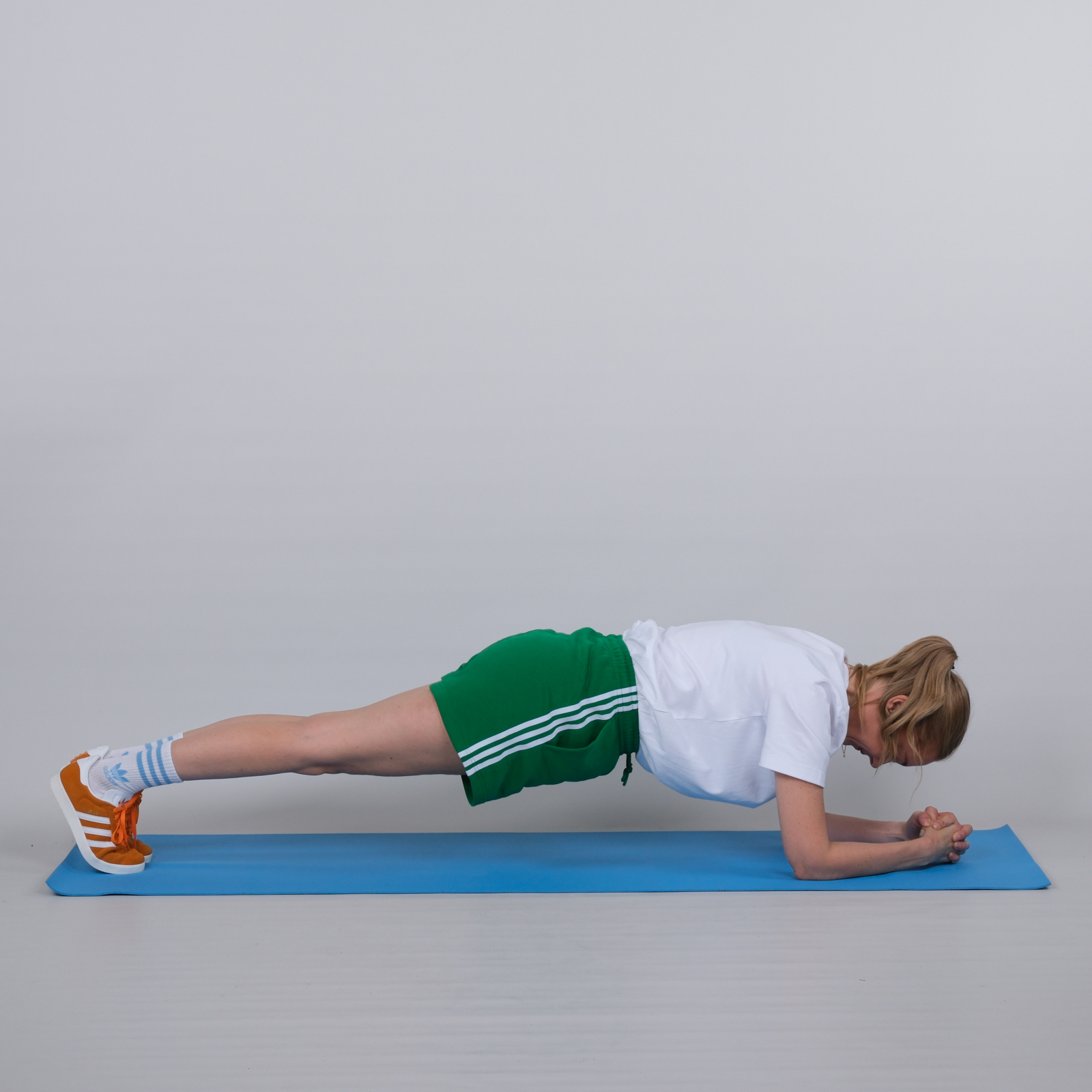
‘Plank. Lie on the floor on your stomach, supporting only your elbows and toes so that your hips do not touch the floor. Hold the position for as long as possible.
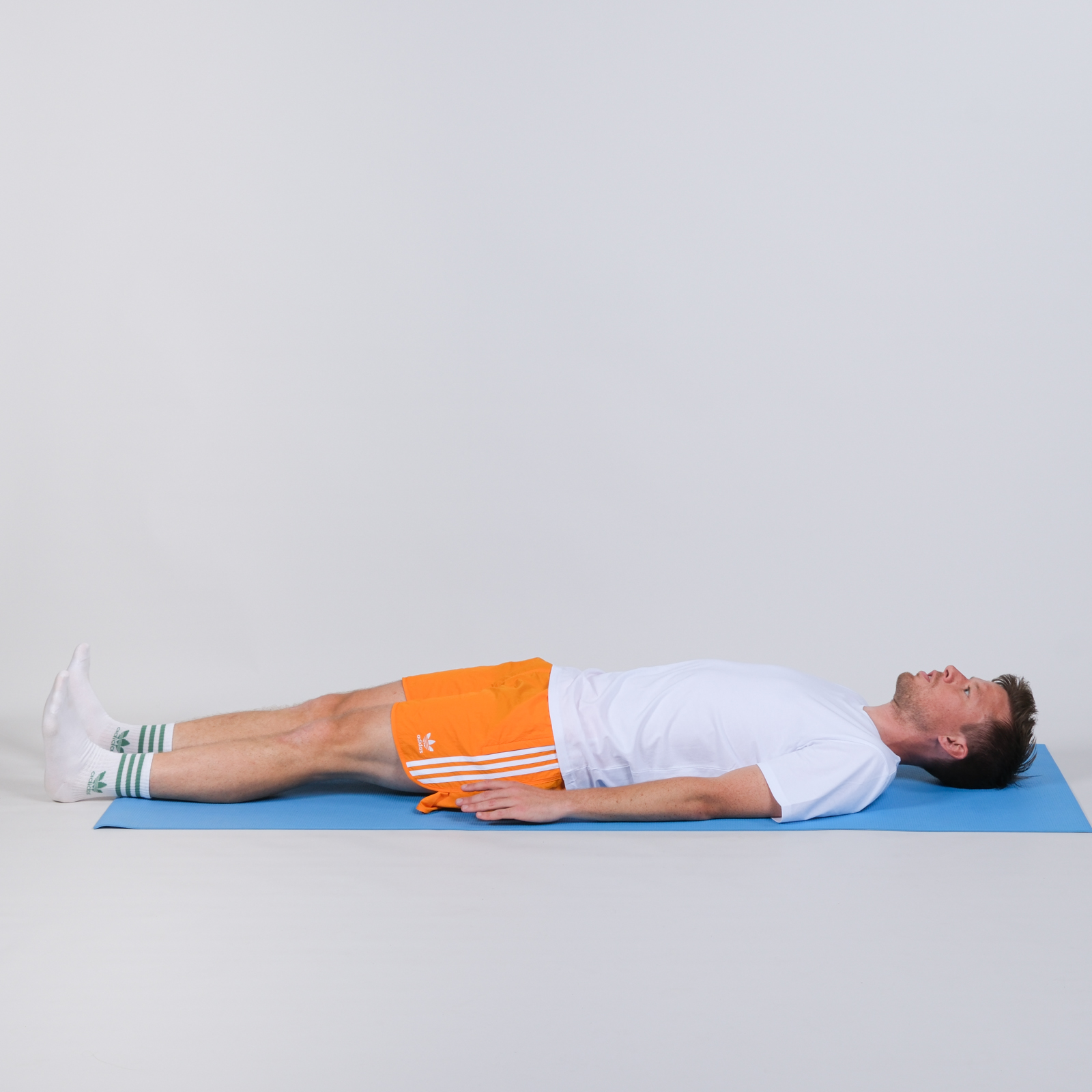
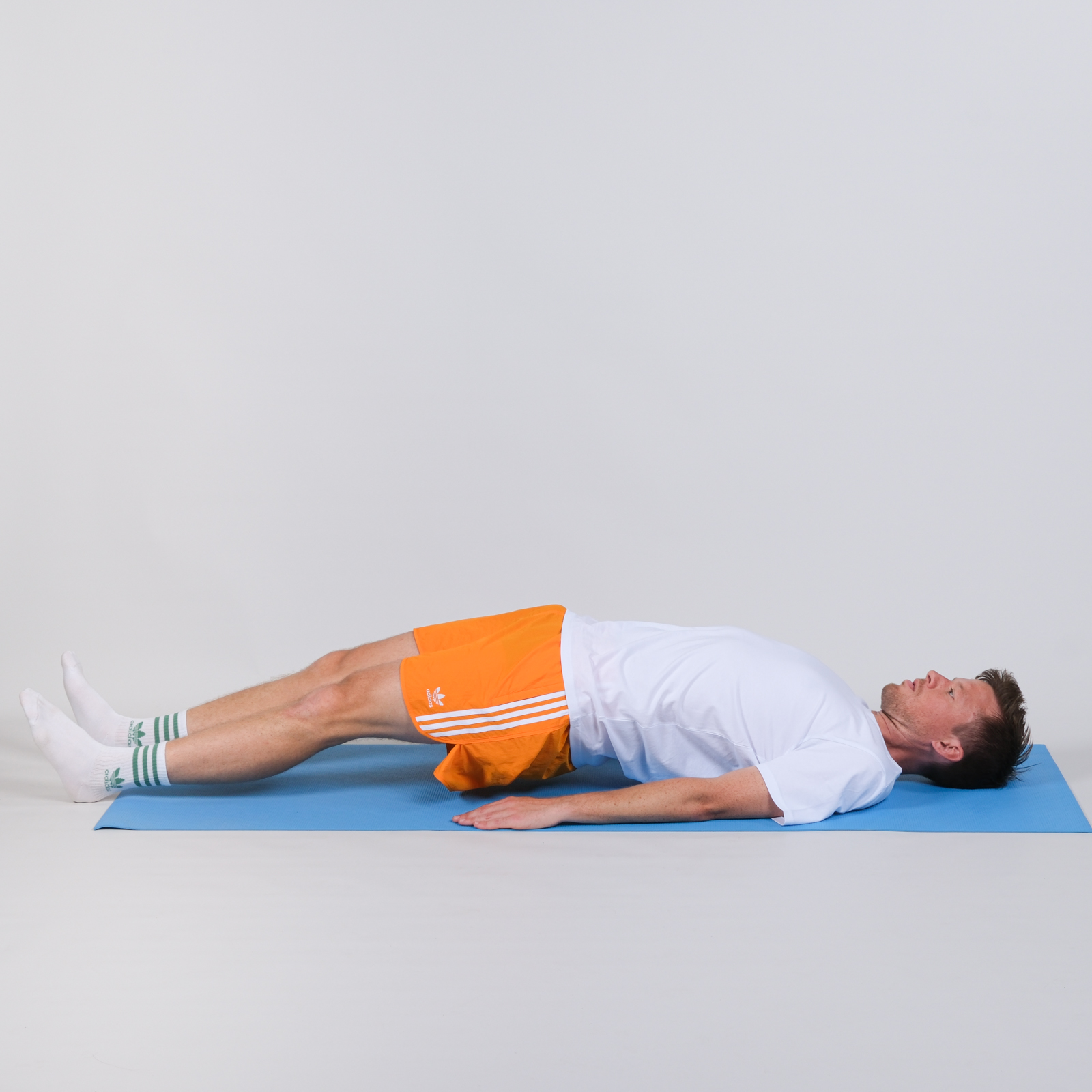
“Hamstring plank”. Lie on your back with your body fully extended. Press your heels into the floor, tense your whole body, and lift your hips off the floor. Hold the tension for as long as possible.
The exercise can be made more difficult by lifting one leg.