Inflammation of the adductor of the thigh – Step 3
Rehabilitation starts with the exercises in Step 1. When the exercises can be performed without pain, rehabilitation starts on the next step.
How often and for how long should I train? Training frequency and duration are individual. Start with about 3 repetitions per workout. exercise and at least 3 times a week. Slowly increase the number of repetitions and load without exceeding the pain threshold
Do I have to do the whole program every time? No, you can divide the exercises into different days. The most important thing is to exercise regularly and gradually increase the intensity
The time in minutes indicates the time distribution between stretching, balance and strength if you train for one hour. Whether you train for one hour or 10 minutes, for example, is adapted to your starting point – and can be increased over time.
Condition
Unlimited: Cycling, Swimming. Jogging on soft ground without sudden changes of direction
Stretching
10 minutes of each training session
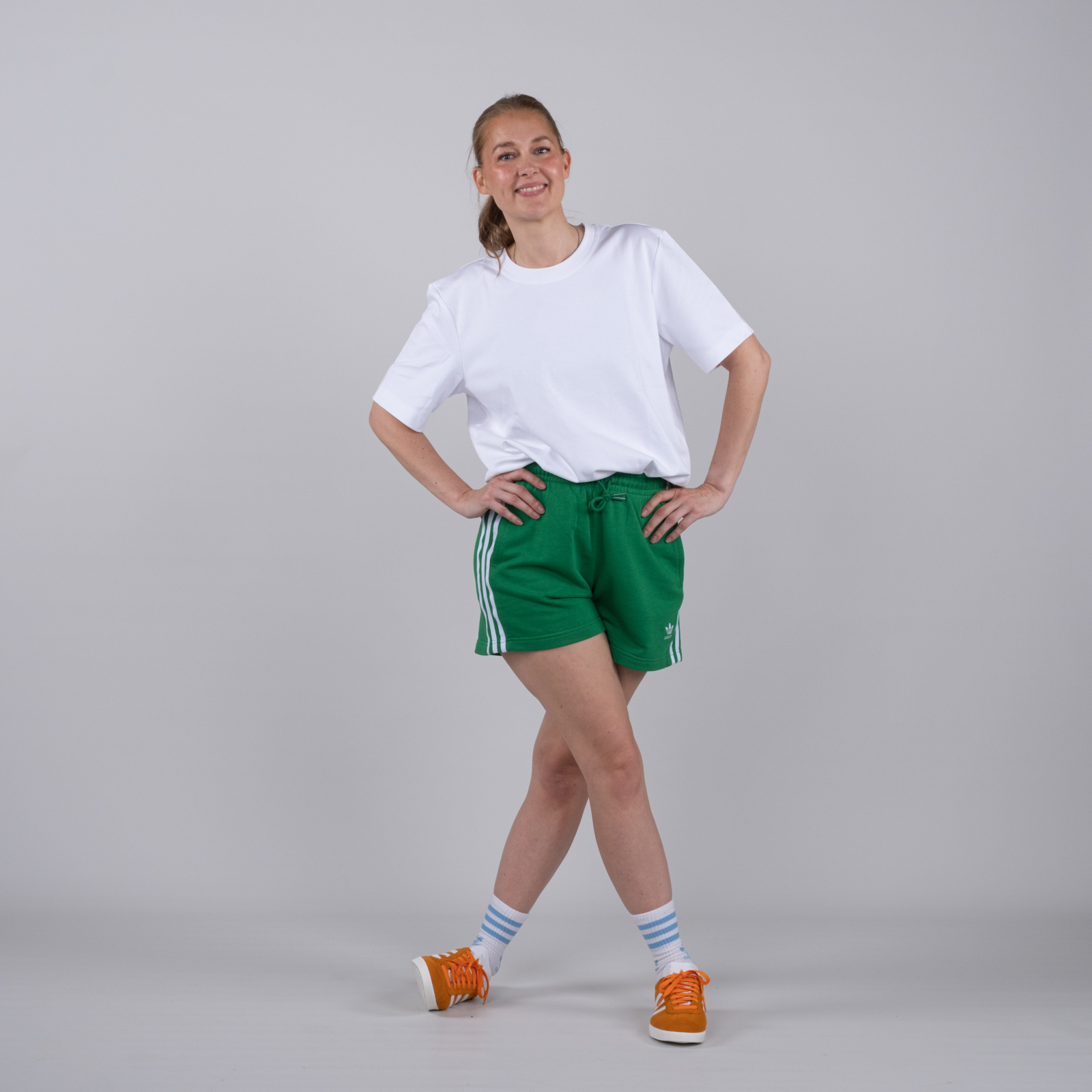
Stand by crossing the training leg straight behind the support leg while bending out to the side over the training leg so that there is an increasing stretching of the outer thigh. Hold stretching for 20 seconds. Repeat exercise alternately on right and left leg
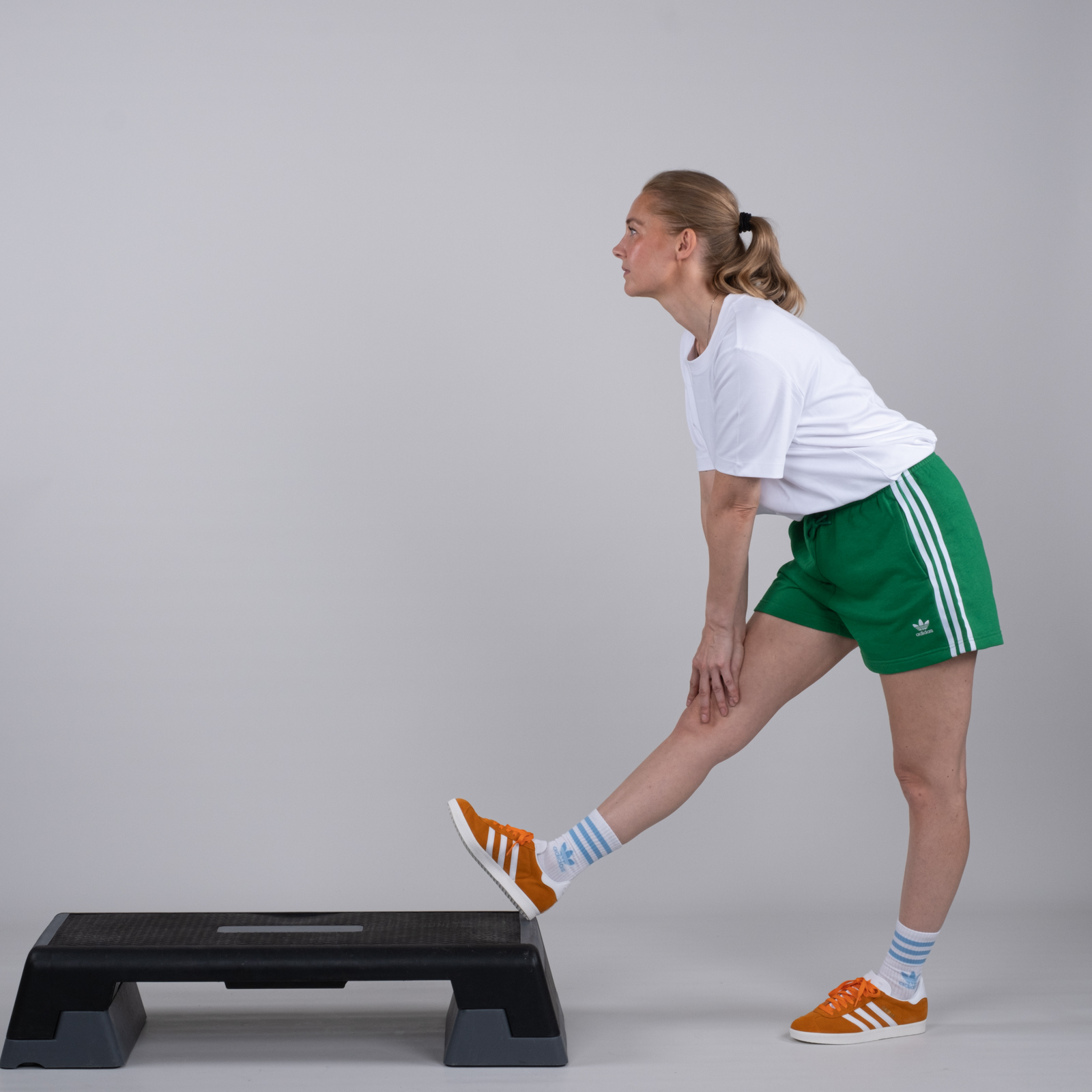
Stand with your training leg straight on a step/stool while bending your front body slightly forwards. Hold the stretch for 20 seconds.
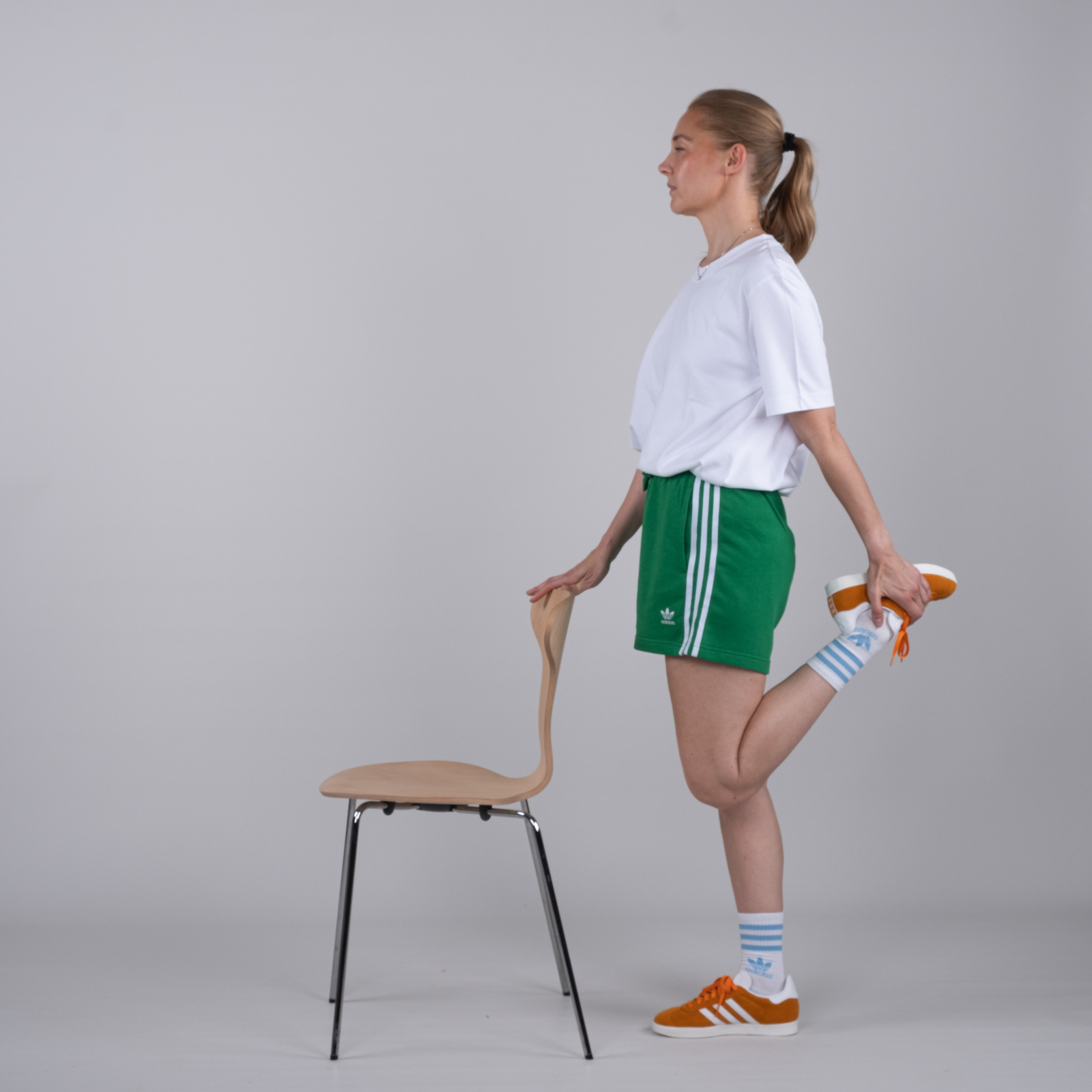
Stand on one leg. Support yourself with one hand against a wall or chair. Bend the opposite knee and grasp your foot with the hand on the same side. Pull your foot upwards and your knee slightly backwards, so that you feel a gradual stretch in your thigh. Hold the stretch for 20 seconds. Repeat the exercise, alternating between your right and left legs.
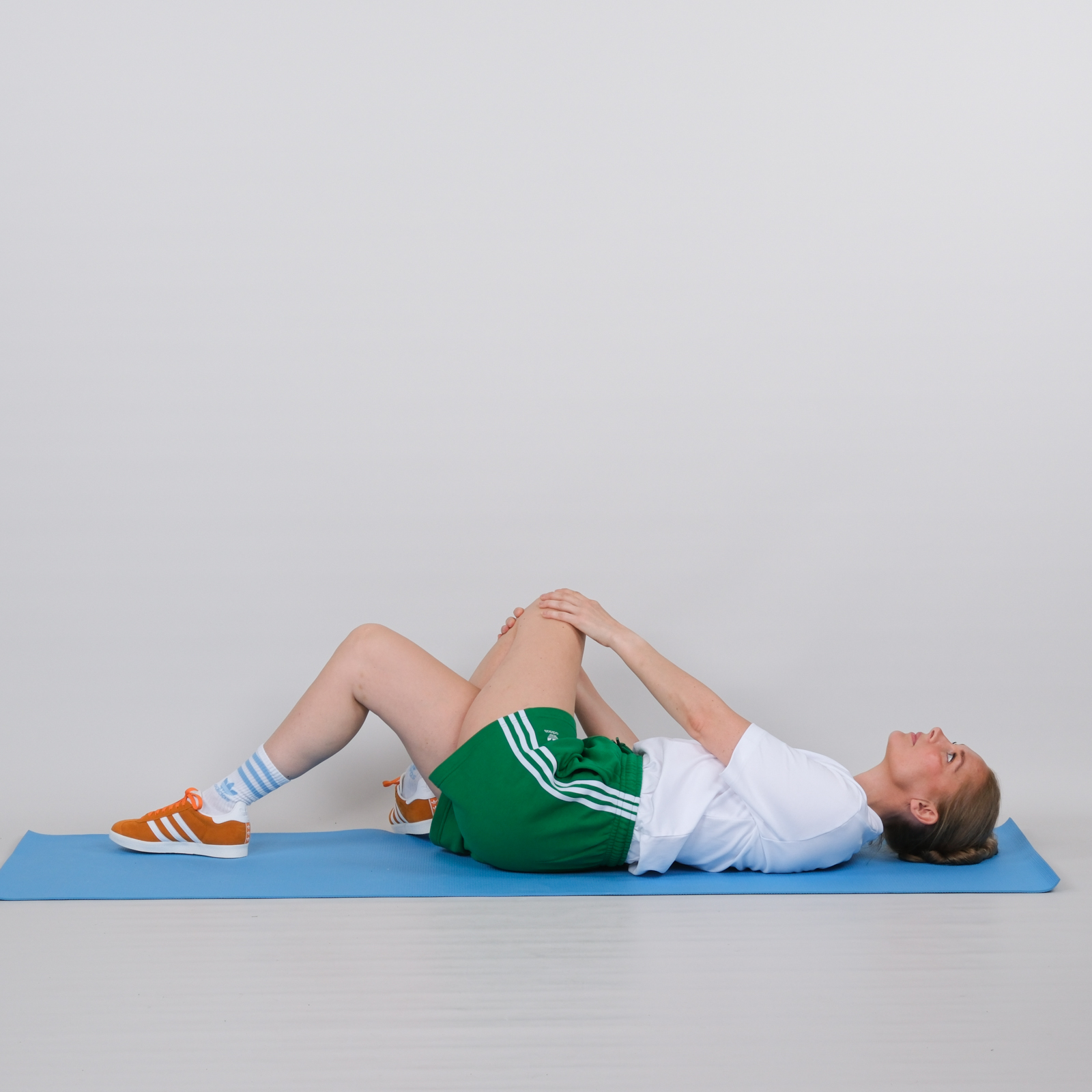
Lie on your back with one leg straight. Bend the other leg and place your foot on the other side of the stretched leg. With both hands, pull your knee up towards the opposite shoulder so that your buttocks are increasingly stretched. Hold the stretch for 20 seconds. Repeat the exercise on the opposite leg.
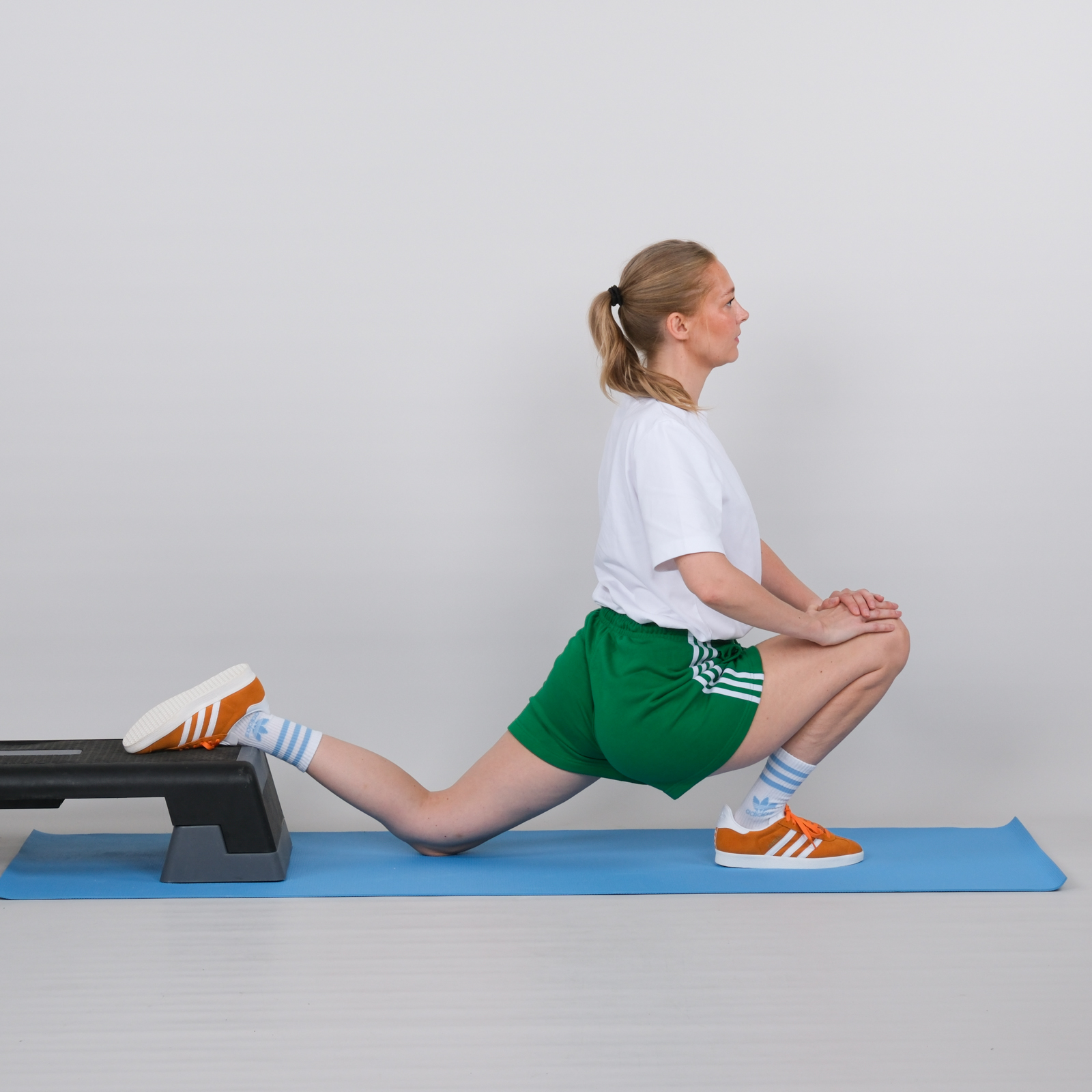
Sit on your left knee and right foot. Bend your right leg at a 90-degree angle at the hip and knee. Extend your left knee as far back as possible, with your foot raised and resting on a small box. Push your hips forwards and downwards without arching your lower back, so that you feel a gradual stretch at the front of your hip. Hold the stretch for 20 seconds. Repeat the exercise on the other leg.
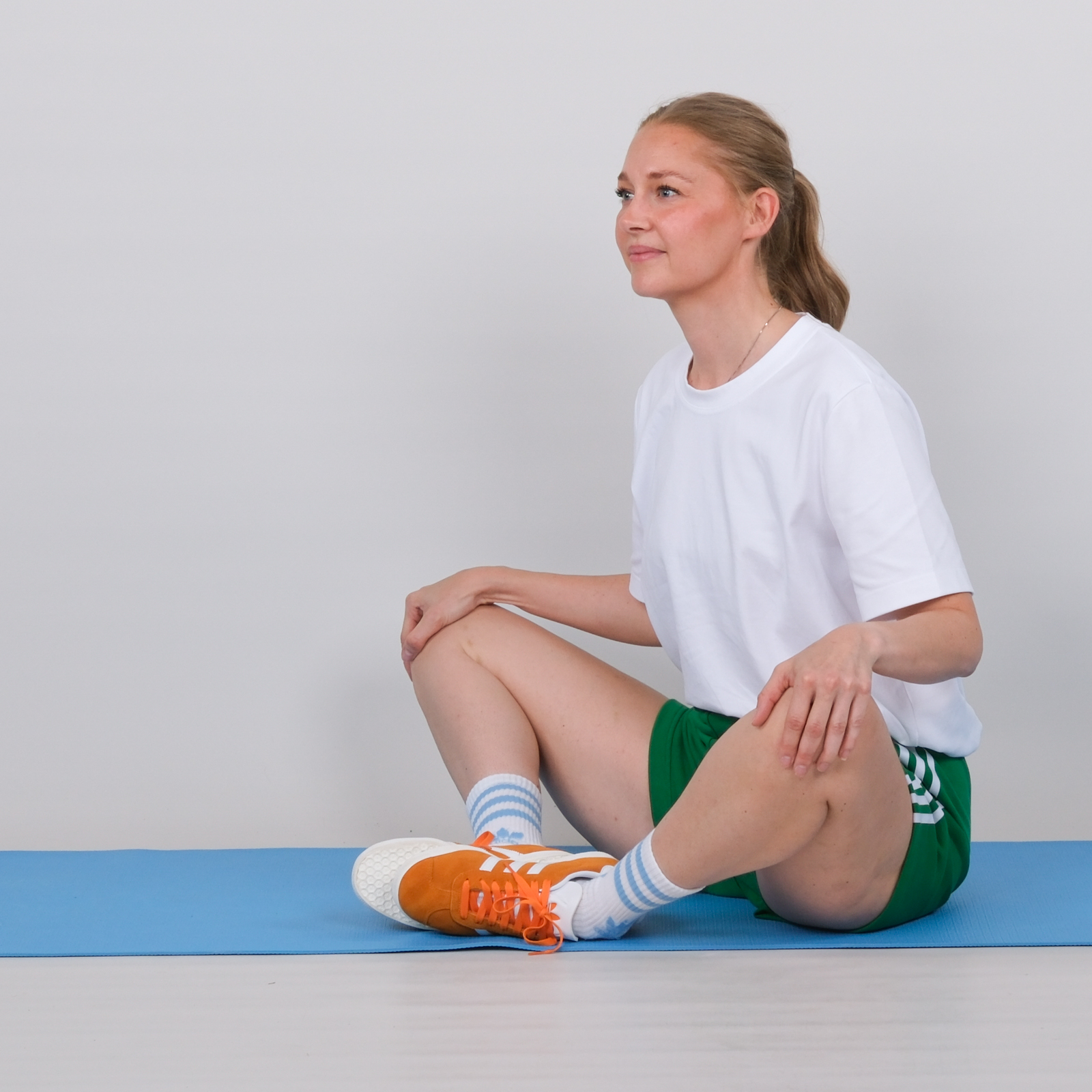
Sit with your knees bent and the soles of your feet touching. Place your hands on both knees and slowly push your knees apart, so that you feel a gradual stretch in your groin. Hold the stretch for 20 seconds. Relax for 20 seconds.
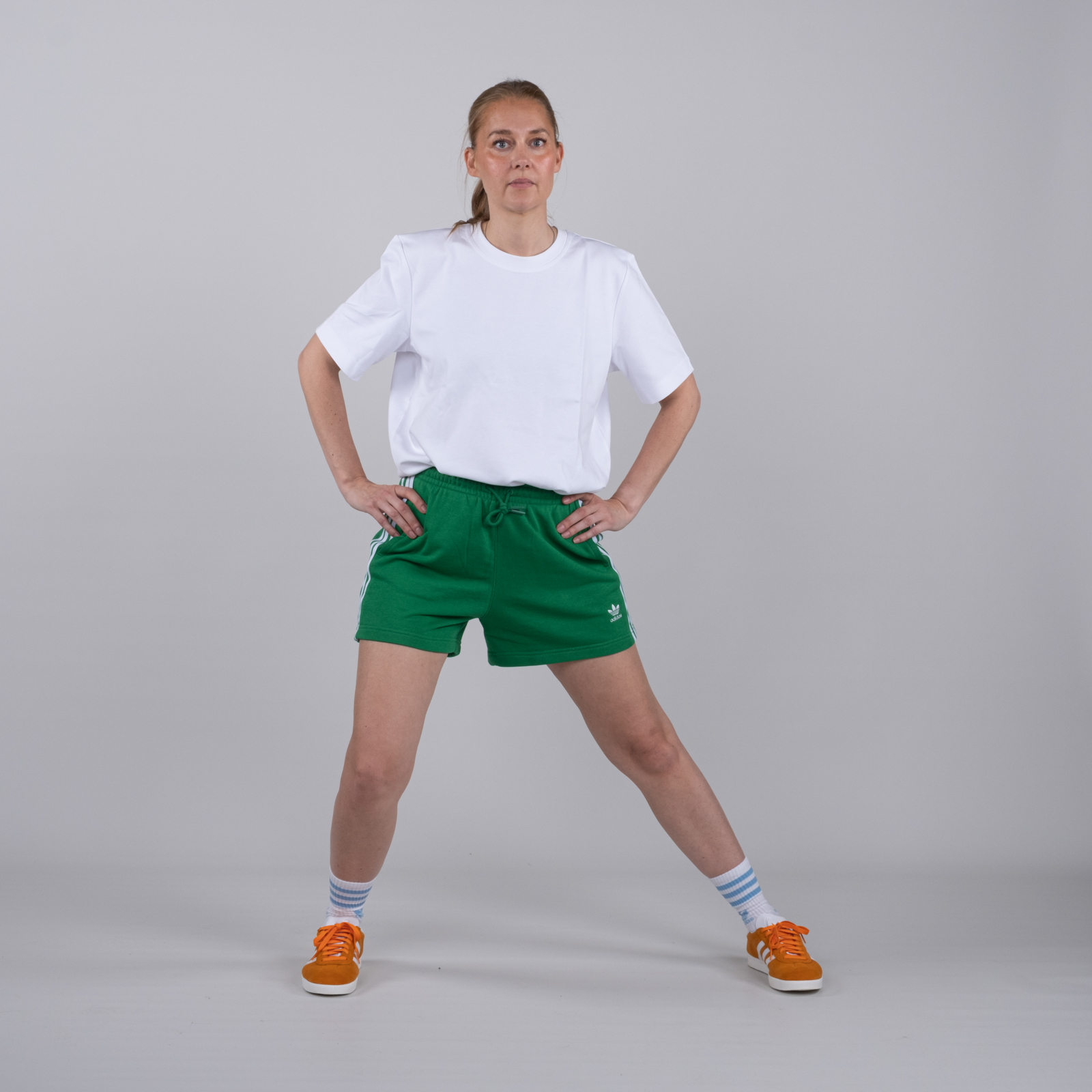
Stand with your legs apart. Keep one leg straight and the other slightly bent. Shift your weight to the side onto your bent leg, so that you feel a gradual stretch on the inside of the opposite thigh. Hold the stretch for 20 seconds. Repeat the exercise on the other leg.
Coodination
5 minutes of each training session
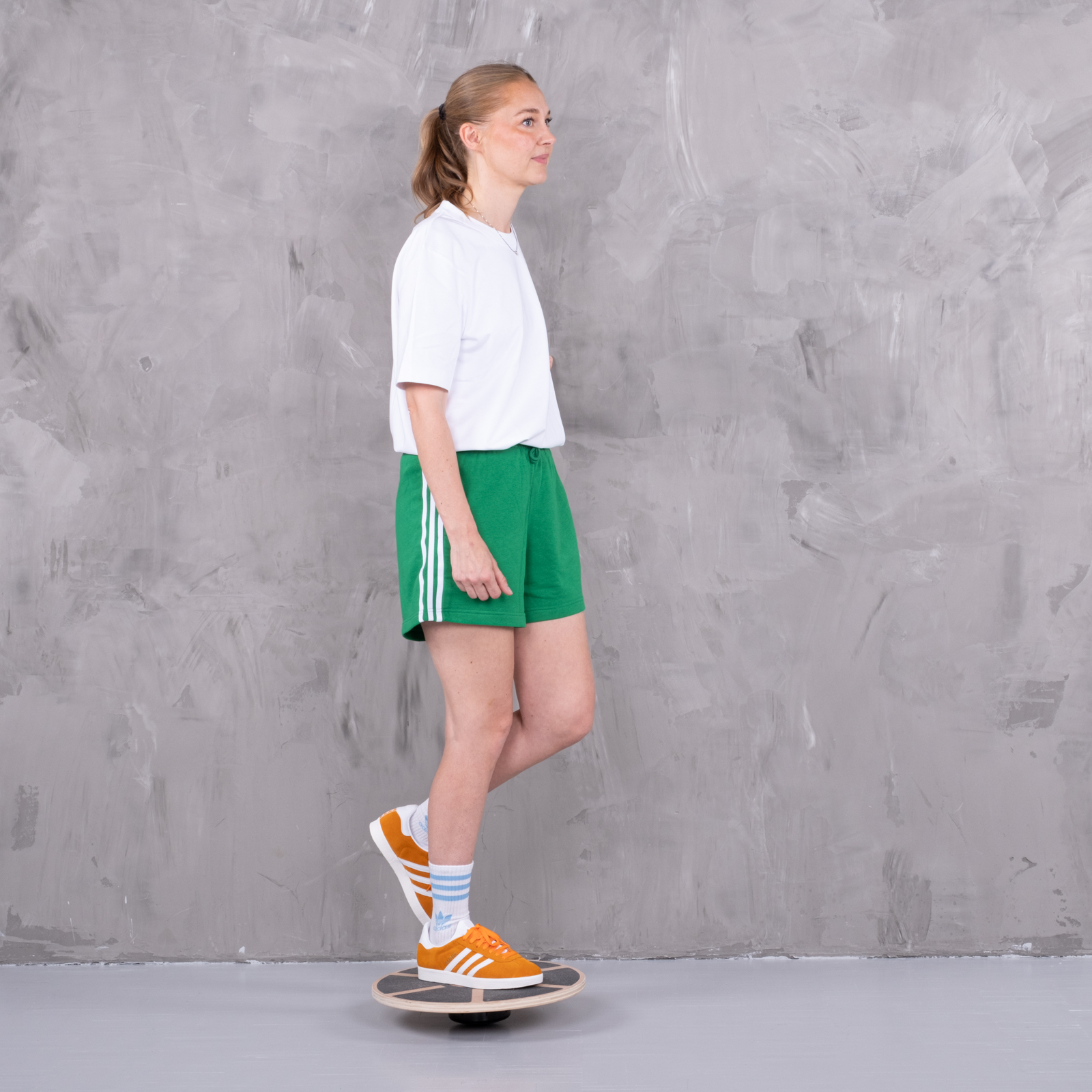
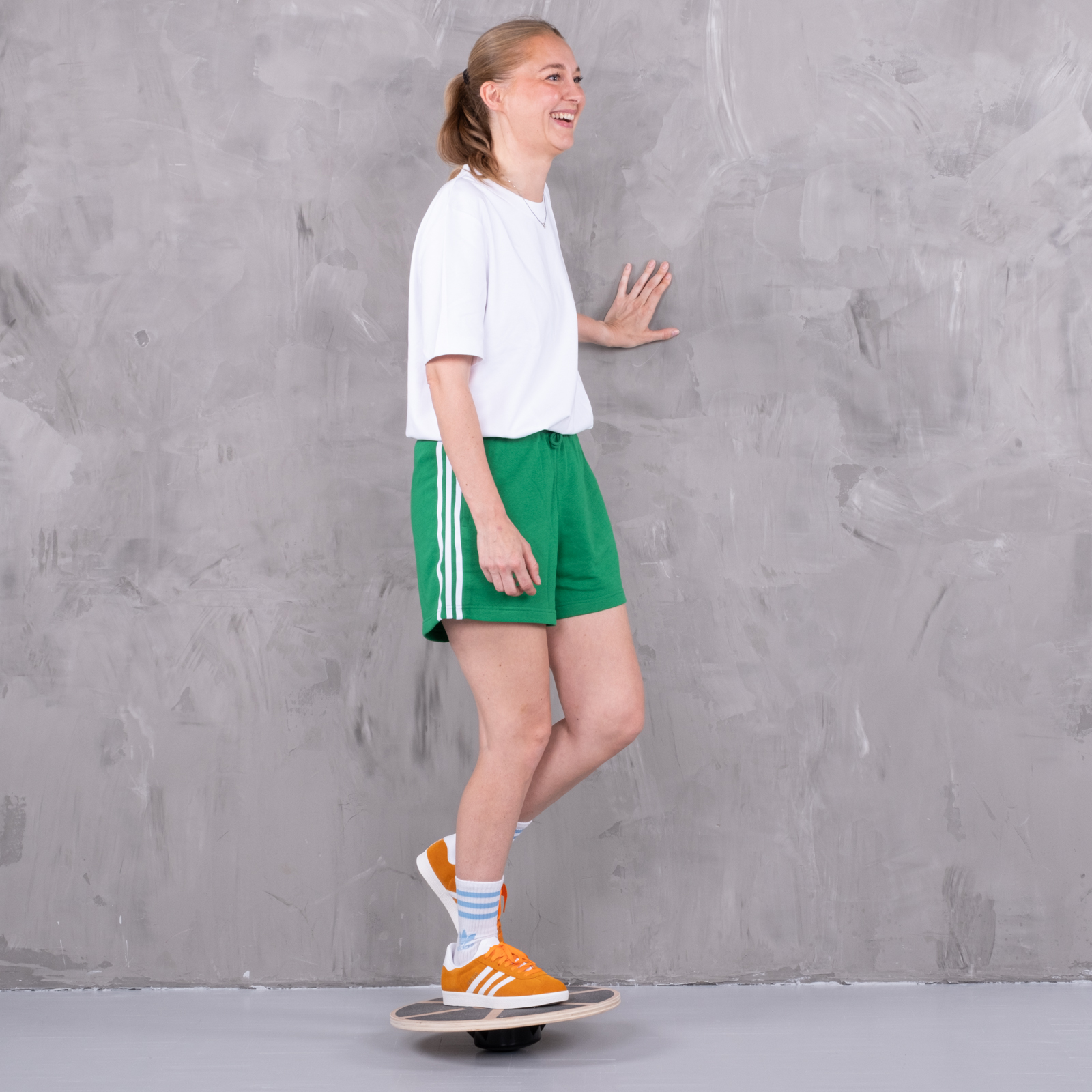
Balance on two feet on the balance board. To begin with, use your hand to support yourself against the wall. Later, balance on one foot without support. Try holding it later balance with your eyes closed.
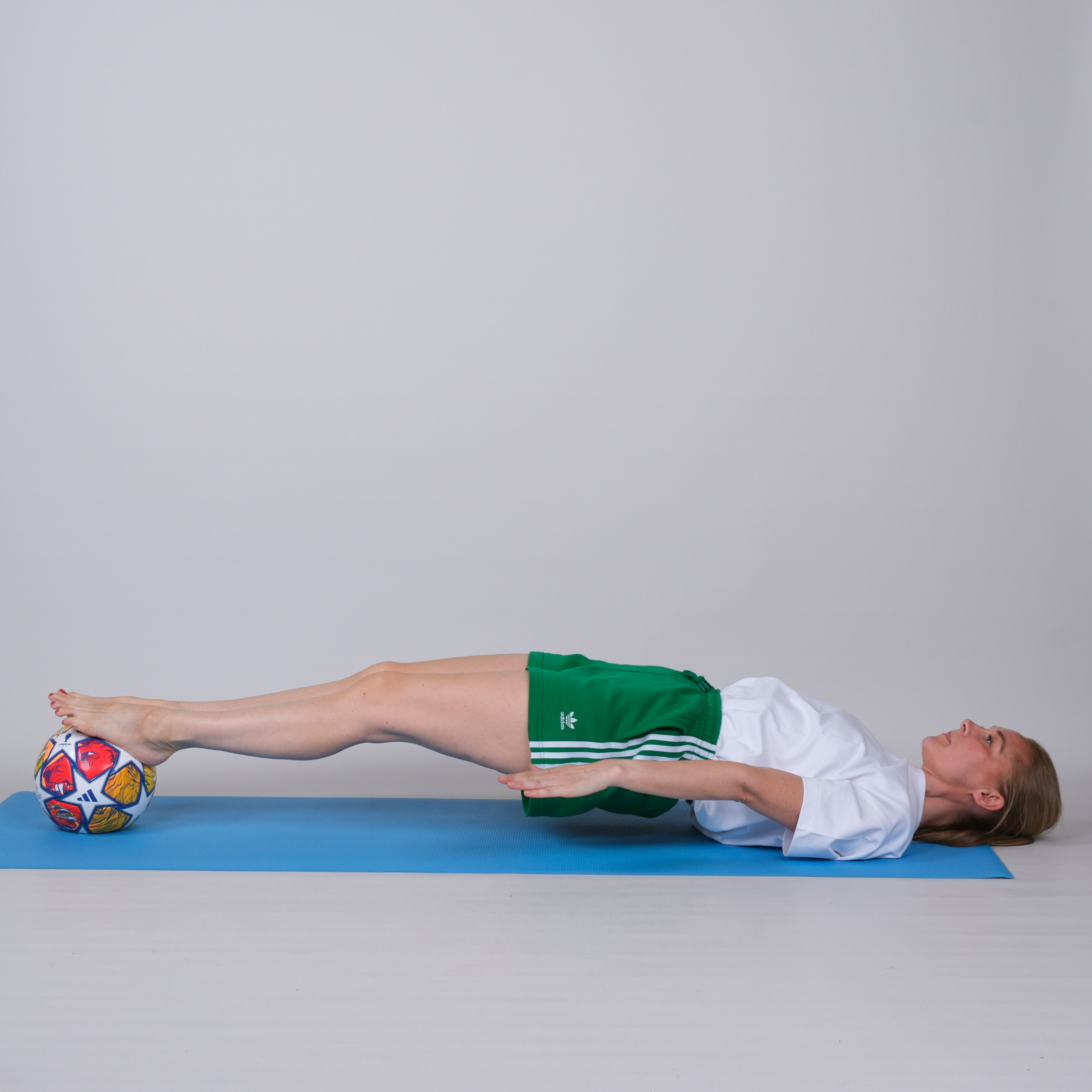
Lie on your back with a ball or stick under both feet. Roll the ball back and forth at a steady pace while lifting your hips.
Strength
45 minutes of each training session
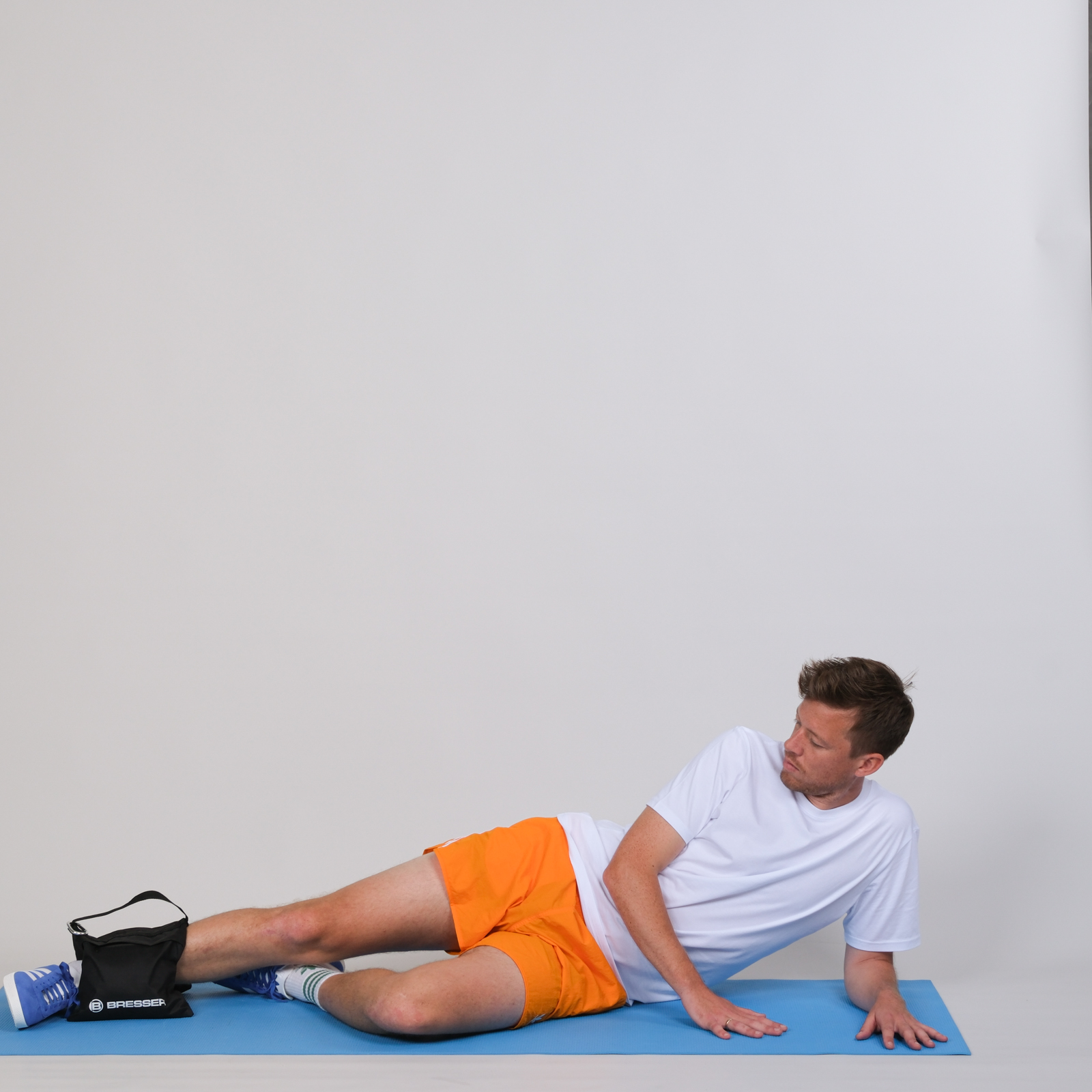
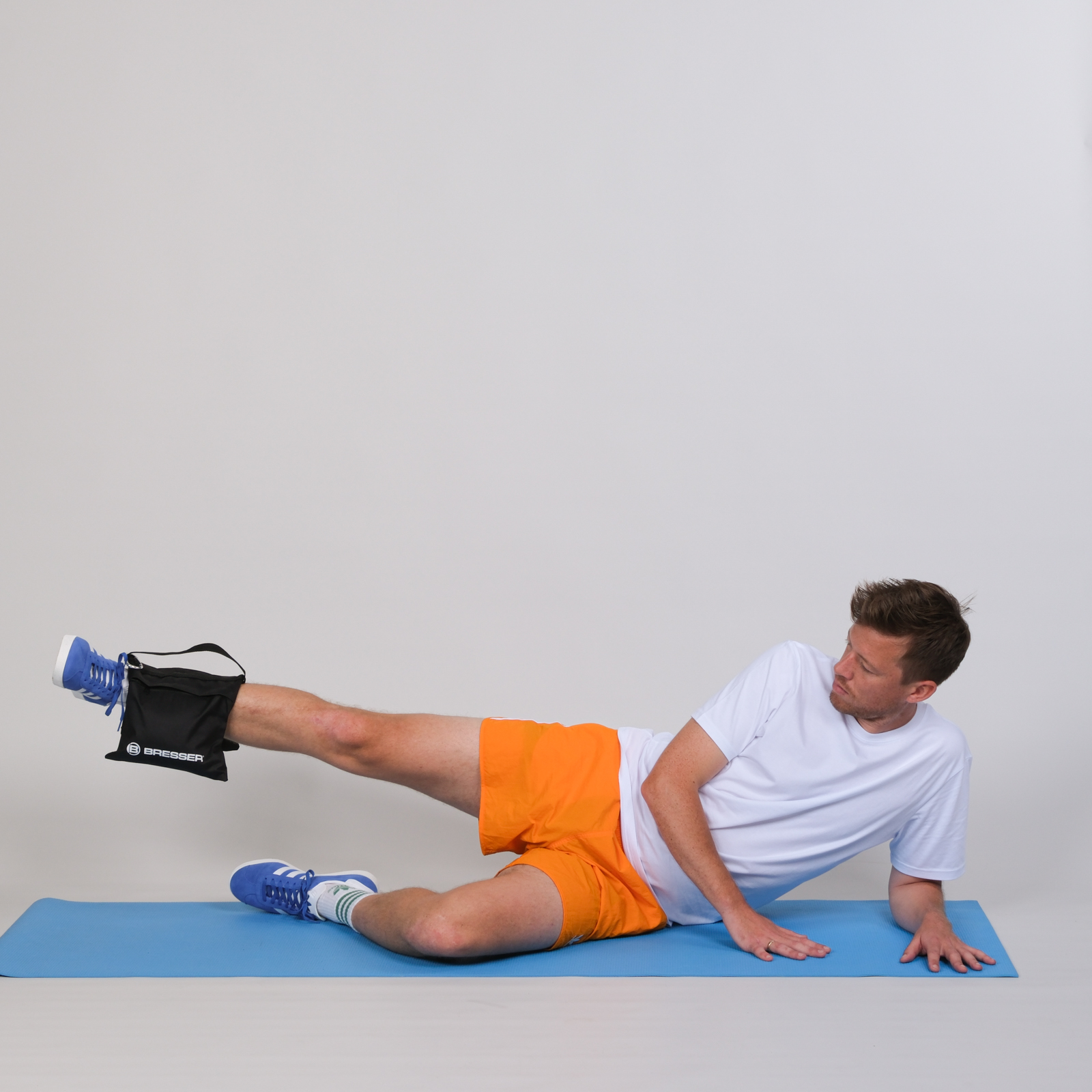
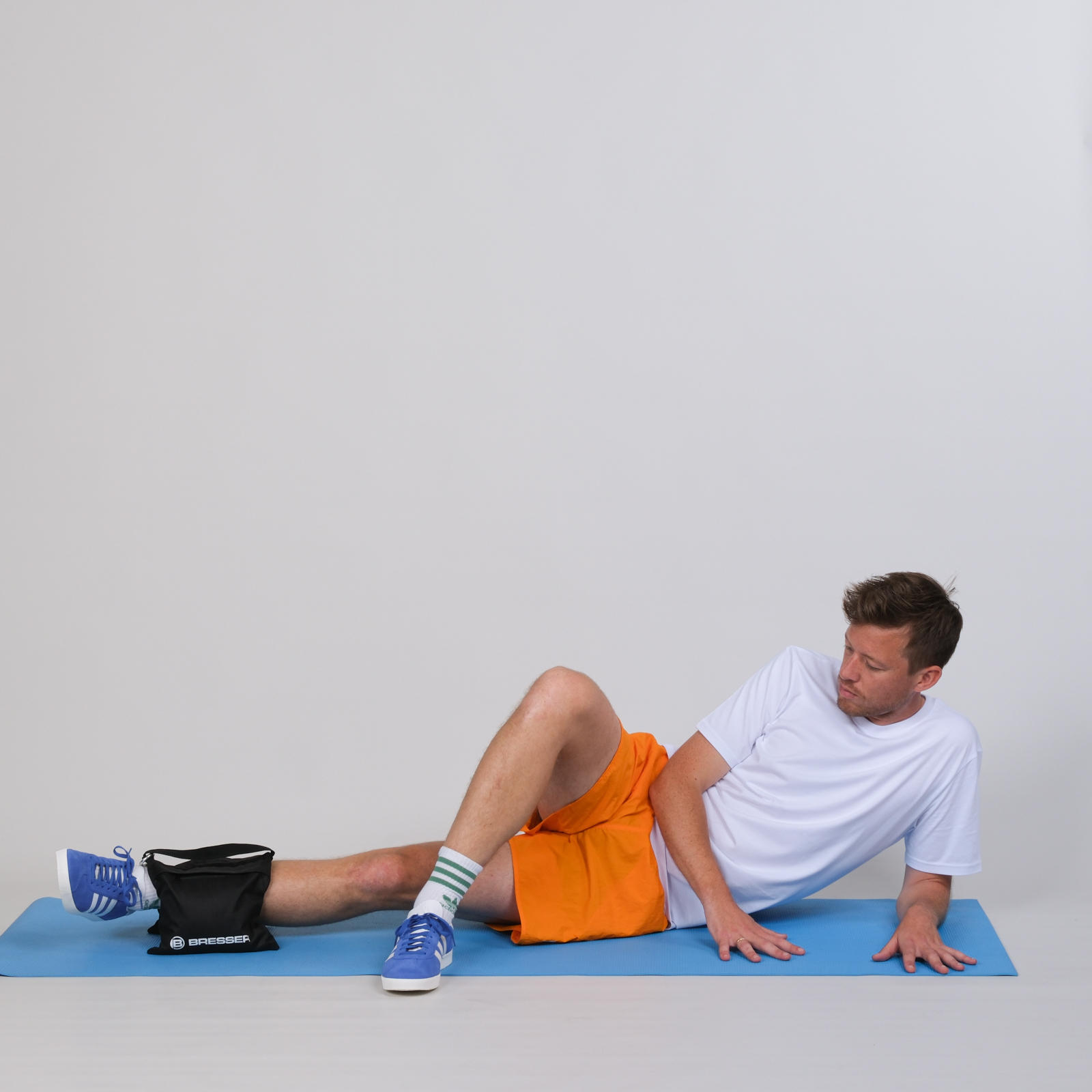
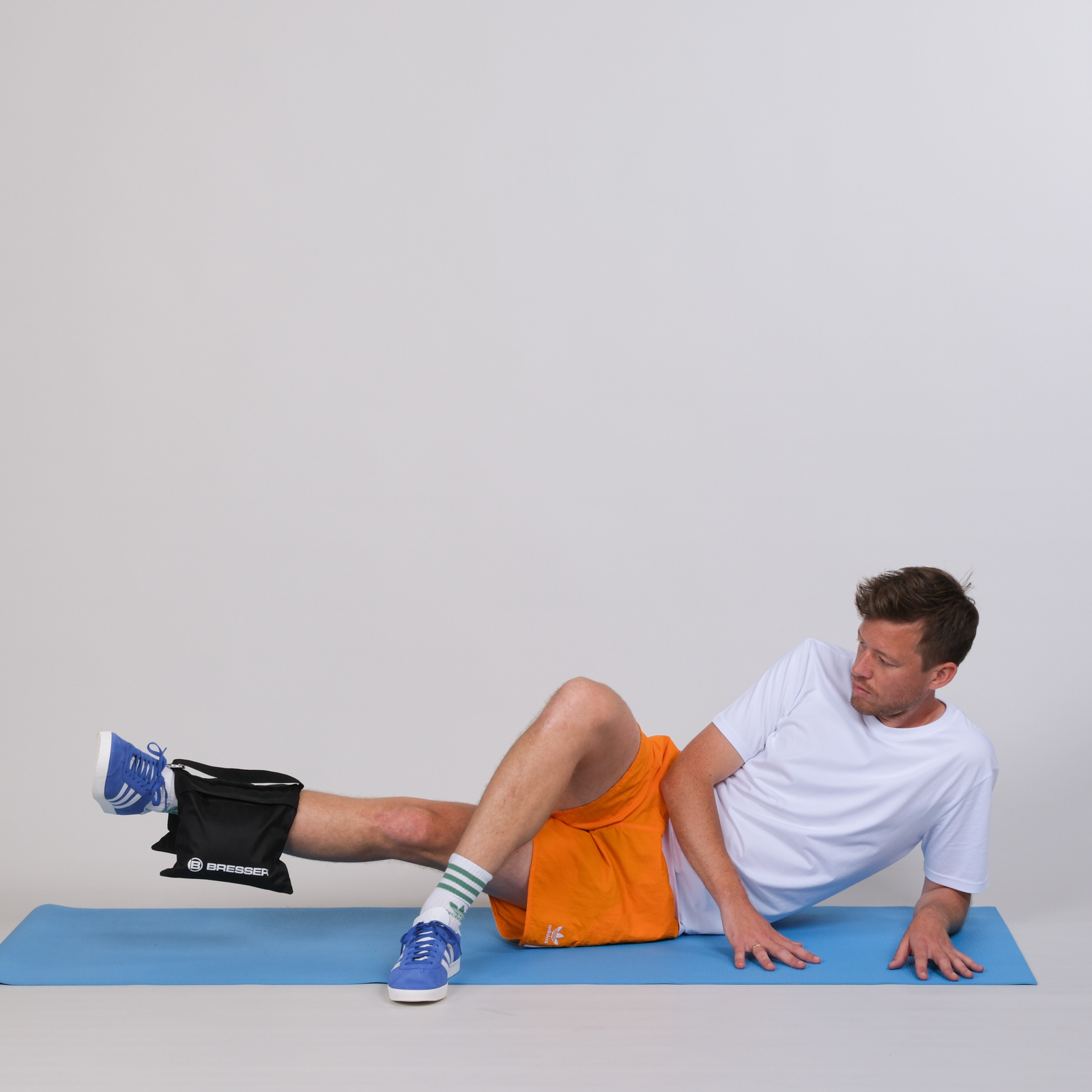
Lie on your side. Bend your lower leg and straighten your upper leg. Fully extend your hip. Lift your upper leg toward the ceiling, with your heel pointing upward. You can increase the resistance by placing a sandbag or similar object around your ankle.
Lie on your side. Extend your lower leg. Keep your upper leg slightly bent, with your foot in front of your lower leg. Lift your lower leg straight up toward the ceiling. You can increase the resistance by placing a sandbag or similar weight around your ankle.
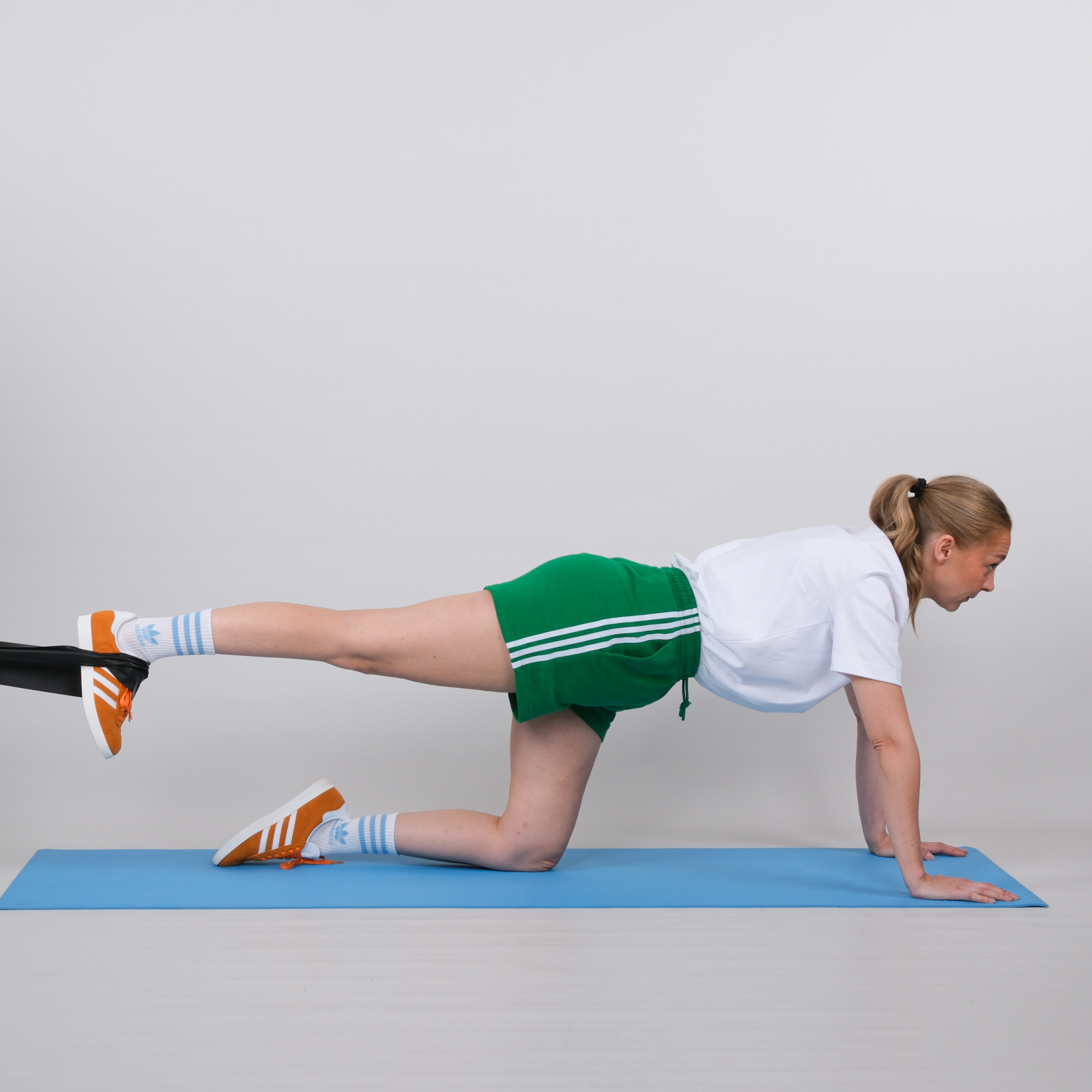
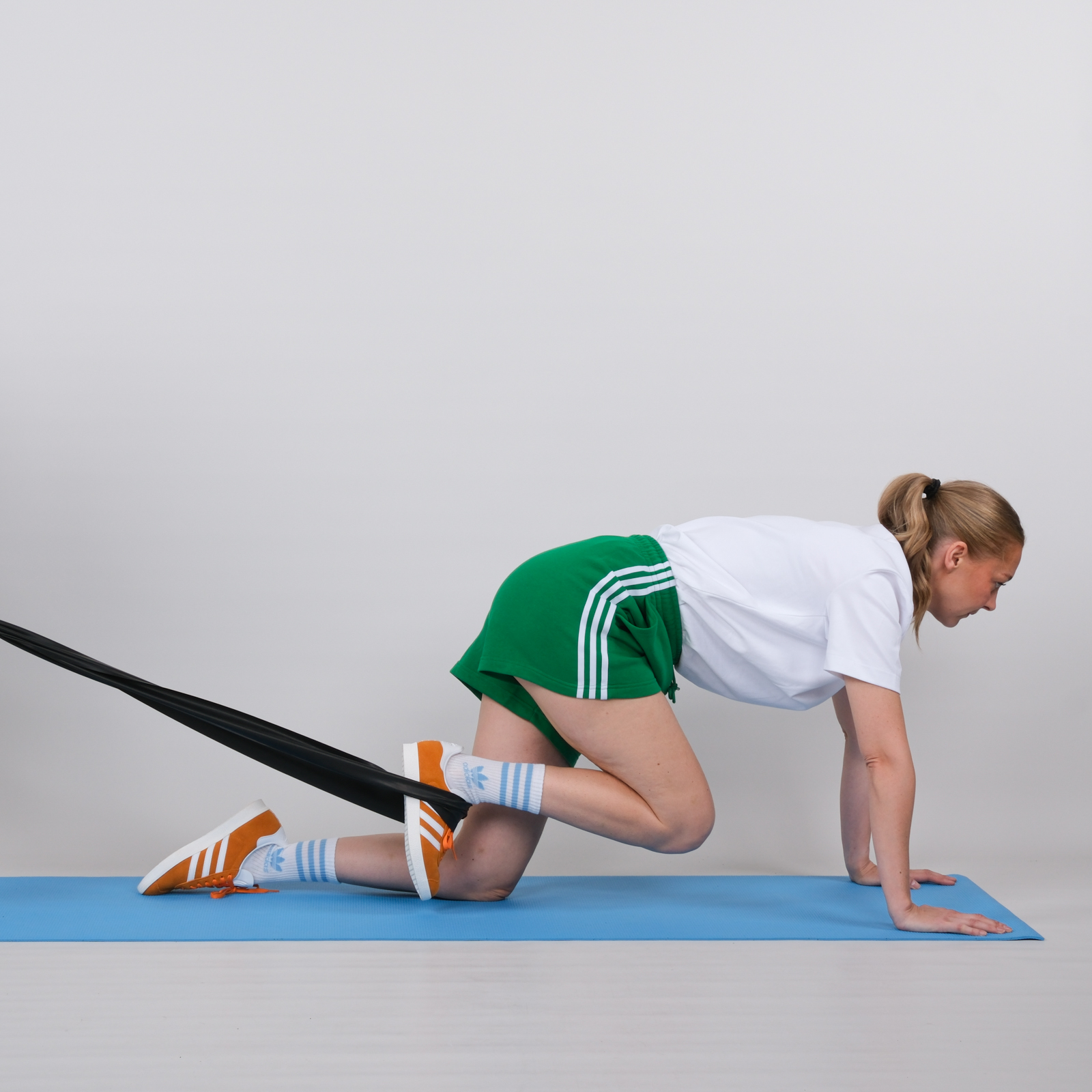
Attach an exercise band to a sturdy chair leg. Get down on all fours with your head facing away from the band. Loop the exercise band around one foot (the instep). Lift the leg with the band attached and pull your knee forwards so that the band tightens. Slowly bring your leg back.
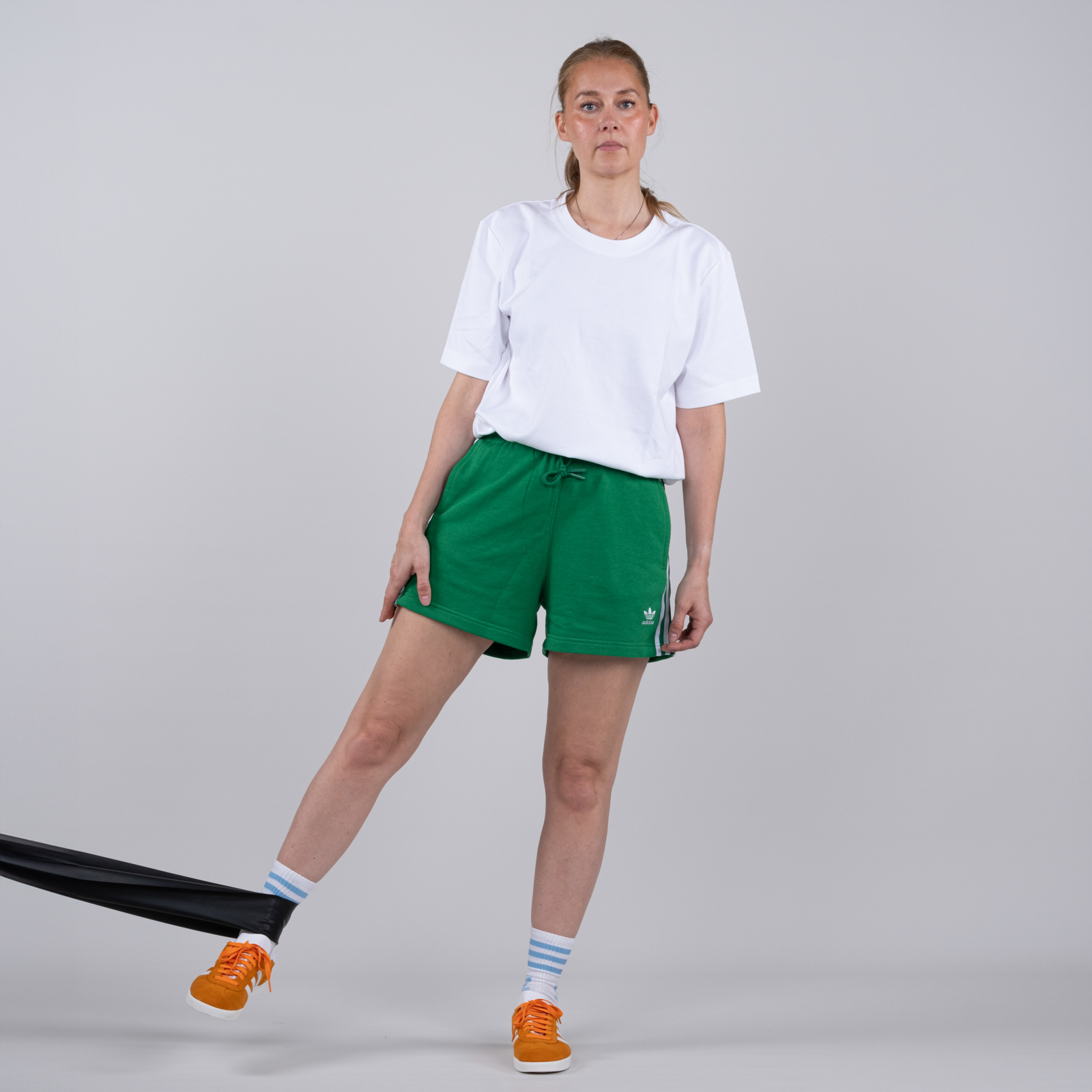
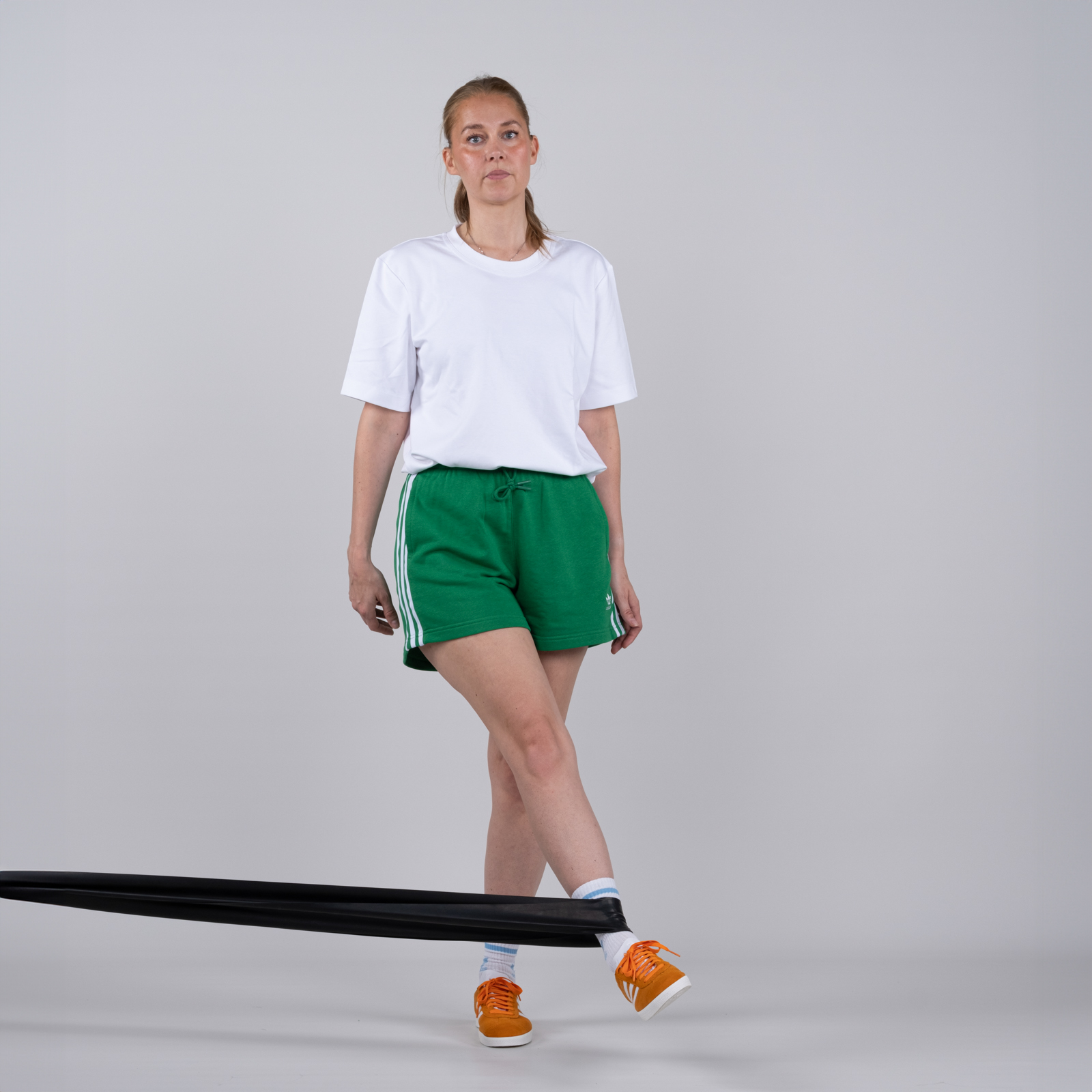
Attach an exercise band 10 cm above floor level. Stand with your side facing the exercise band, with the working leg closest to the band. Place the band around the working leg. Position the band between the knee and the ankle (the lower the position, the greater the resistance). Slowly move the leg to the side (in front of the supporting leg) so that the band tightens. Hold the tension for a few seconds and slowly return the leg to the starting position.
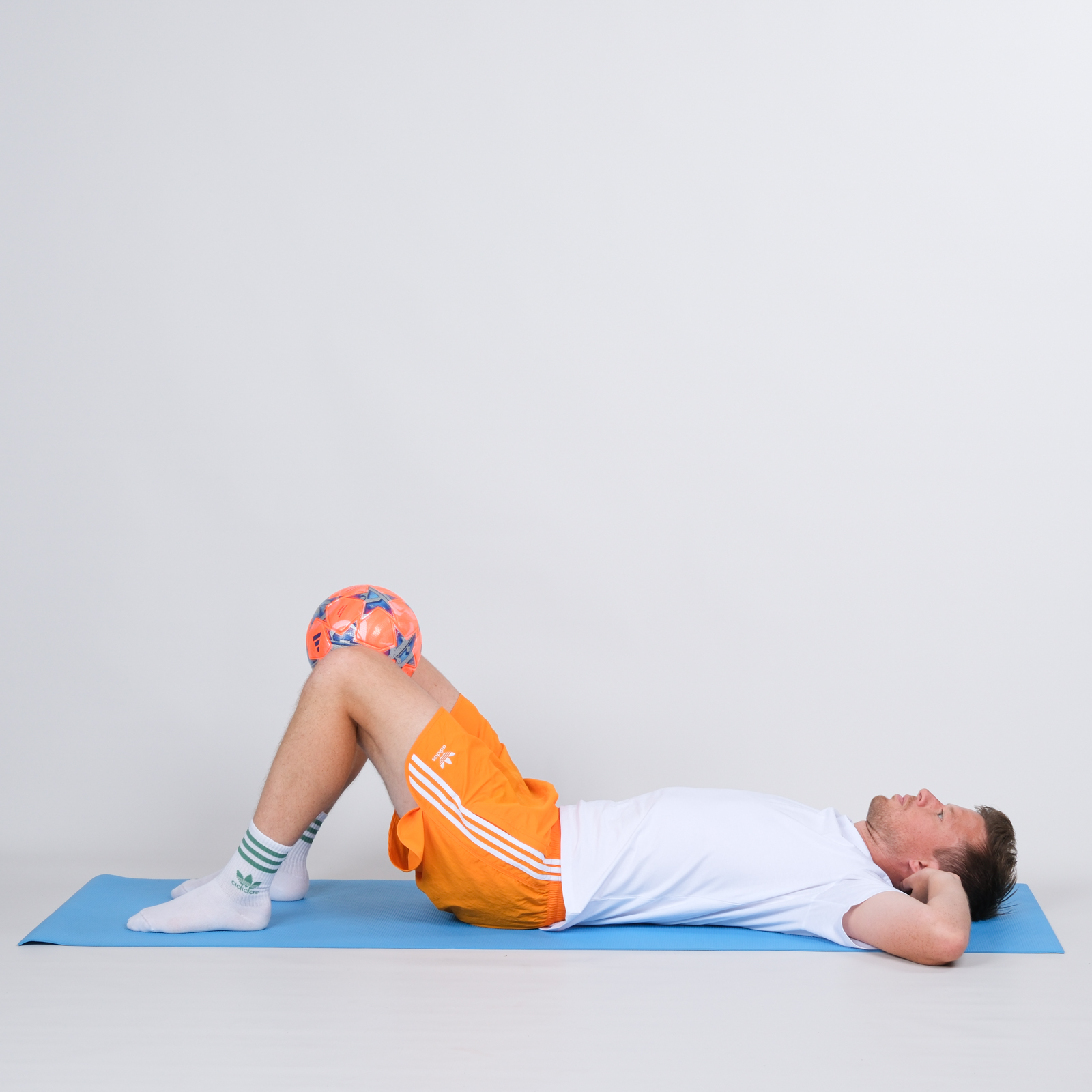
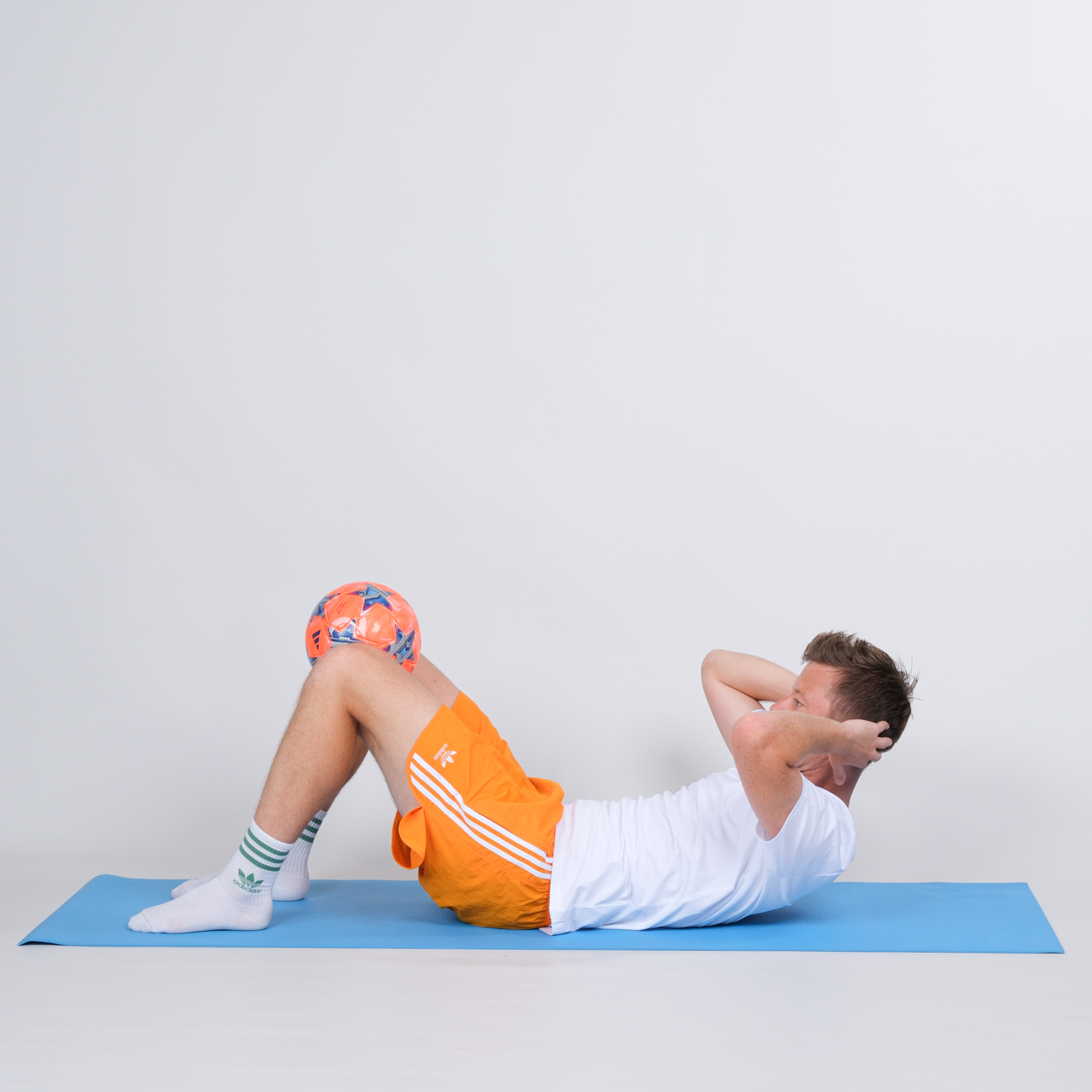
Lie on your back with your knees bent and the ball between your knees. Squeeze the ball with your knees. Lift your head and shoulders 15 cm off the floor and hold the position for a few seconds before slowly lowering your head and shoulders again.
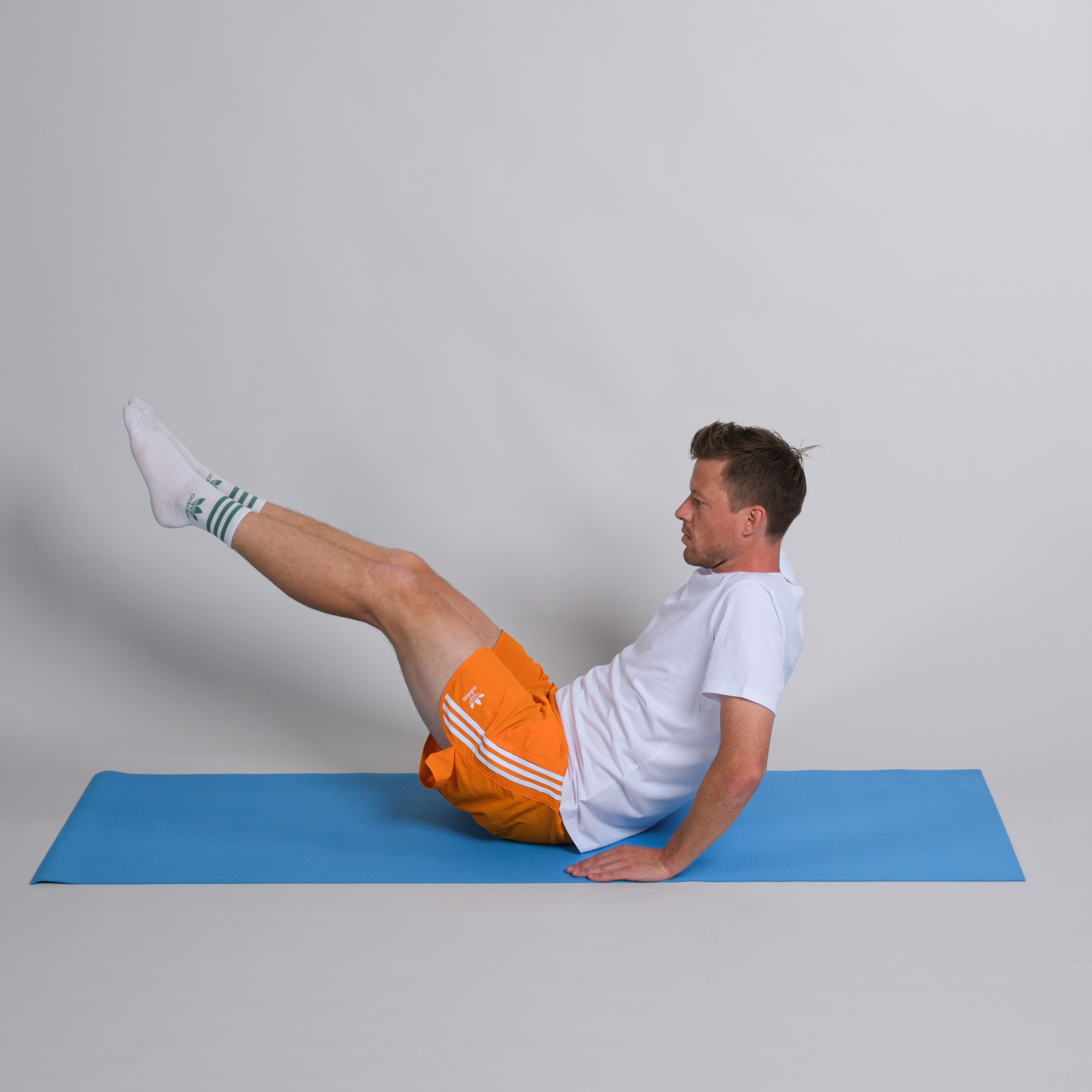
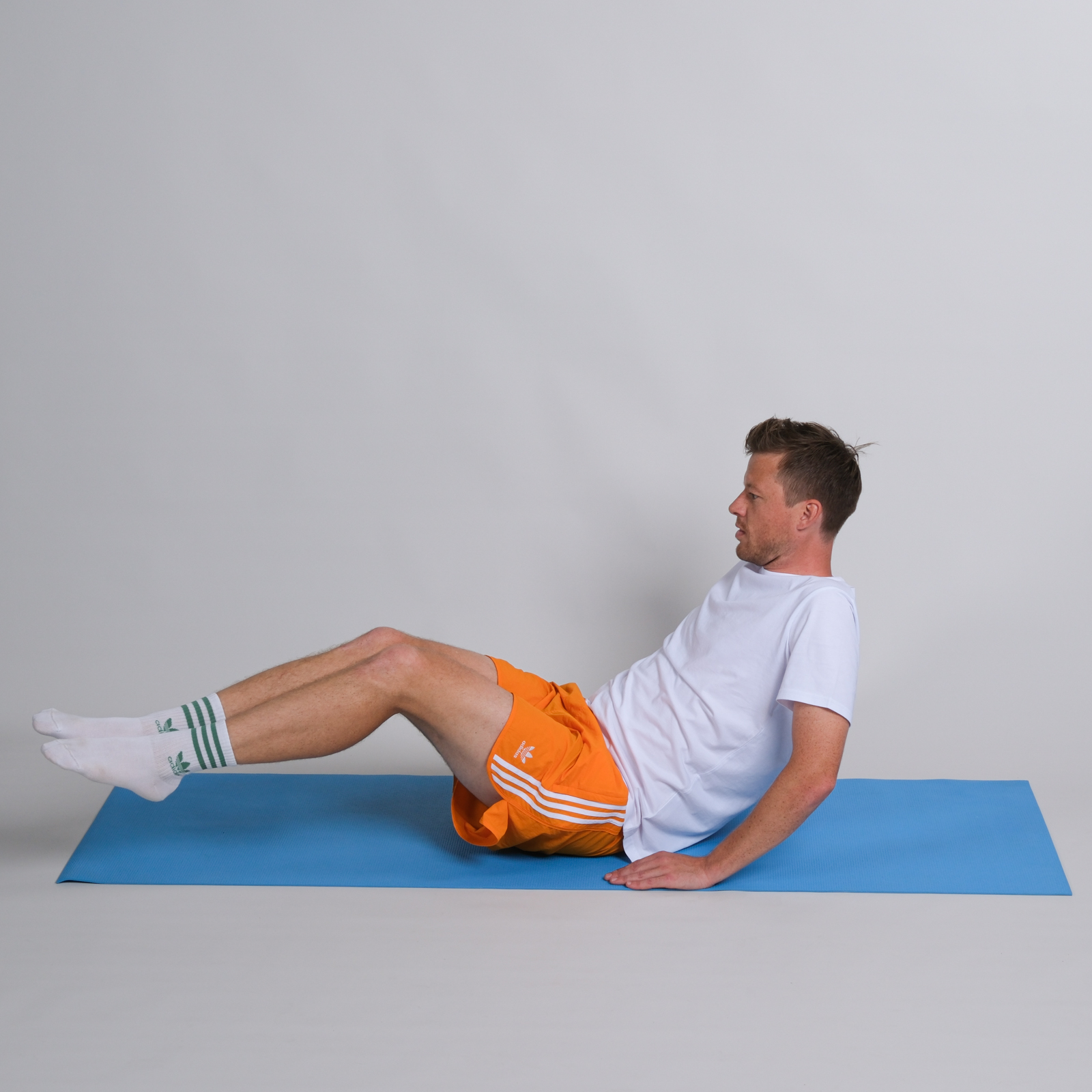
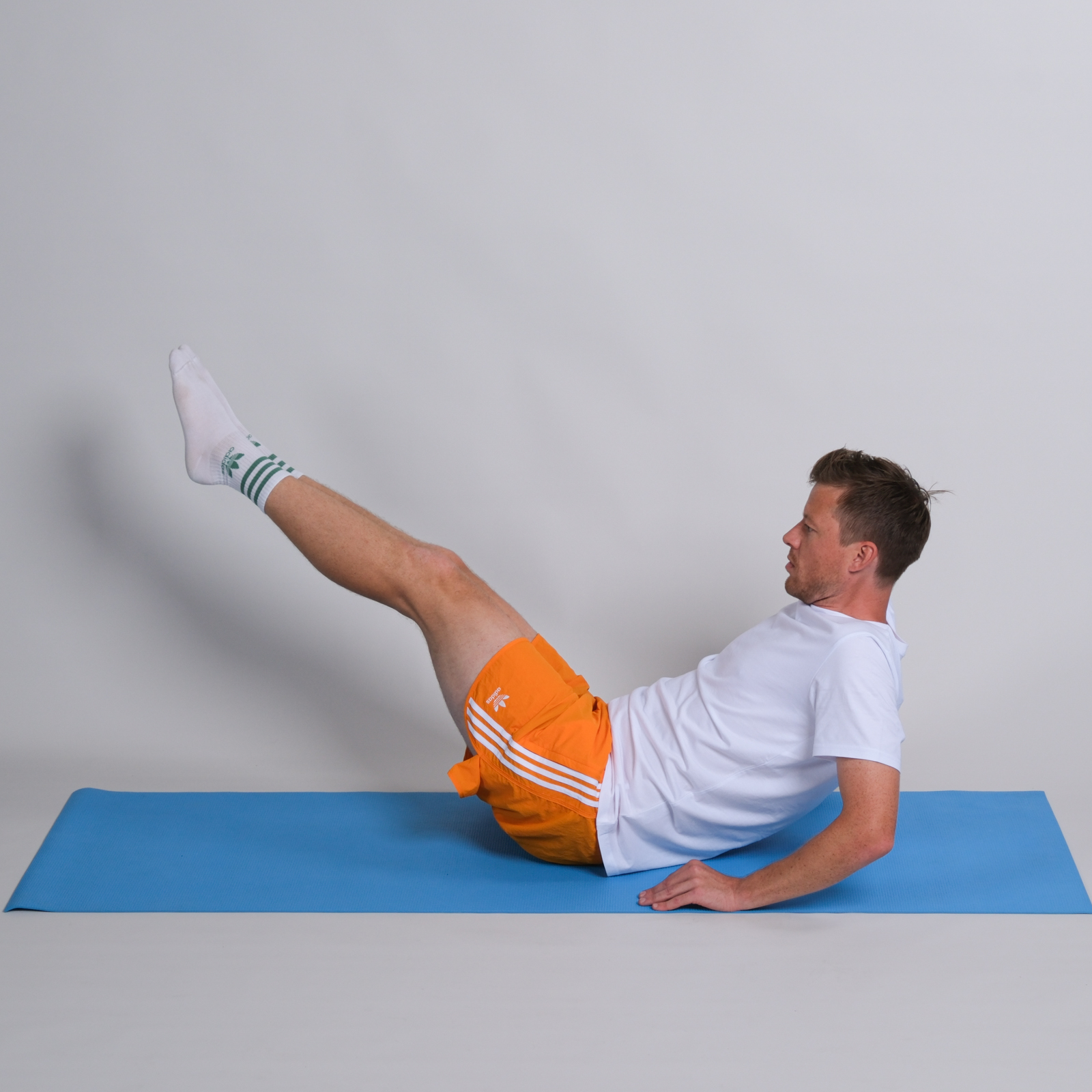
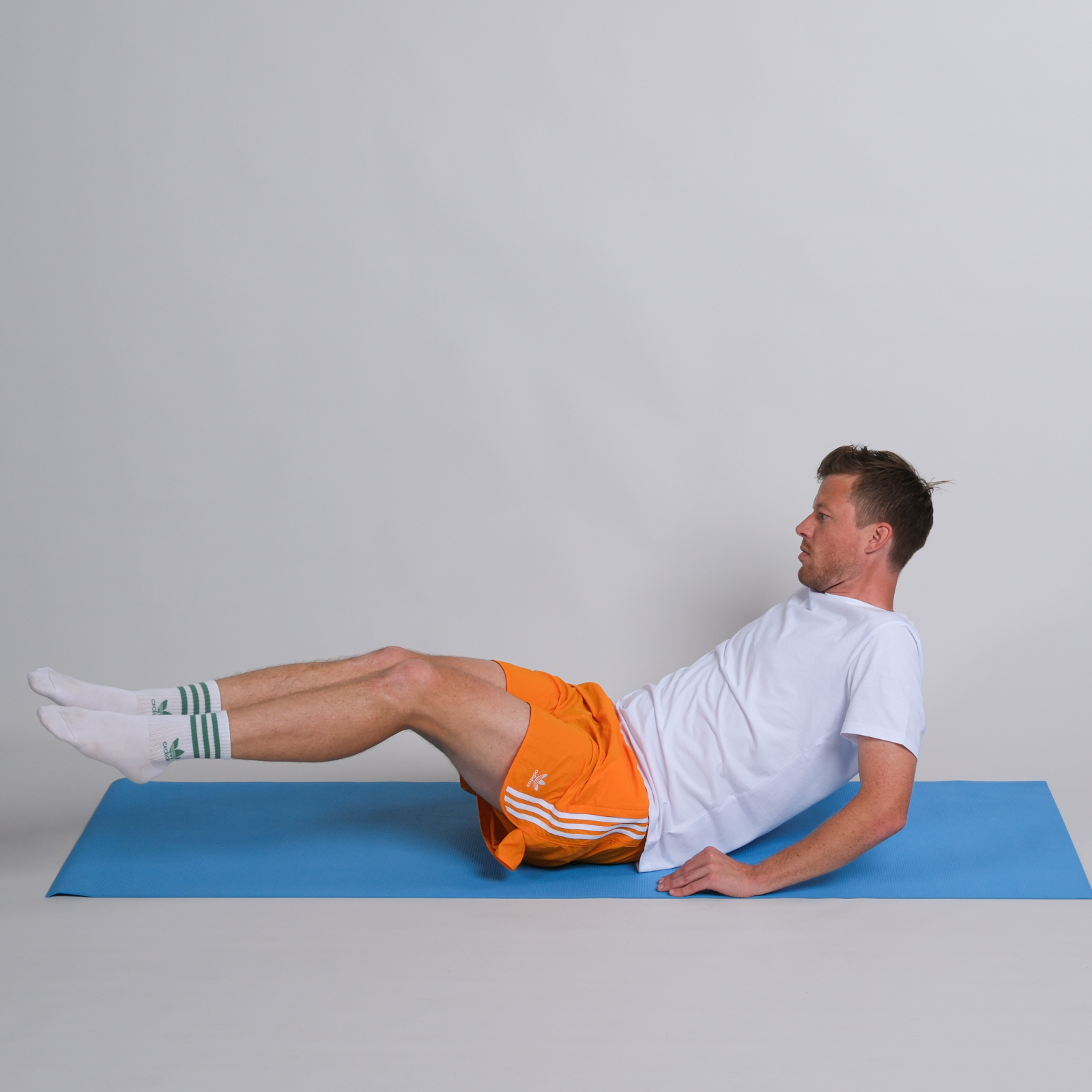
Lie on your back with your legs straight. Lift your legs straight up and, at the same time, lift your head, shoulders and back so that you are supported only by your pelvis. Place your hands on the floor for support. Move your straight legs in a circle: up, to the right, down, to the left, and so on. At some point, switch to moving in the opposite direction.
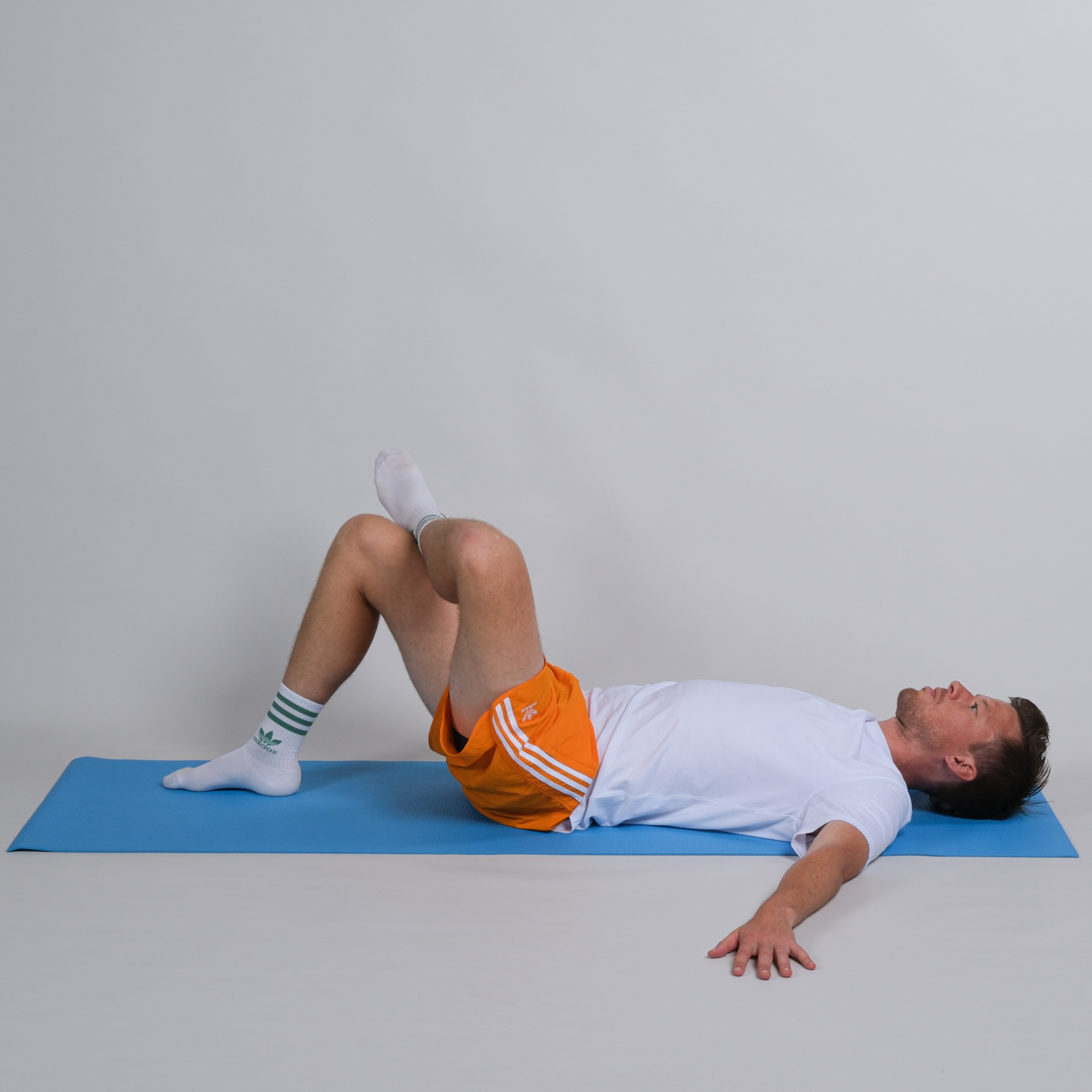
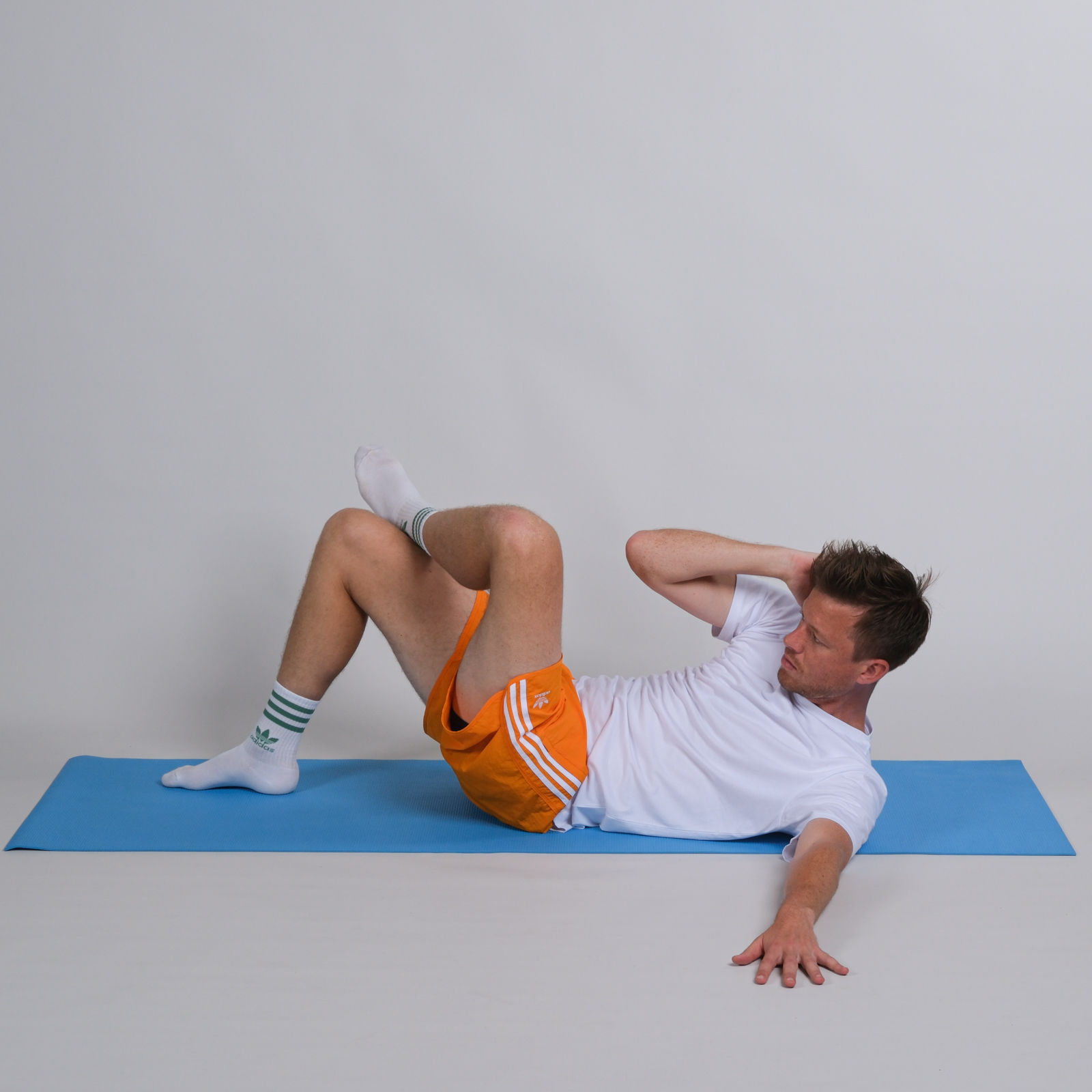
Lie on your back with your knees bent. Cross your legs so that the outside of your right ankle rests against your right thigh just below the knee. Place your right arm across your stomach and rest your left hand on the back of your neck. Extend your right arm out from your body and over your head, whilst lifting your head and left shoulder so that your left elbow touches your right knee, then return to the starting position.
Do the same exercise on the other side.
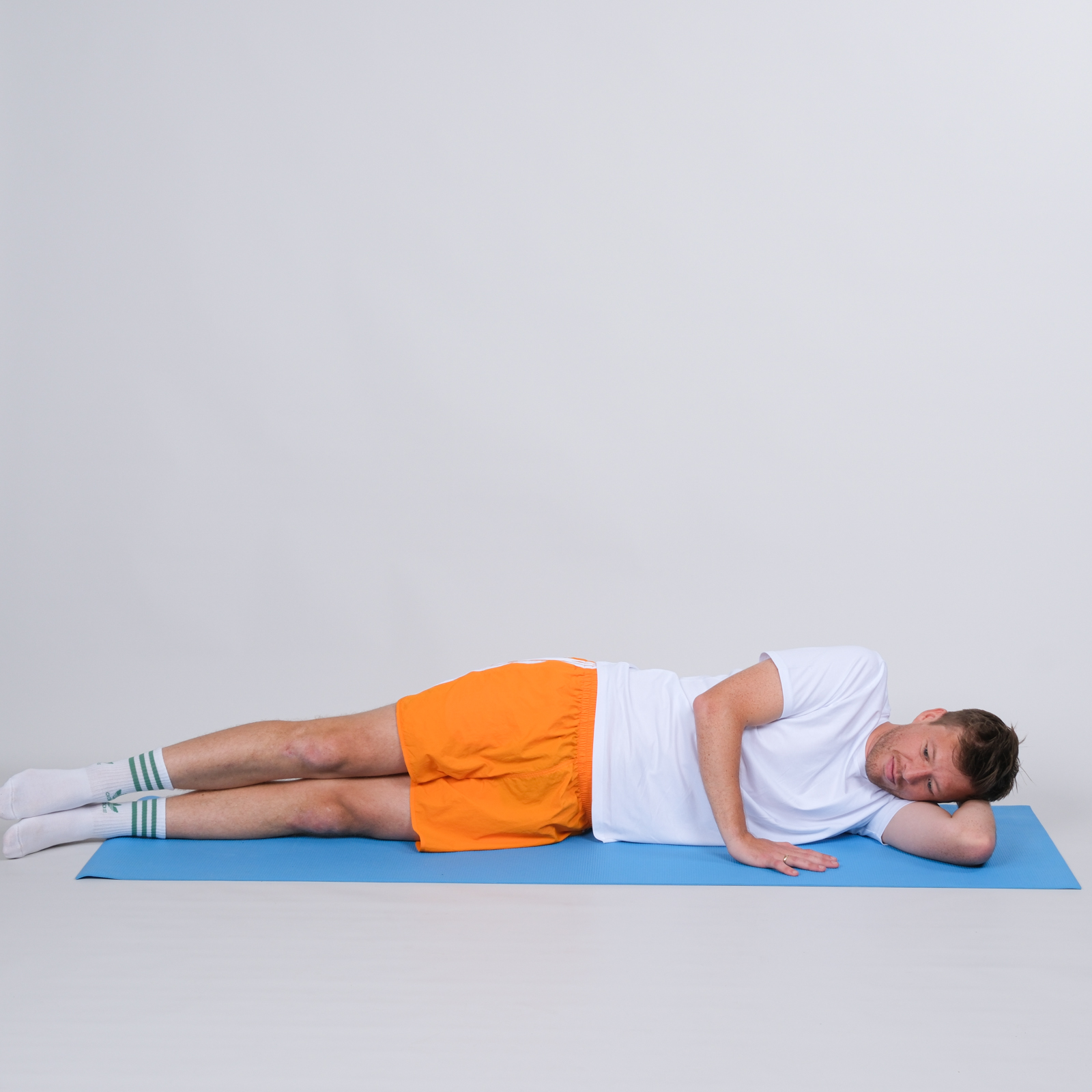
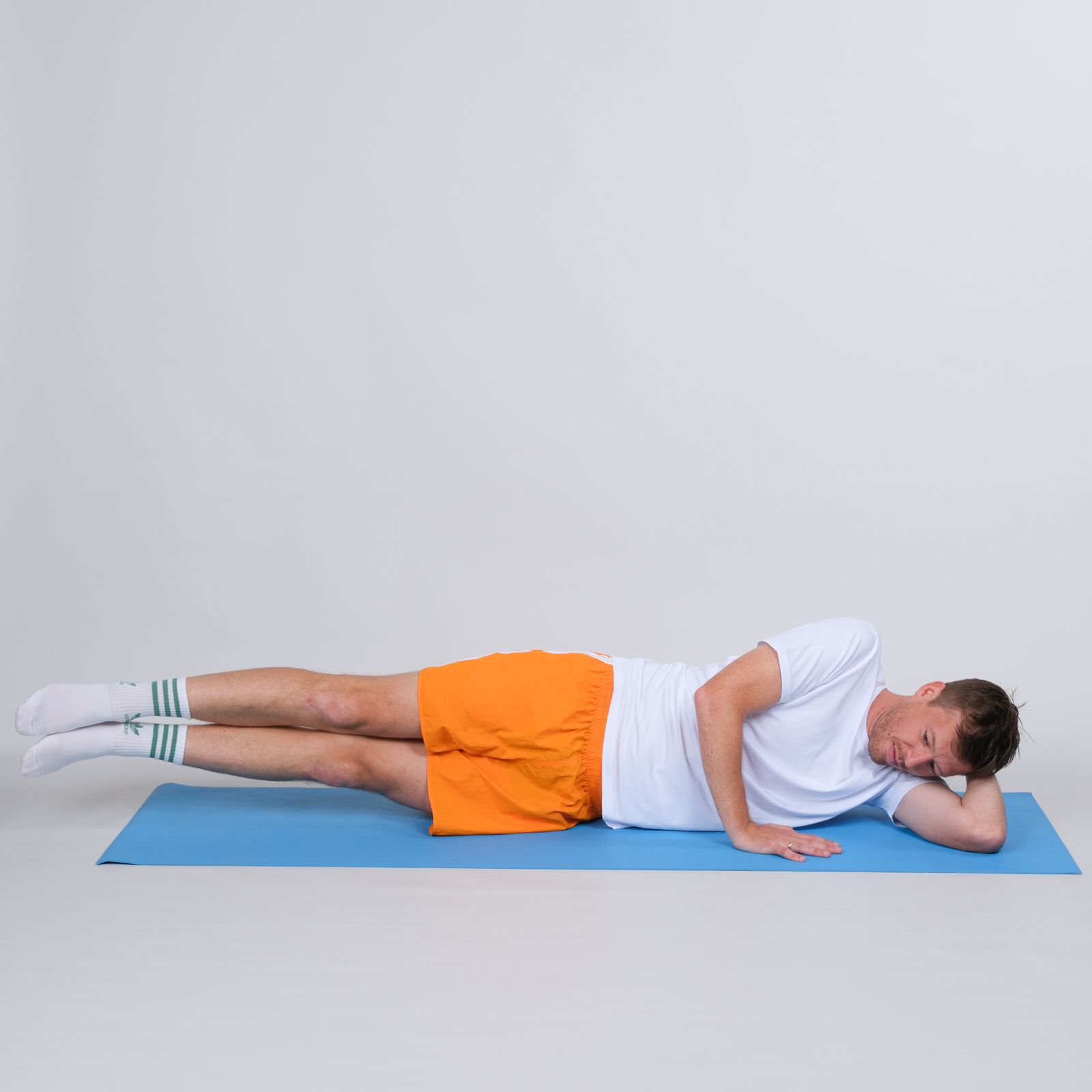
Lie on your side with your lower arm above your head. Your arm rests on your elbow and your hand supports your head. Raise both legs together as high as possible towards the ceiling. Hold the position for a few seconds and slowly lower your legs back to the starting position.