Rehabilitation starts with the exercises in Step 1. When the exercises can be performed without pain, rehabilitation starts on the next step.
How often and for how long should I train? Training frequency and duration are individual. Start with about 3 repetitions per workout. exercise and at least 3 times a week. Slowly increase the number of repetitions and load without exceeding the pain threshold
Do I have to do the whole program every time? No, you can divide the exercises into different days. The most important thing is to exercise regularly and gradually increase the intensity
The time in minutes indicates the time distribution between stretching, balance and strength if you train for one hour. Whether you train for one hour or 10 minutes, for example, is adapted to your starting point – and can be increased over time.
Condition
Unlimited: Cycling, swimming, light running
Stretching
15 minutes of each training session
Sit on a chair. Place your left hand on the right side of your head, whilst your right hand holds onto the seat of the chair. Gently pull your head to the left and resist with your right arm, so that you feel a gradual stretch in the right side of your neck. Move your head in different directions (forward/backward) so that all the muscles around your neck are stretched. Hold the stretch for 20 seconds each time. Repeat the exercise on the opposite side.
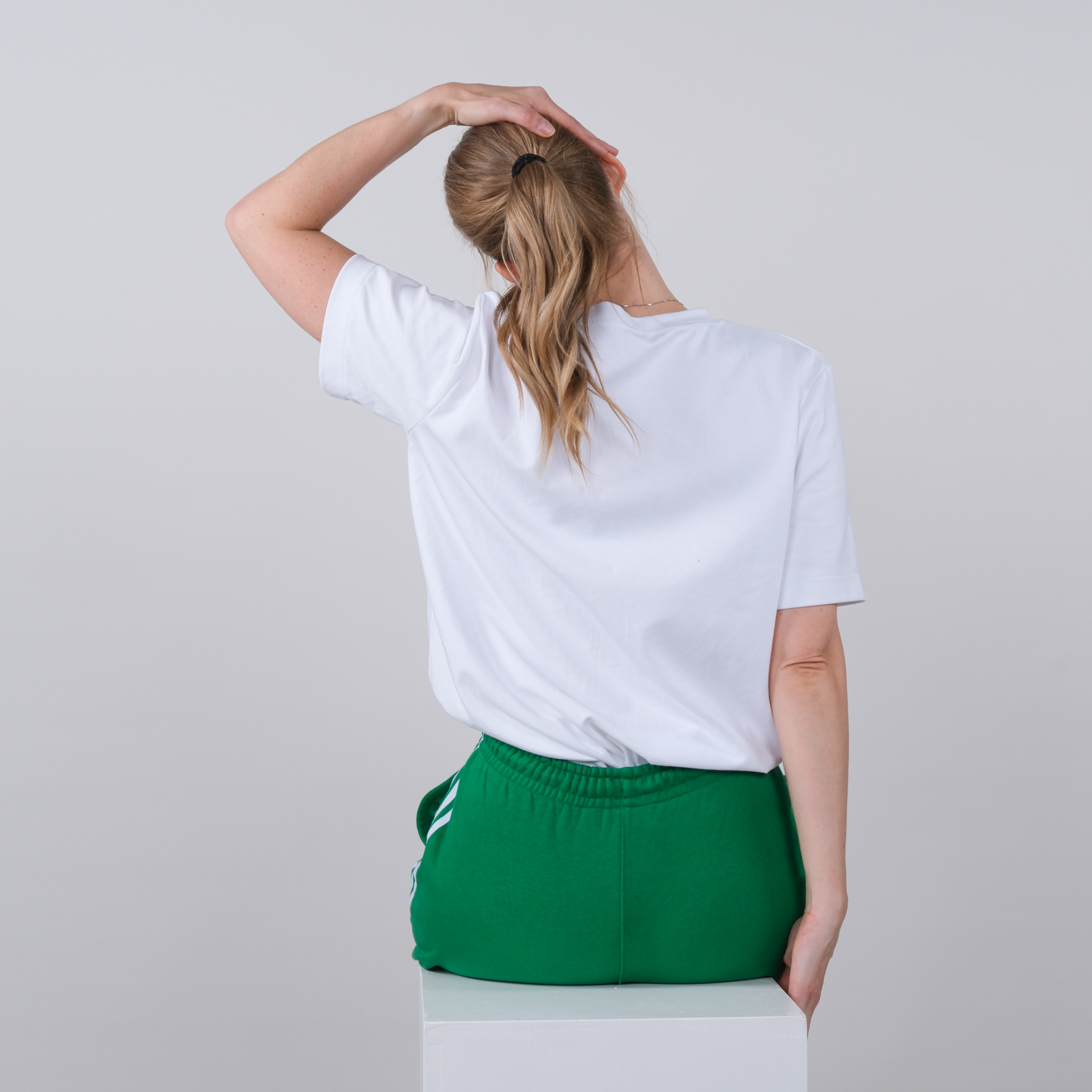
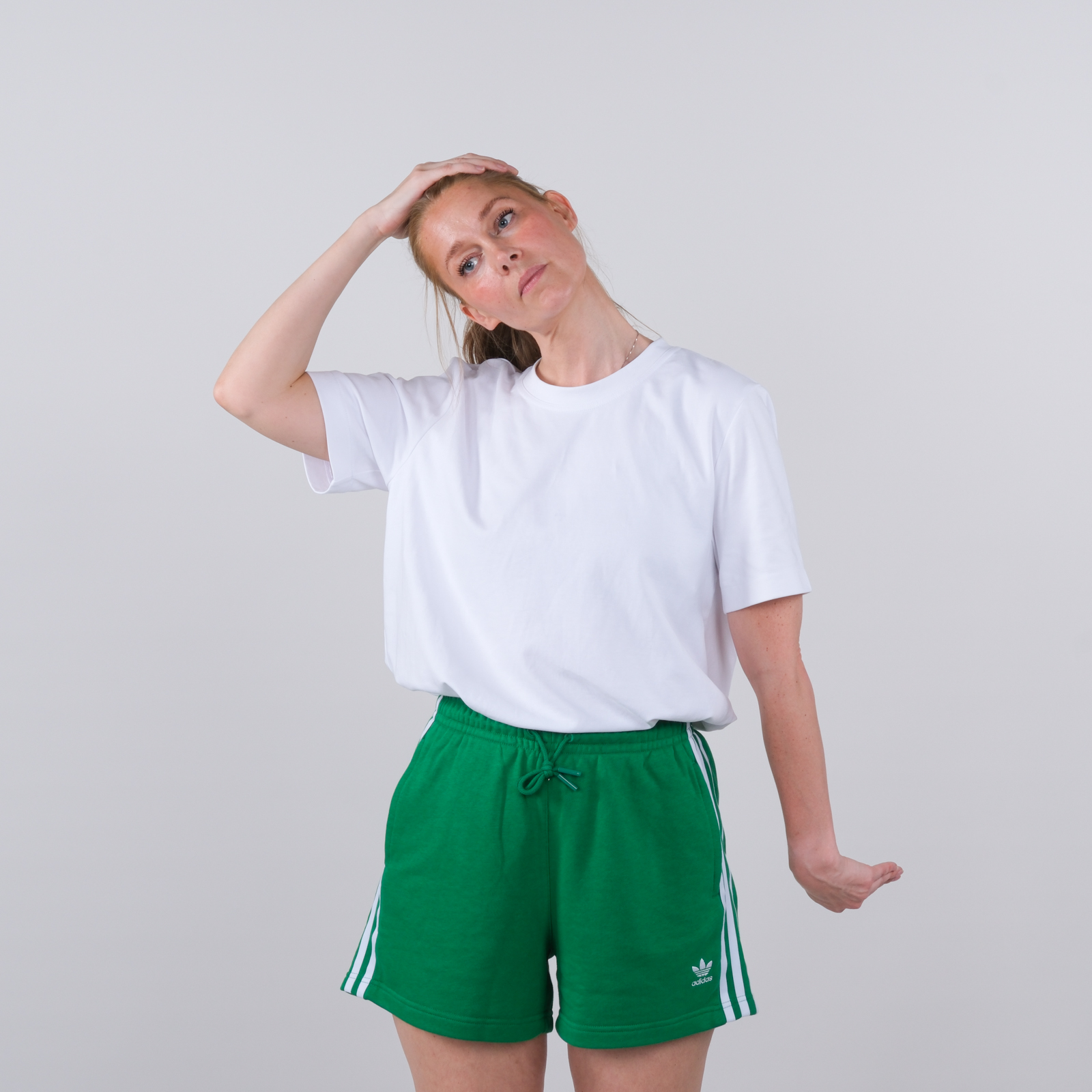
Keep your right arm stretched down alongside your body. Turn your hand inwards (so that your thumb is pointing backwards) and move your arm backwards and downwards. Tuck your chin in and tilt your head to the opposite side. Gently pull with your left hand at the back of your neck, so that you feel a gradual stretch in the muscles on the right side of your neck and shoulder. Hold the stretch for 20 seconds. Repeat the exercise on the other side.
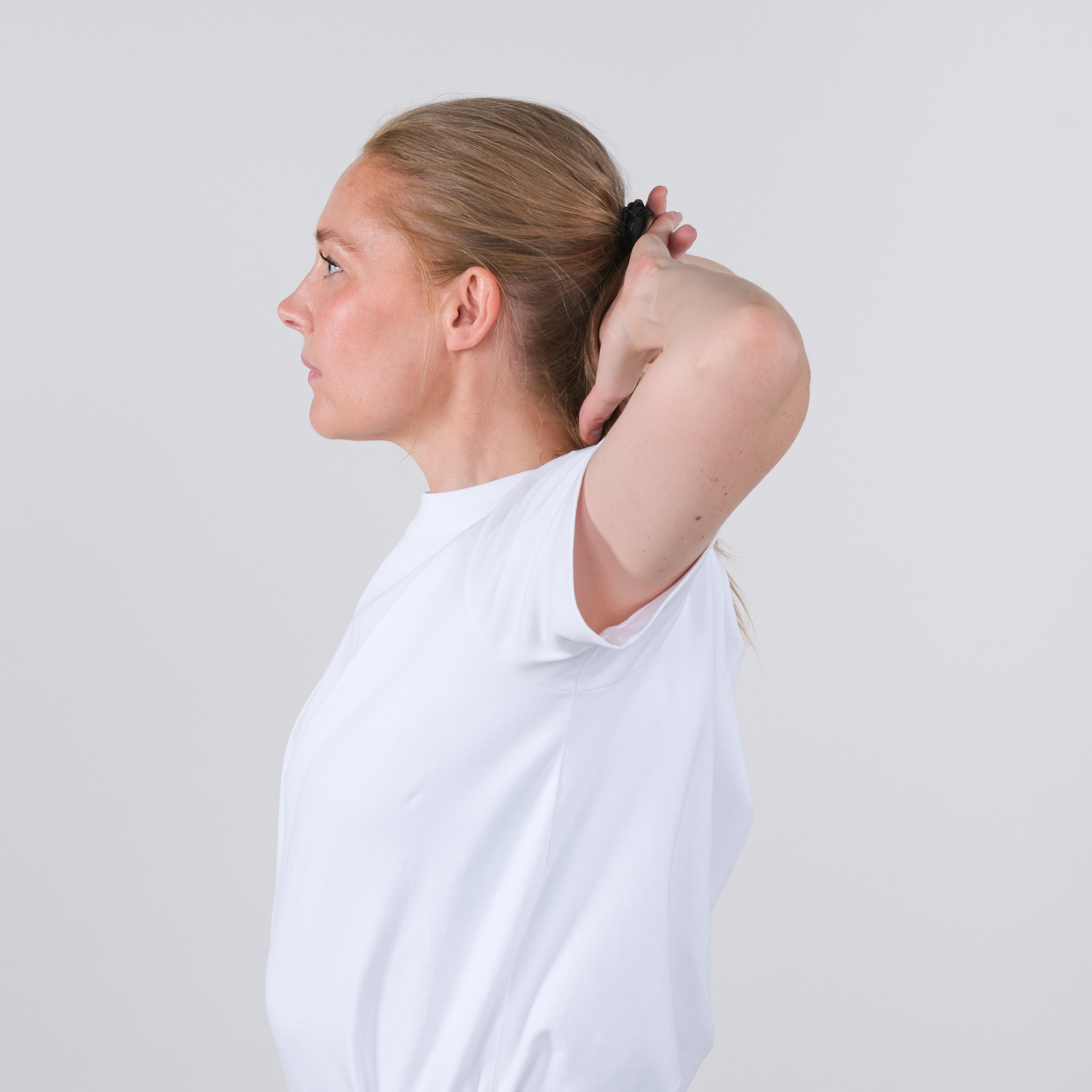
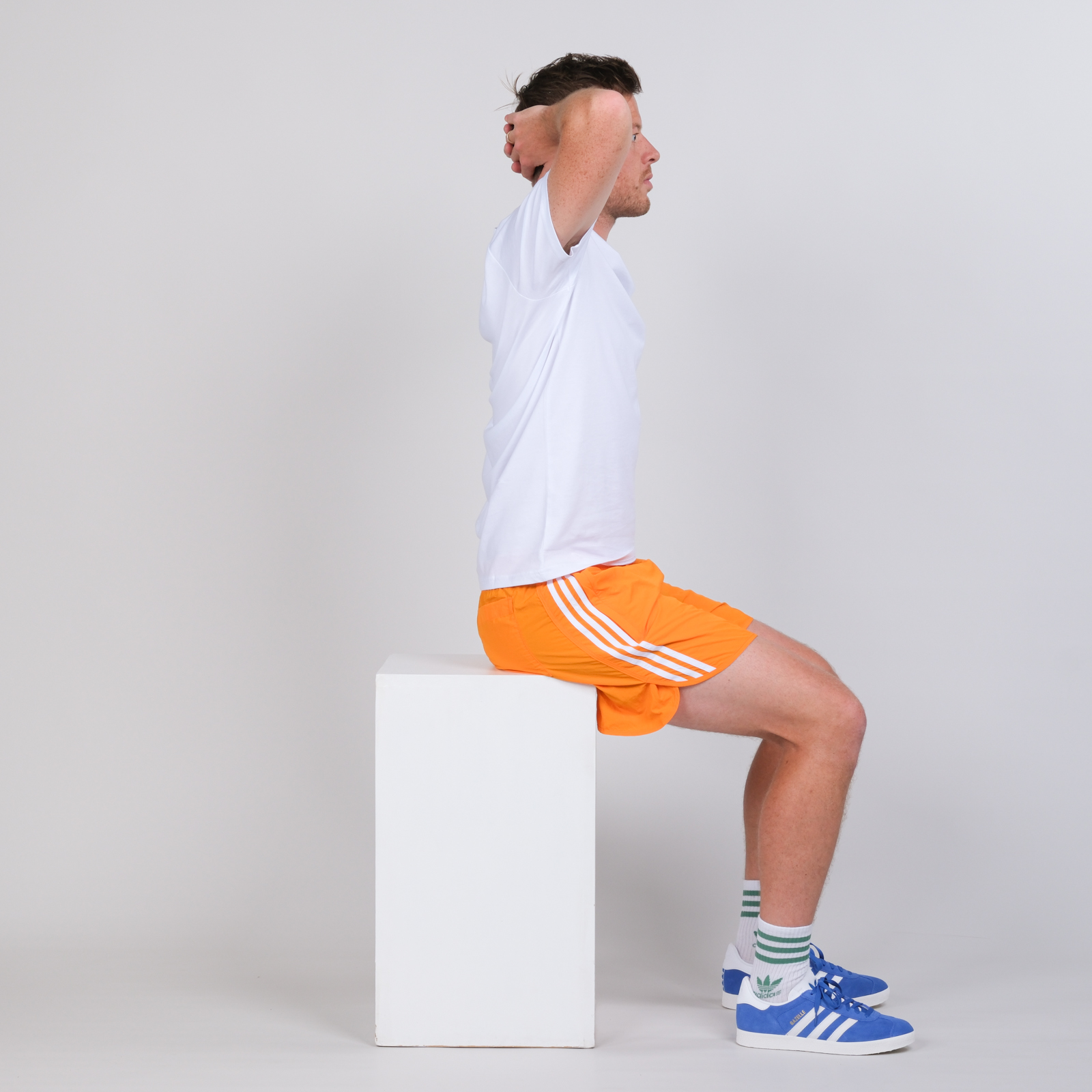
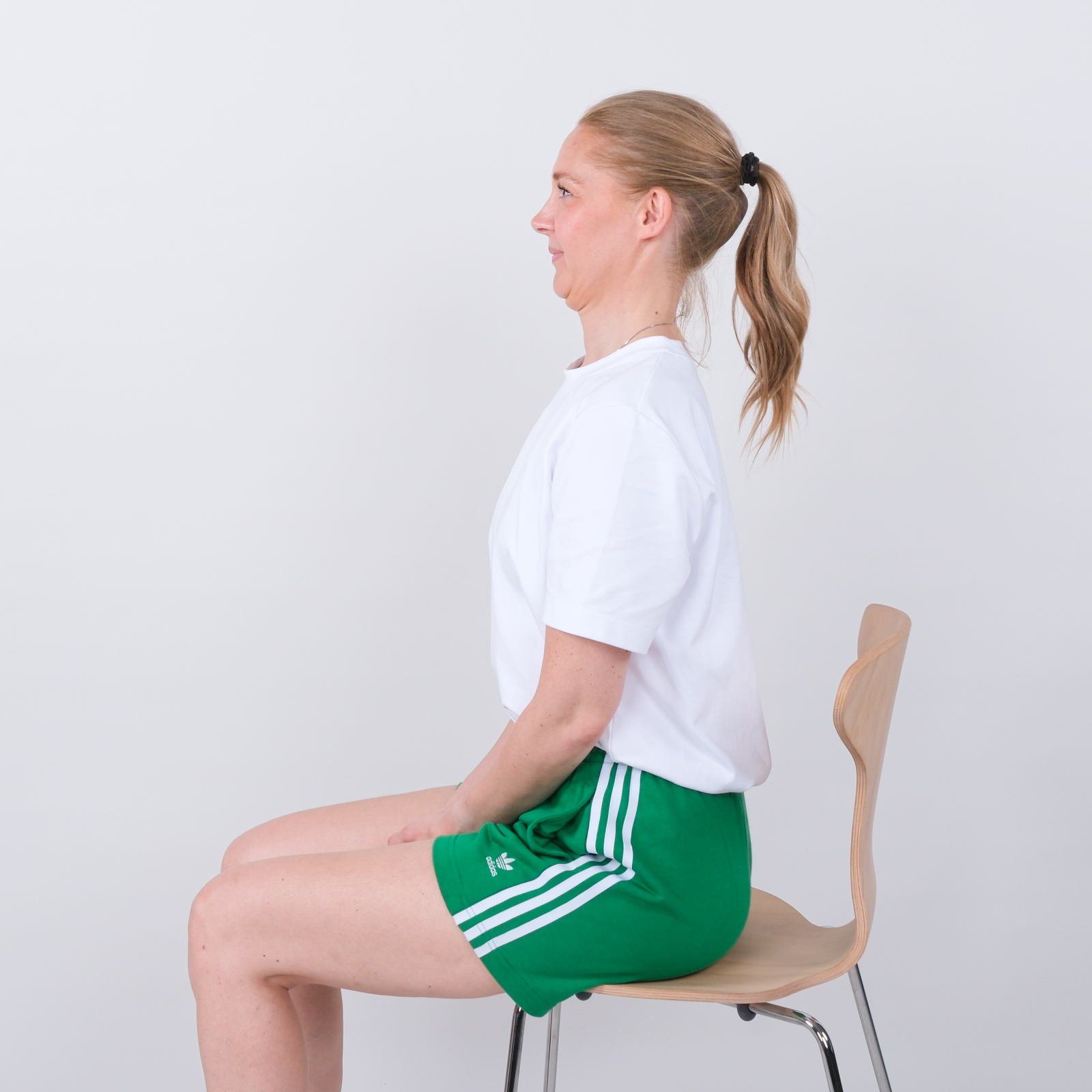
Sit on a chair. Place your hands behind your neck. Keep your chin level and press your neck against your hands. Hold the position for 5 seconds. Then bring your chin forward and hold the position for 5 seconds.
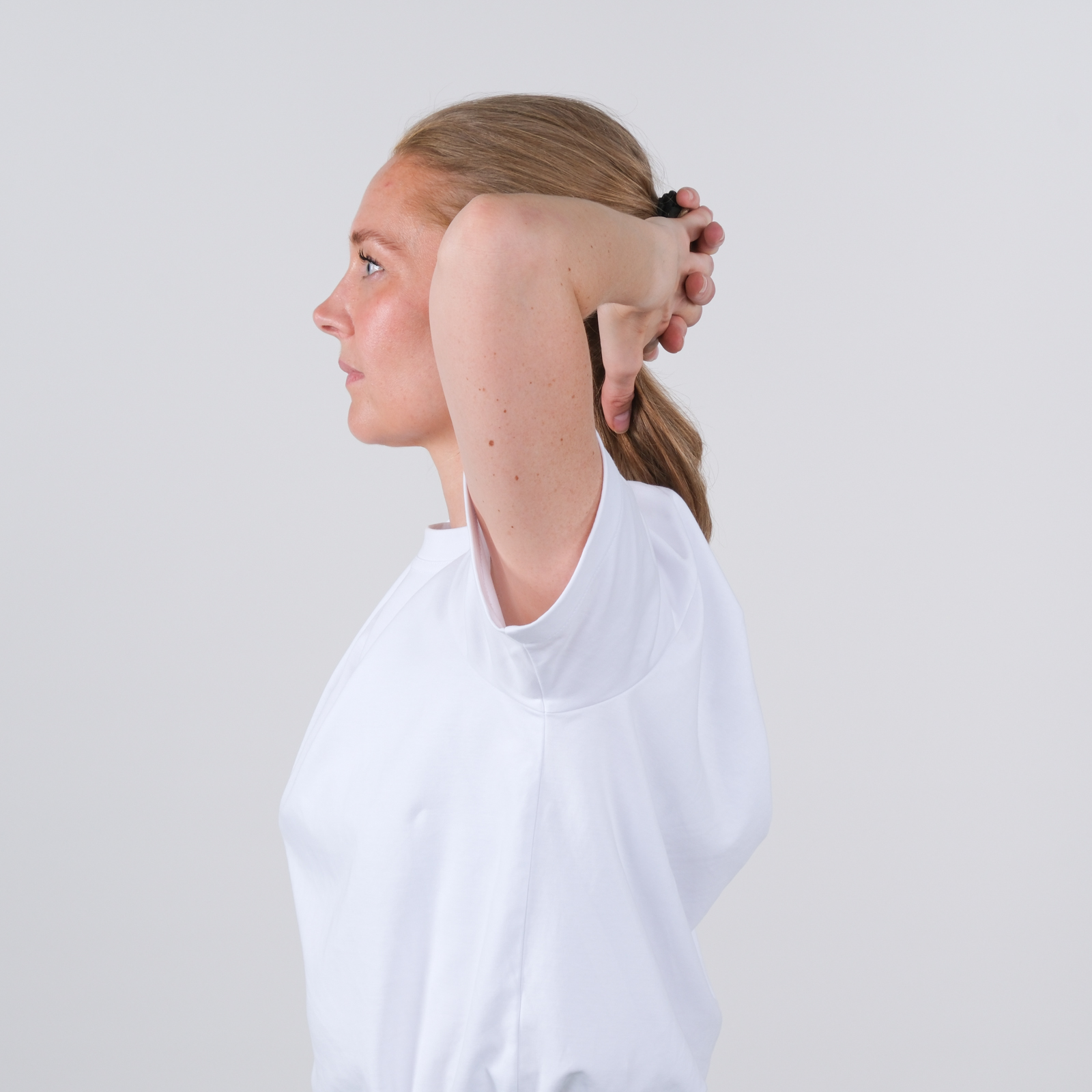
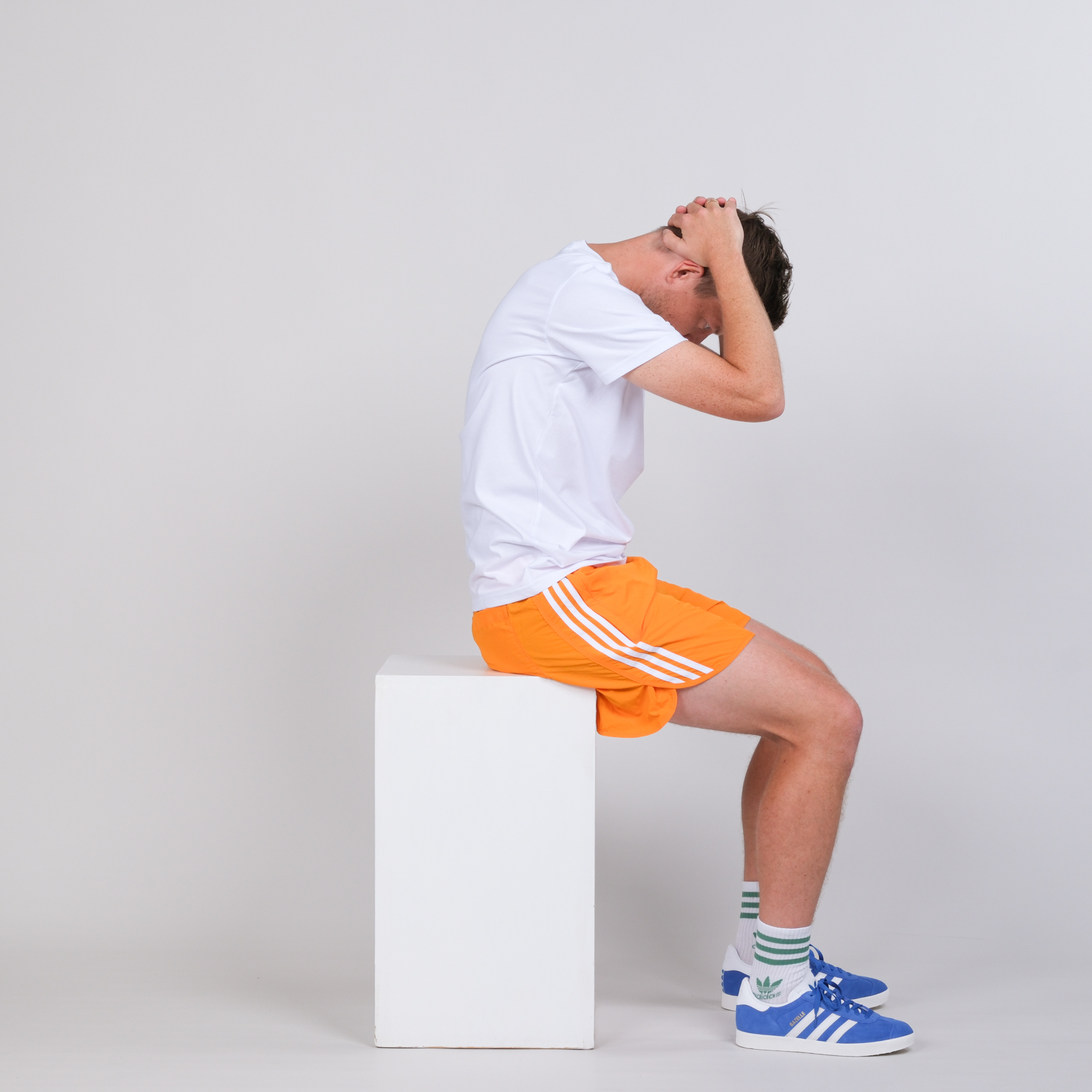
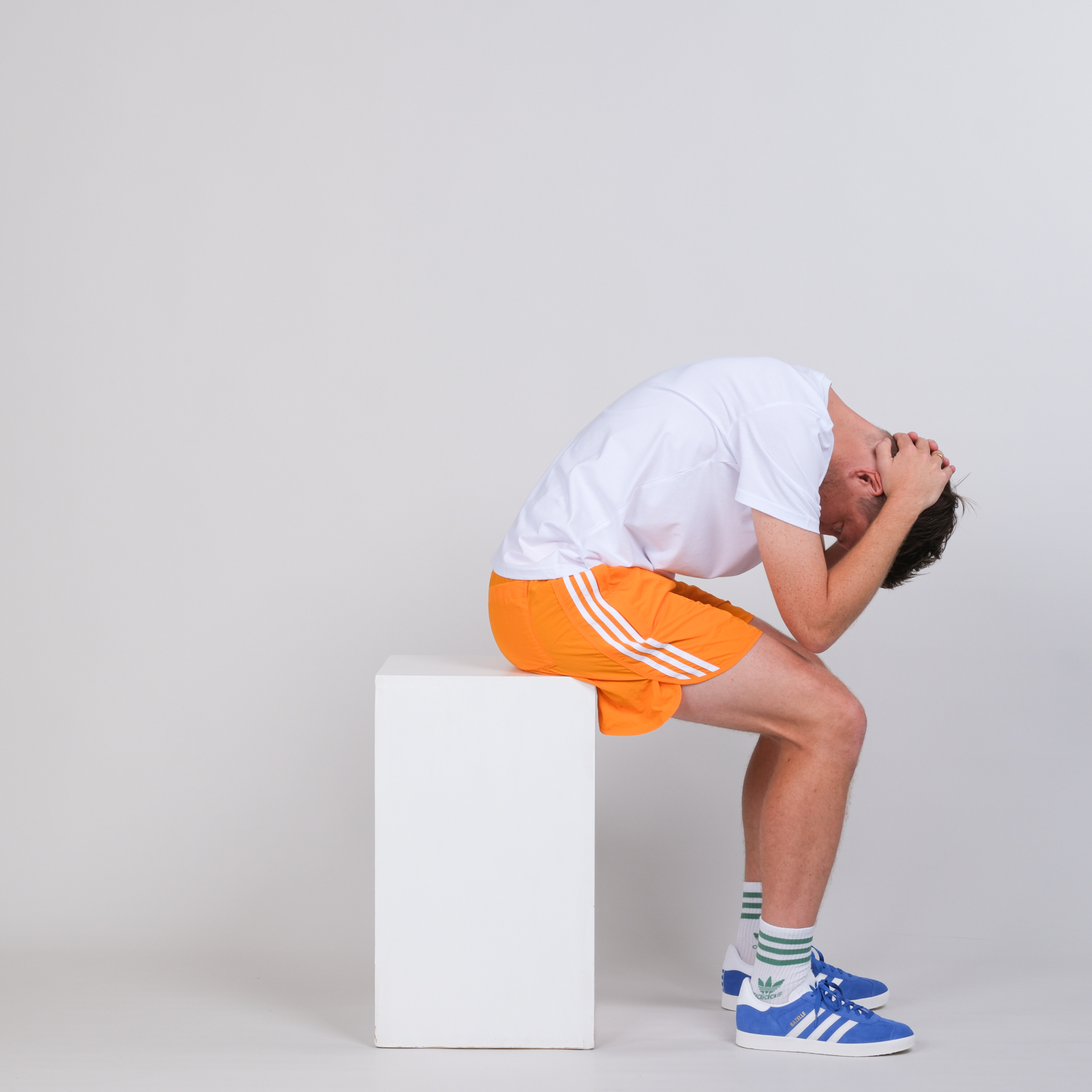
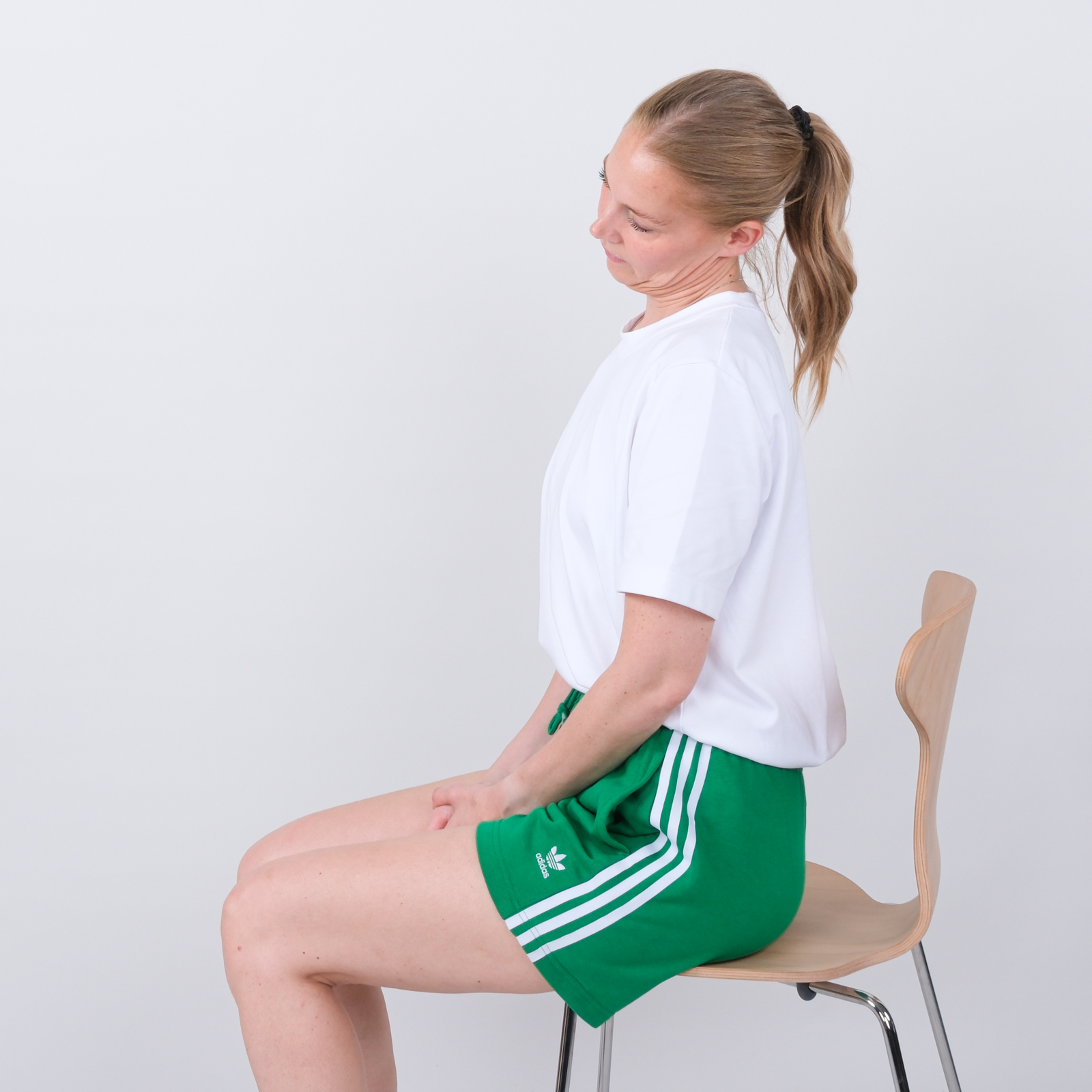
Interlace your fingers behind your neck. Bring your head down towards your chest by pressing with your hands. Hold the pressure for a few seconds. Then bend forwards until your elbows touch your thighs if possible. Hold the starting position for a few seconds. Straighten your back and return to the starting position.
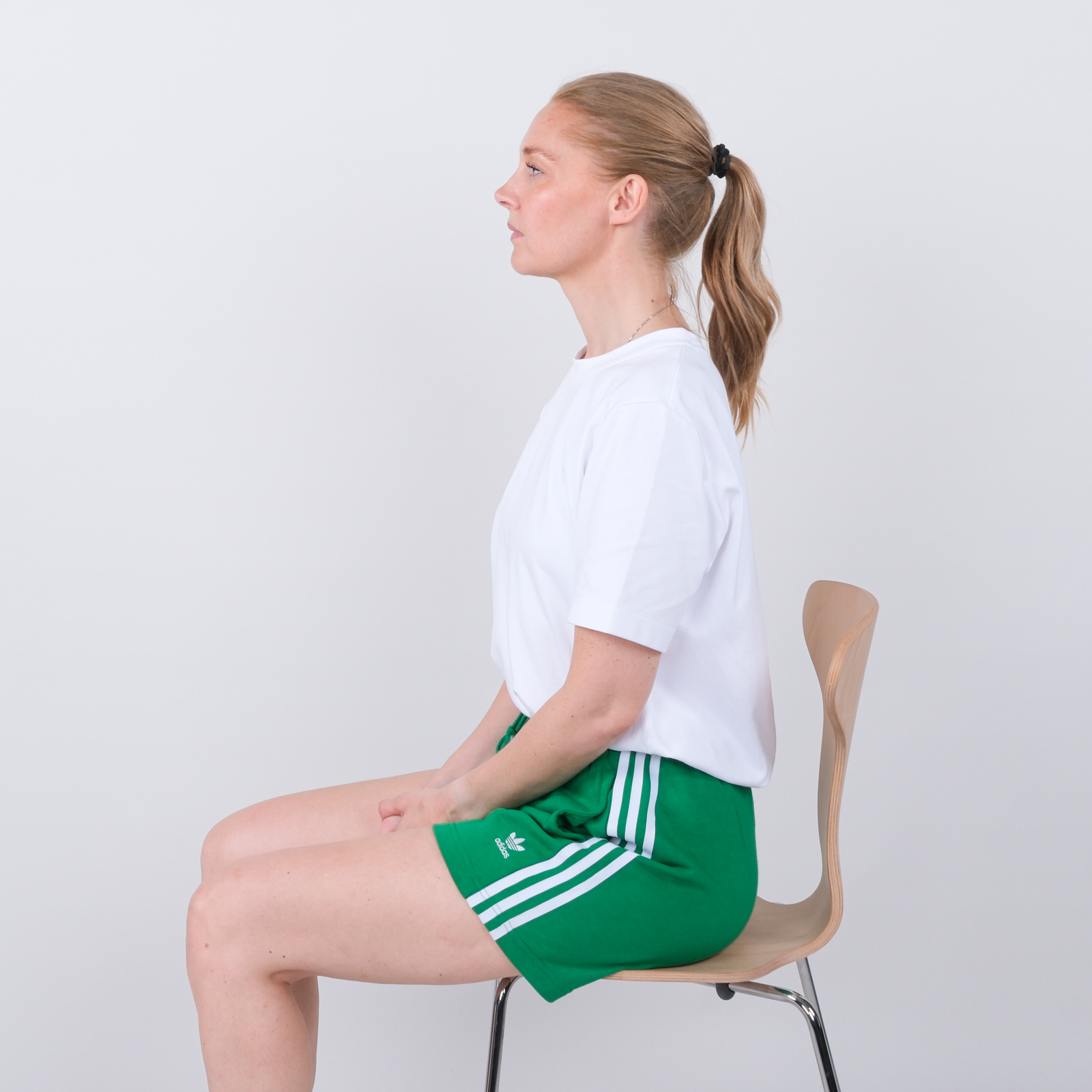
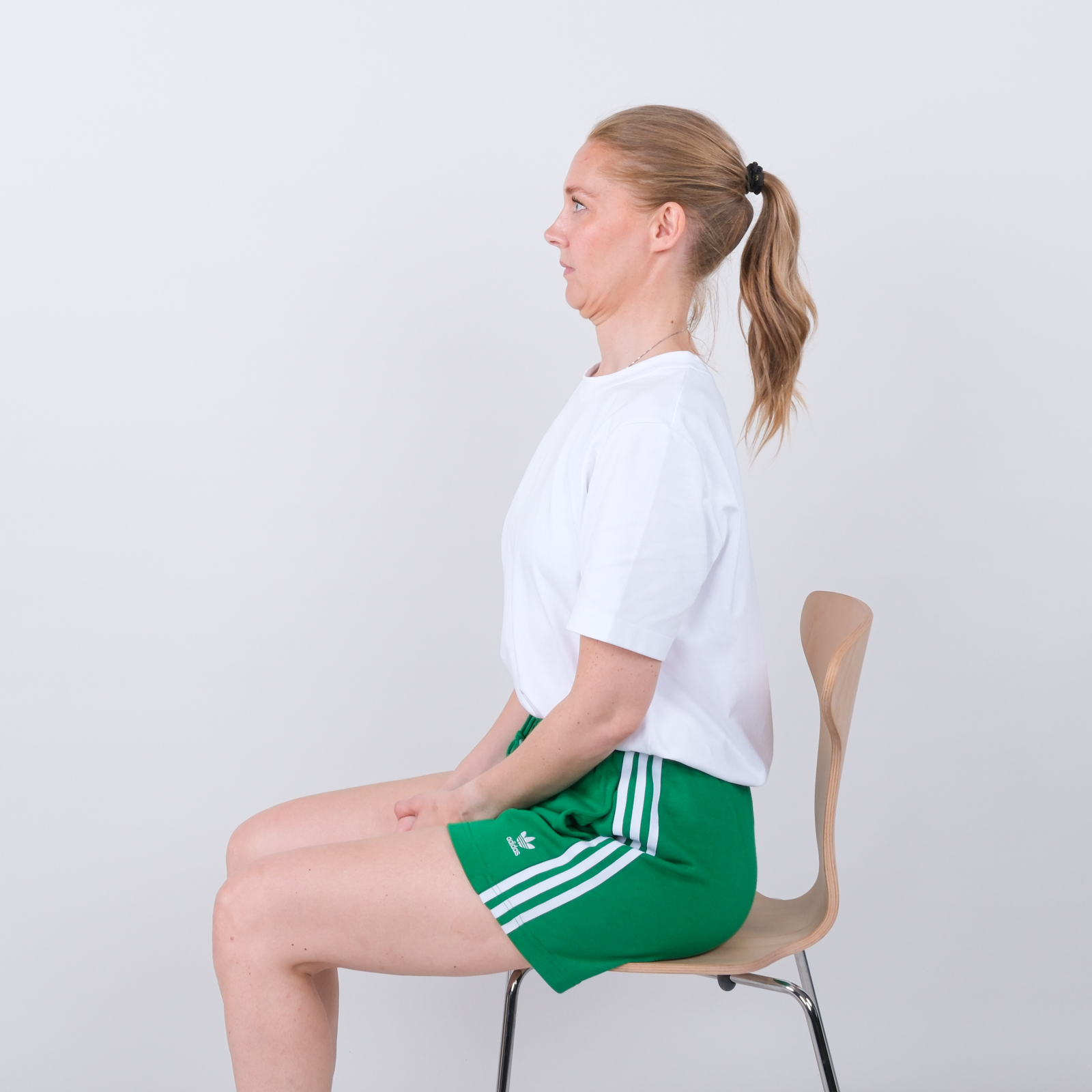
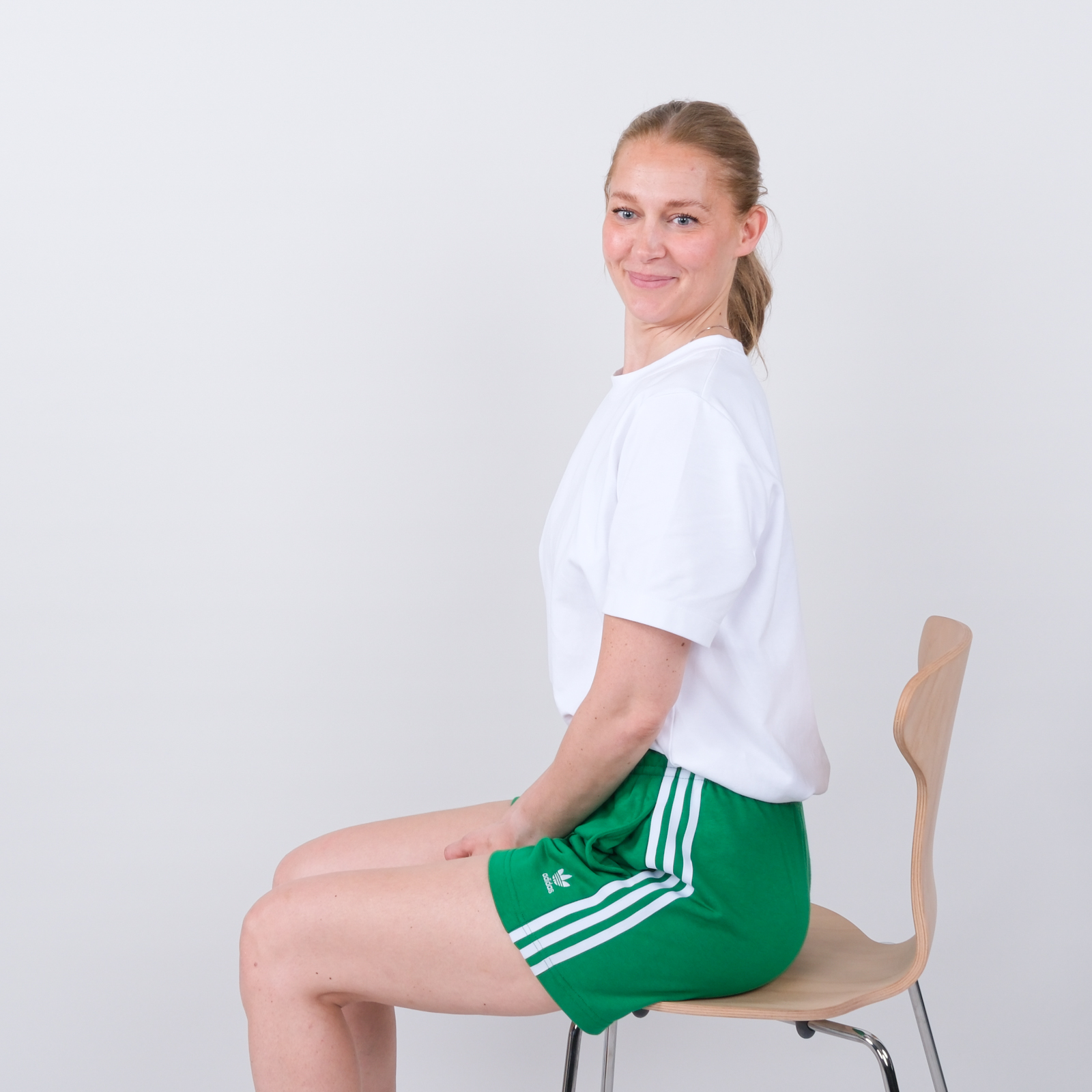
Sit on a chair. Straighten your back. Look straight ahead and tuck your chin in towards your chest so that you get a “double chin”. Tilt your ear down towards your shoulder and hold the position for a few seconds. Repeat the exercise on the other side.
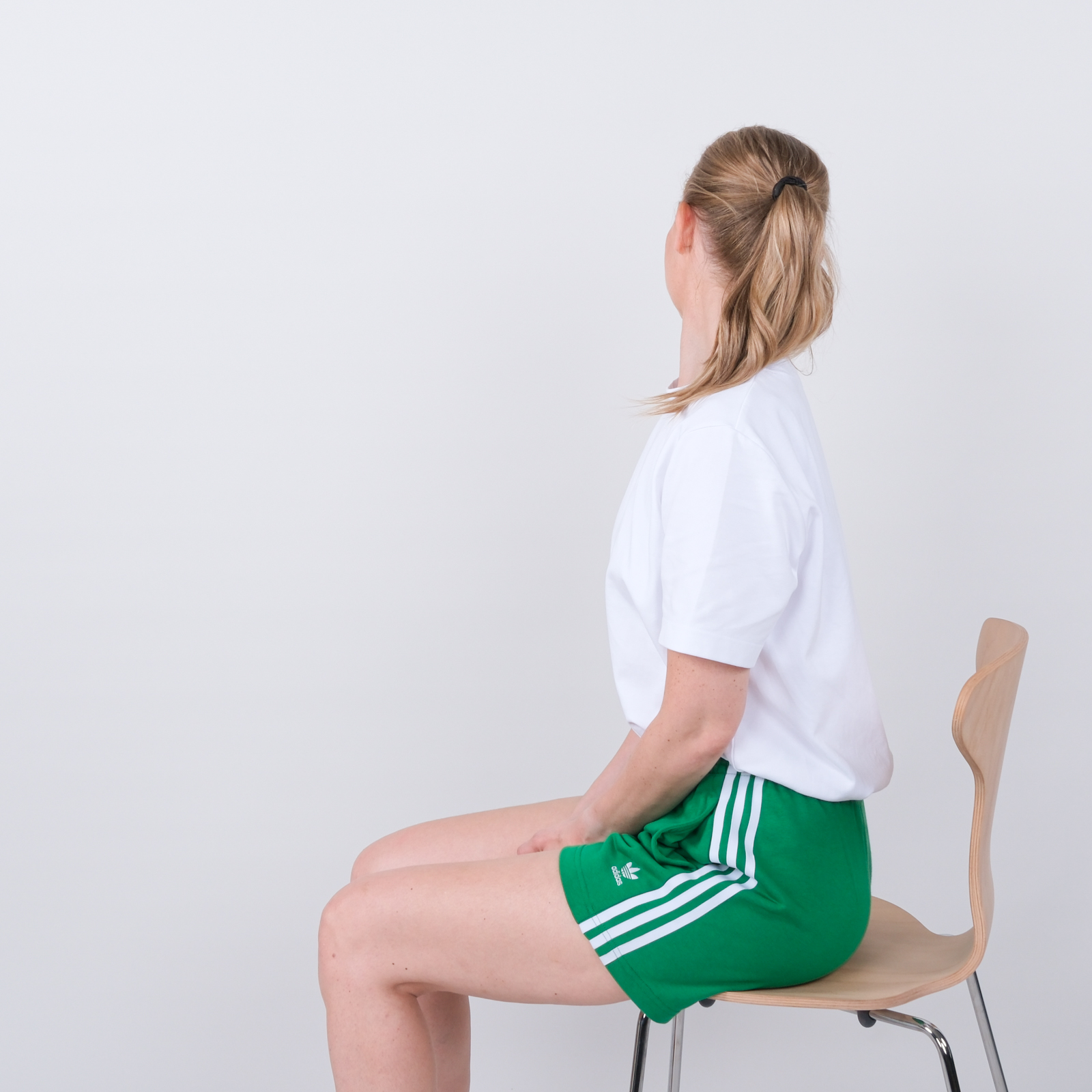
Sit on a chair. Straighten your back. Look straight ahead and tuck your chin in towards your chest so that you get a “double chin”. Turn your face as far as possible to the left. Hold the position for a few seconds. Turn your face as far as possible to the right. Hold the position for a few seconds.
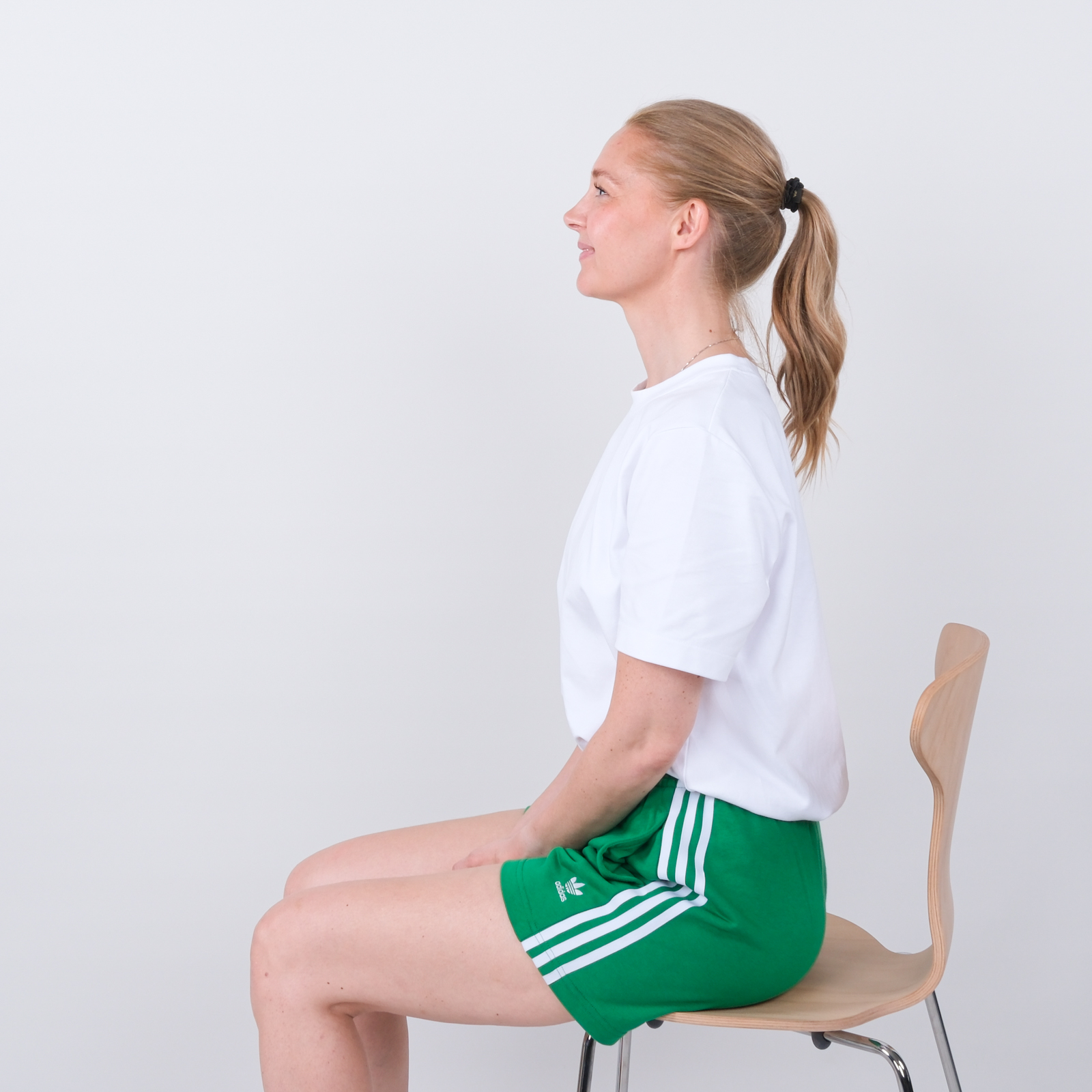
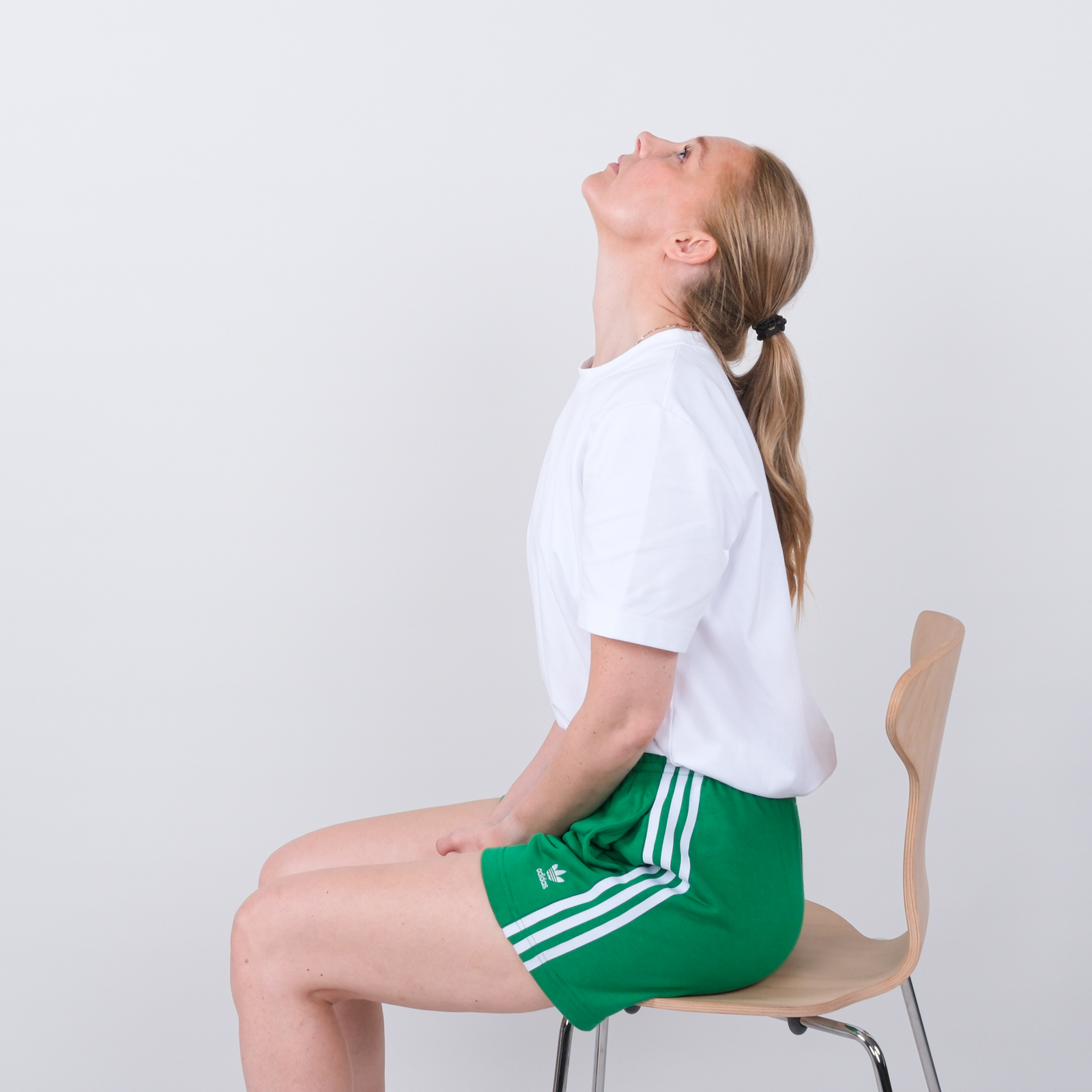
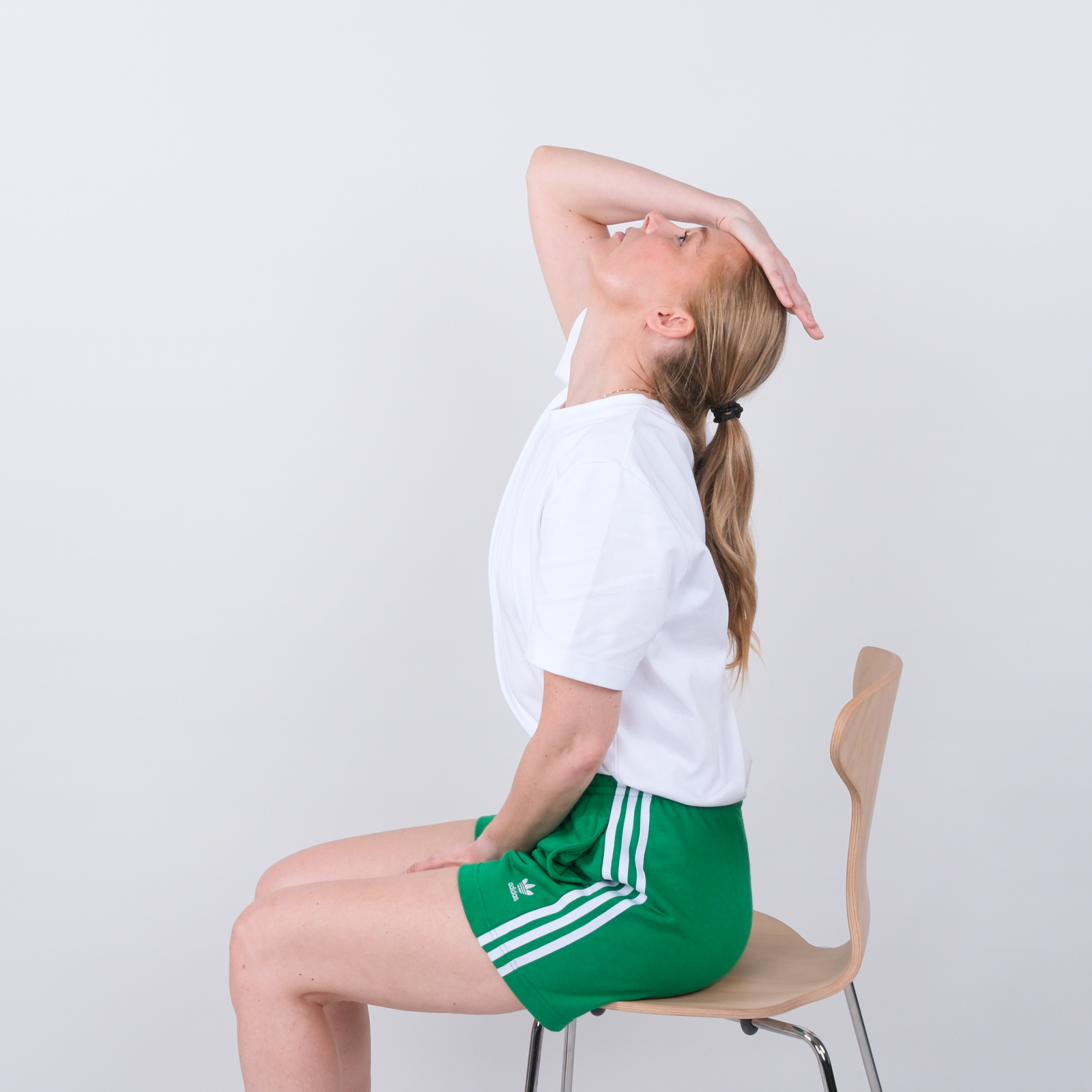
Bend your neck backwards as much as possible. Press lightly on your forehead with the palm of one of your hands to reinforce the backward bend. Hold the stretch for a few seconds. Then bend your neck forwards again to the starting position.
Strength
45 minutes of each training session
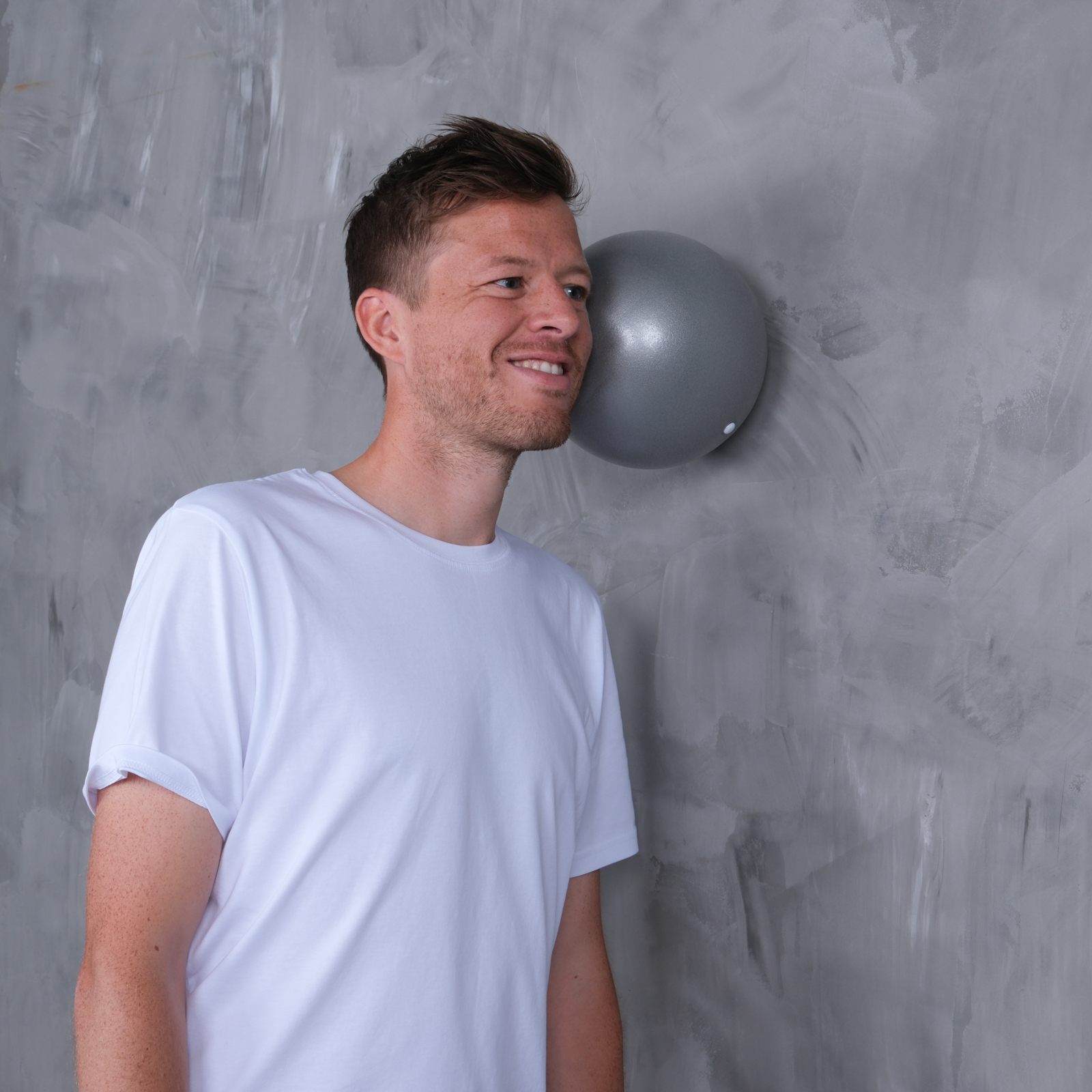
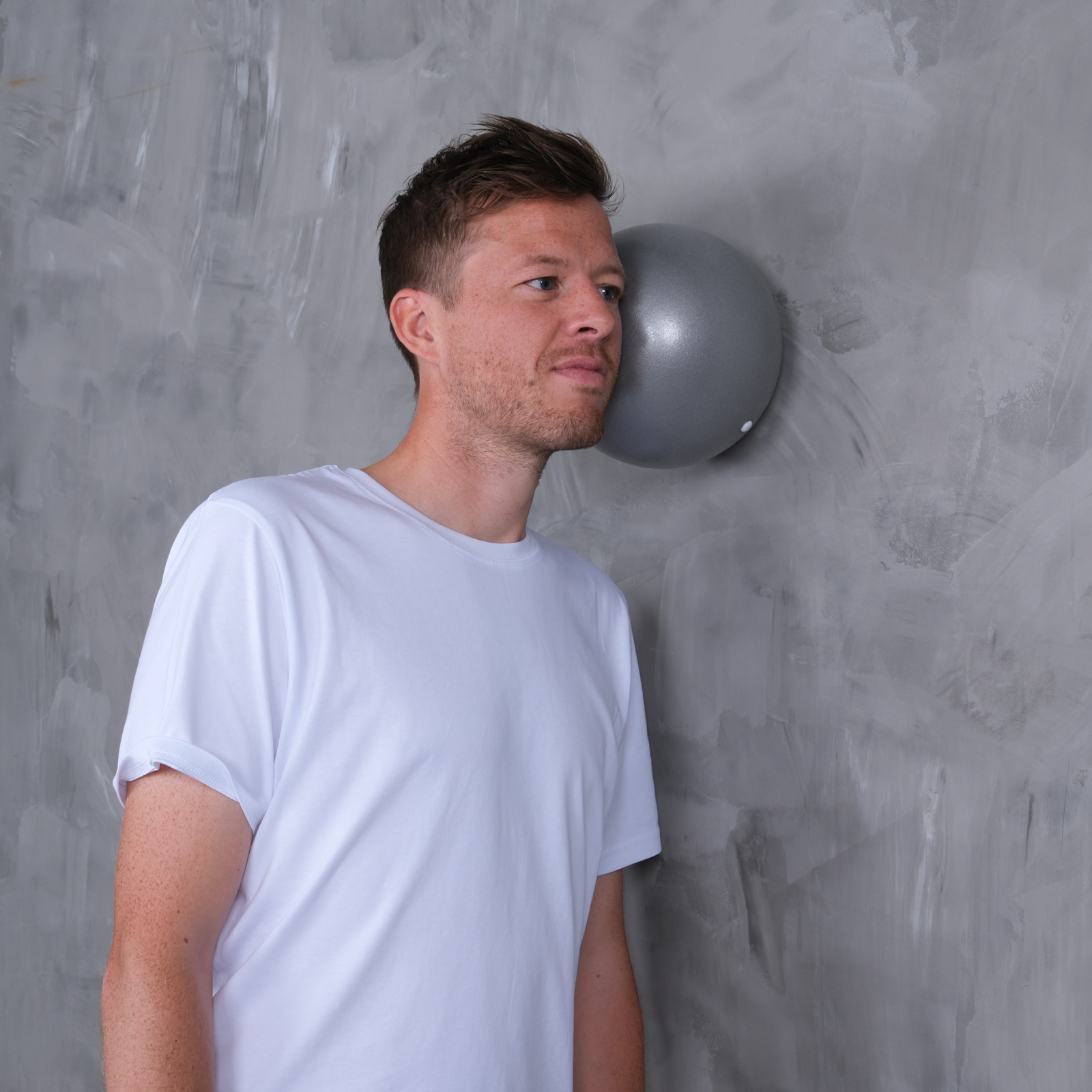
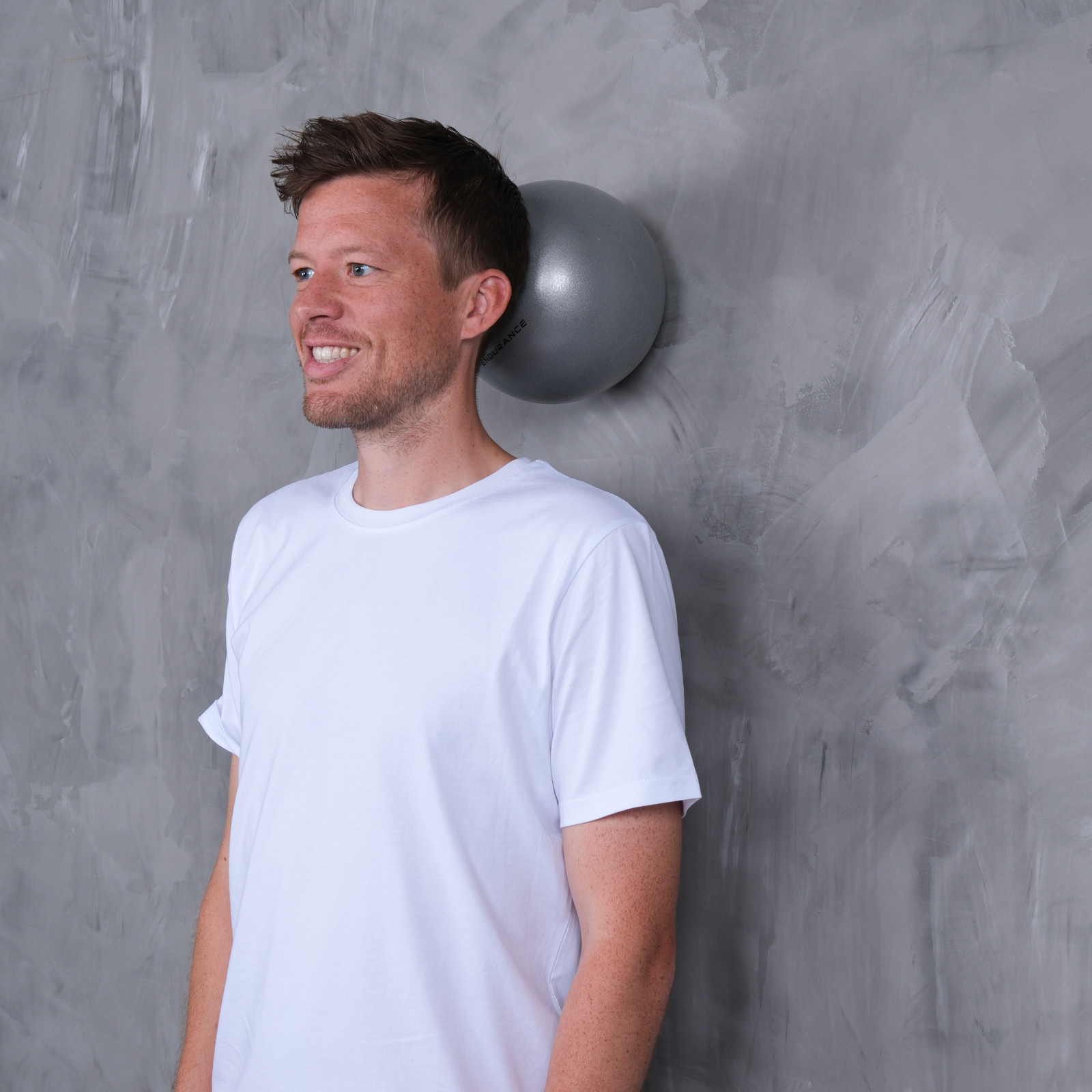
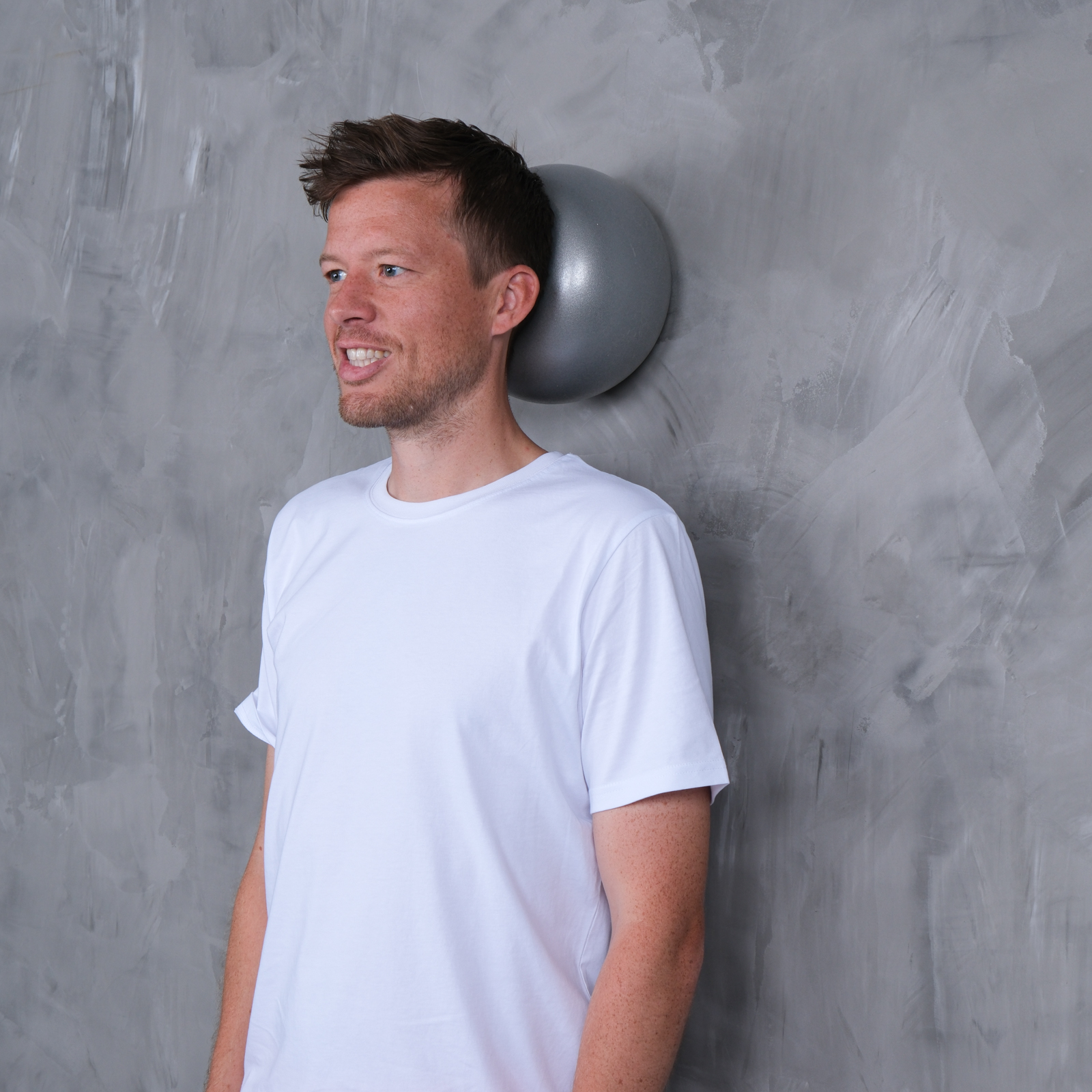
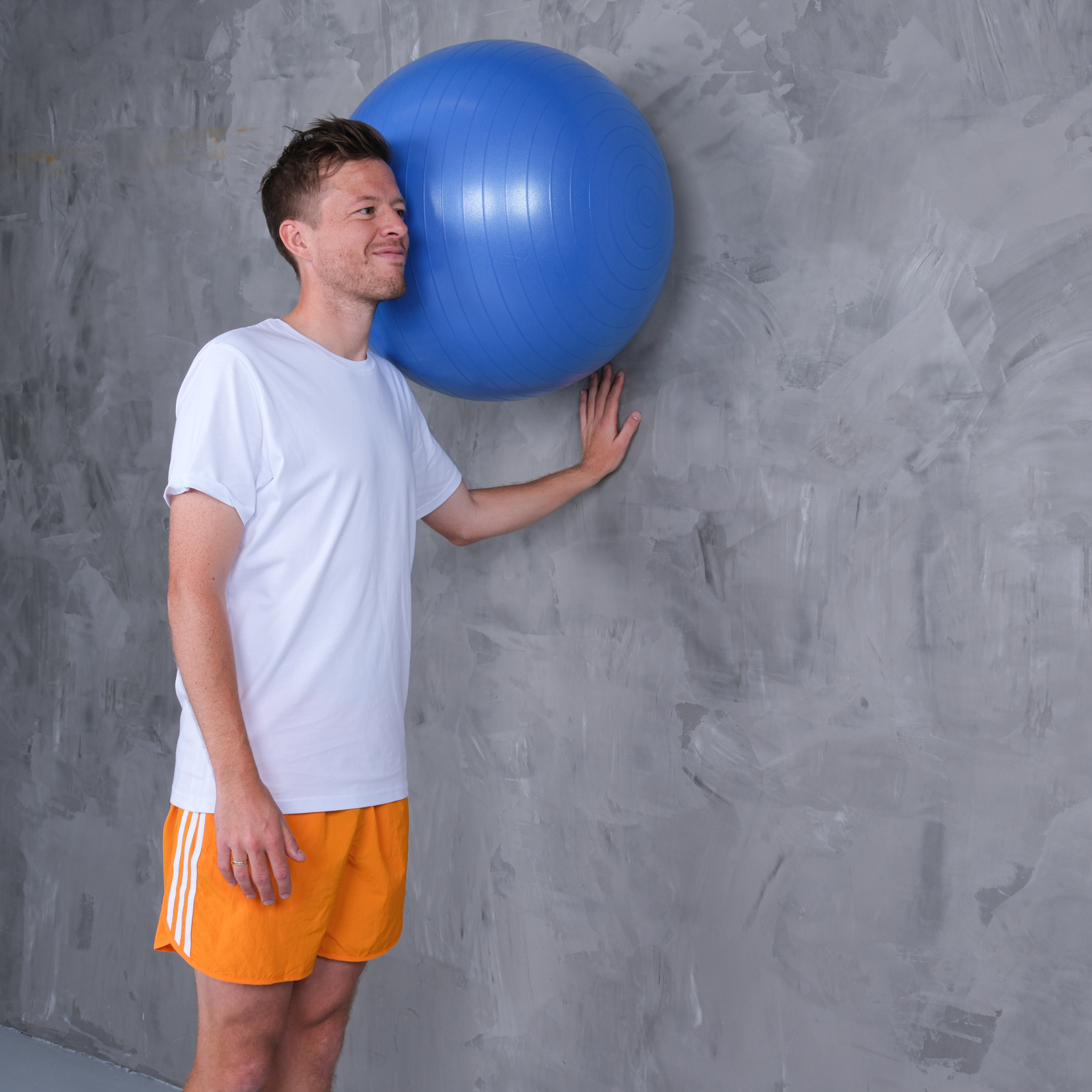
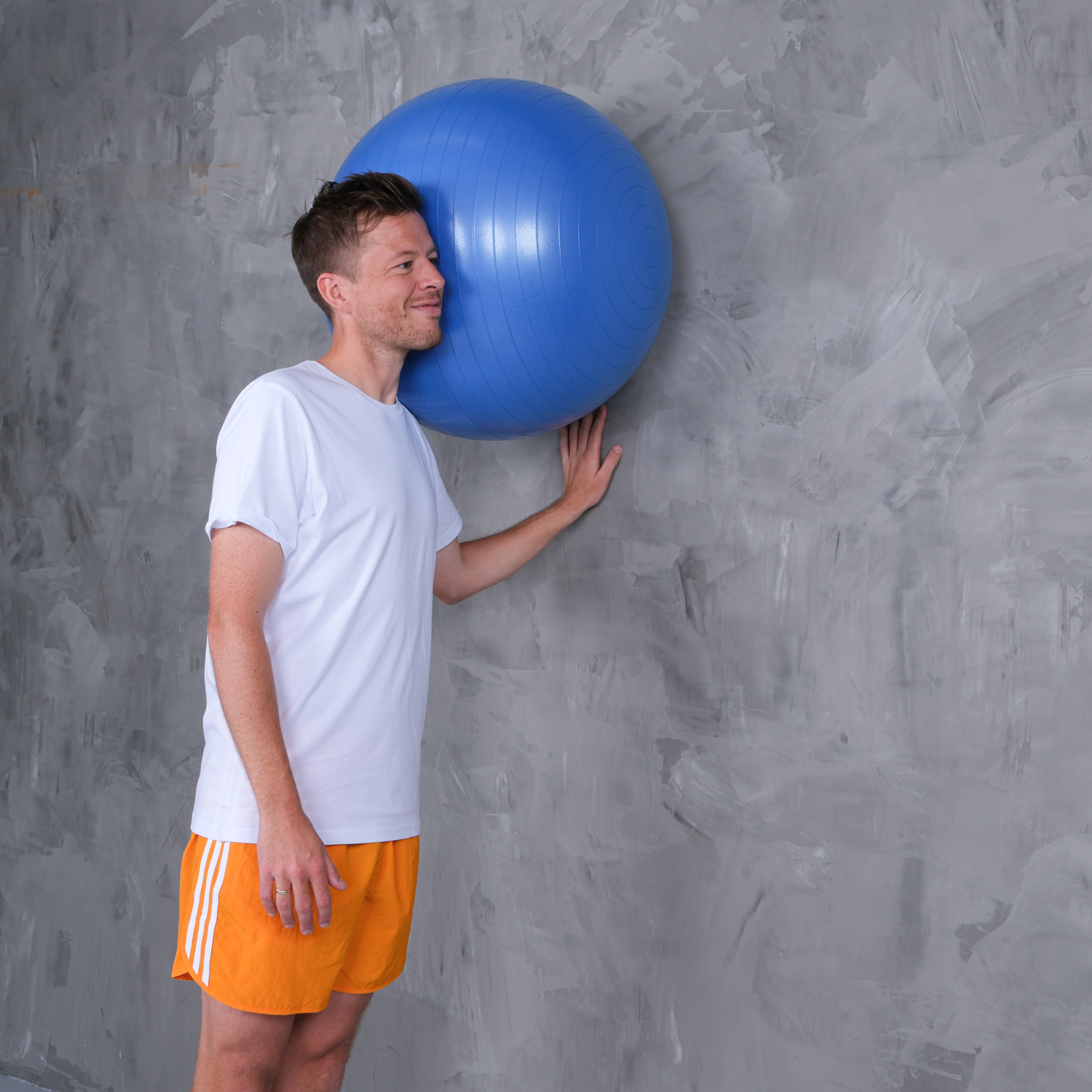
Stil dig med siden til væggen, og placer en bold mellem siden af dit hoved og væggen. Pres hovedet mod bolden. Hold spændingen i et par sekunder. Gentag øvelsen på den modsatte side.
Stand with your back against a wall with a ball between your head/neck and the wall. Press the back of your head against the ball so that you feel tension in your neck muscles. Hold the tension for a few seconds.
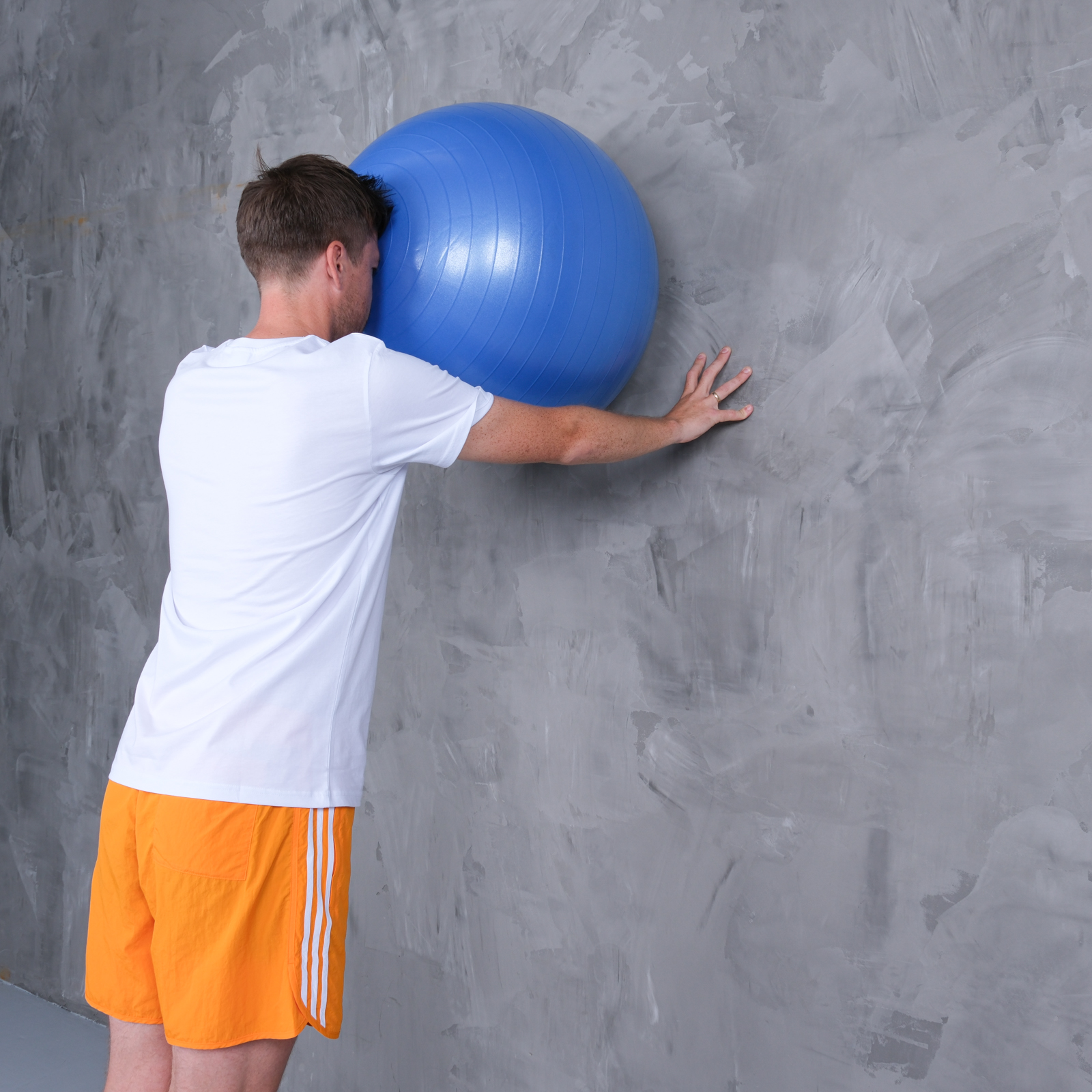
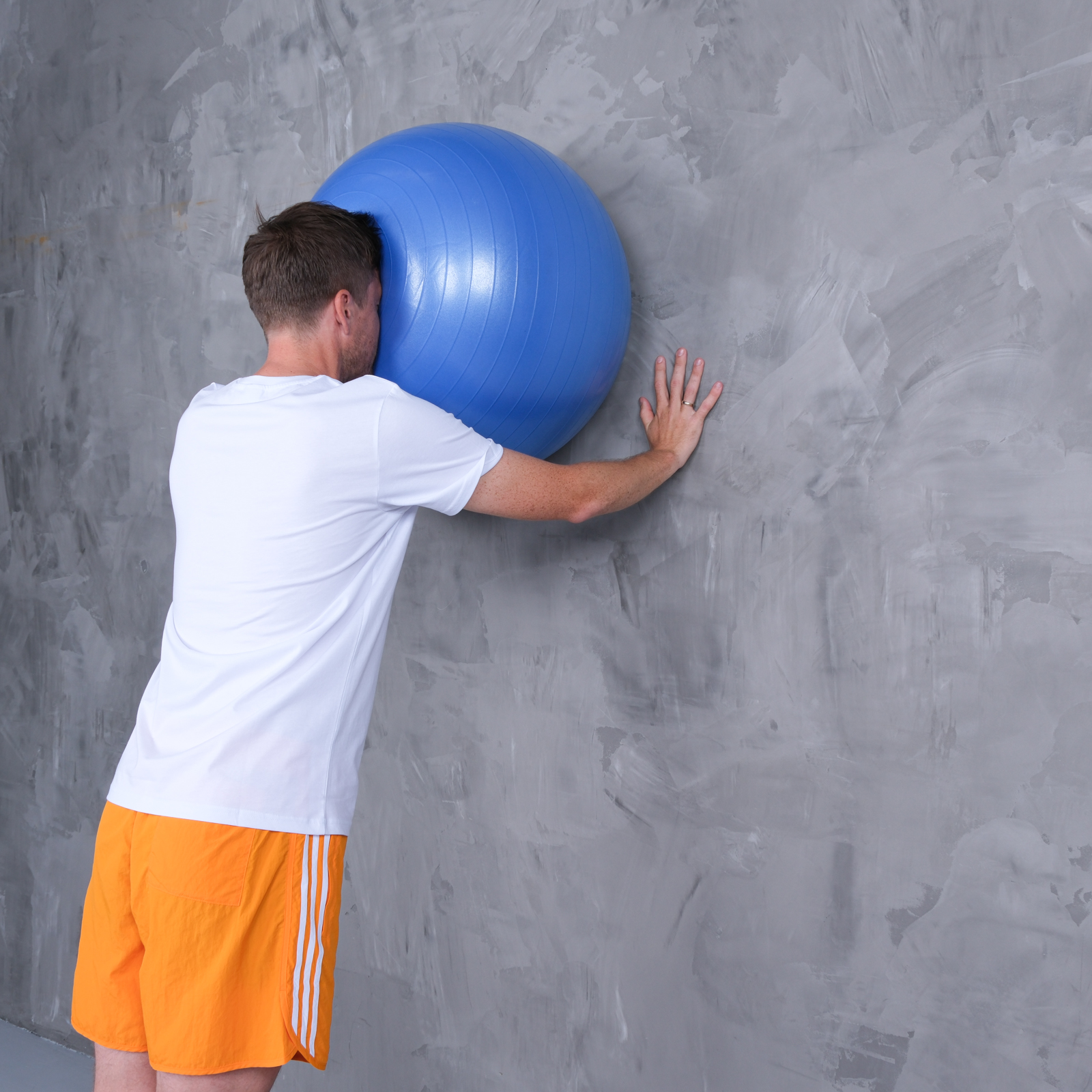
Stand facing a wall with a ball between your forehead and the wall. Press your forehead against the ball so that you feel a tension in your throat muscles. Hold the tension for a few seconds.
Stil dig med siden til væggen, og placer en bold mellem siden af dit hoved og væggen. Pres hovedet mod bolden. Hold spændingen i et par sekunder. Gentag øvelsen på den modsatte side.
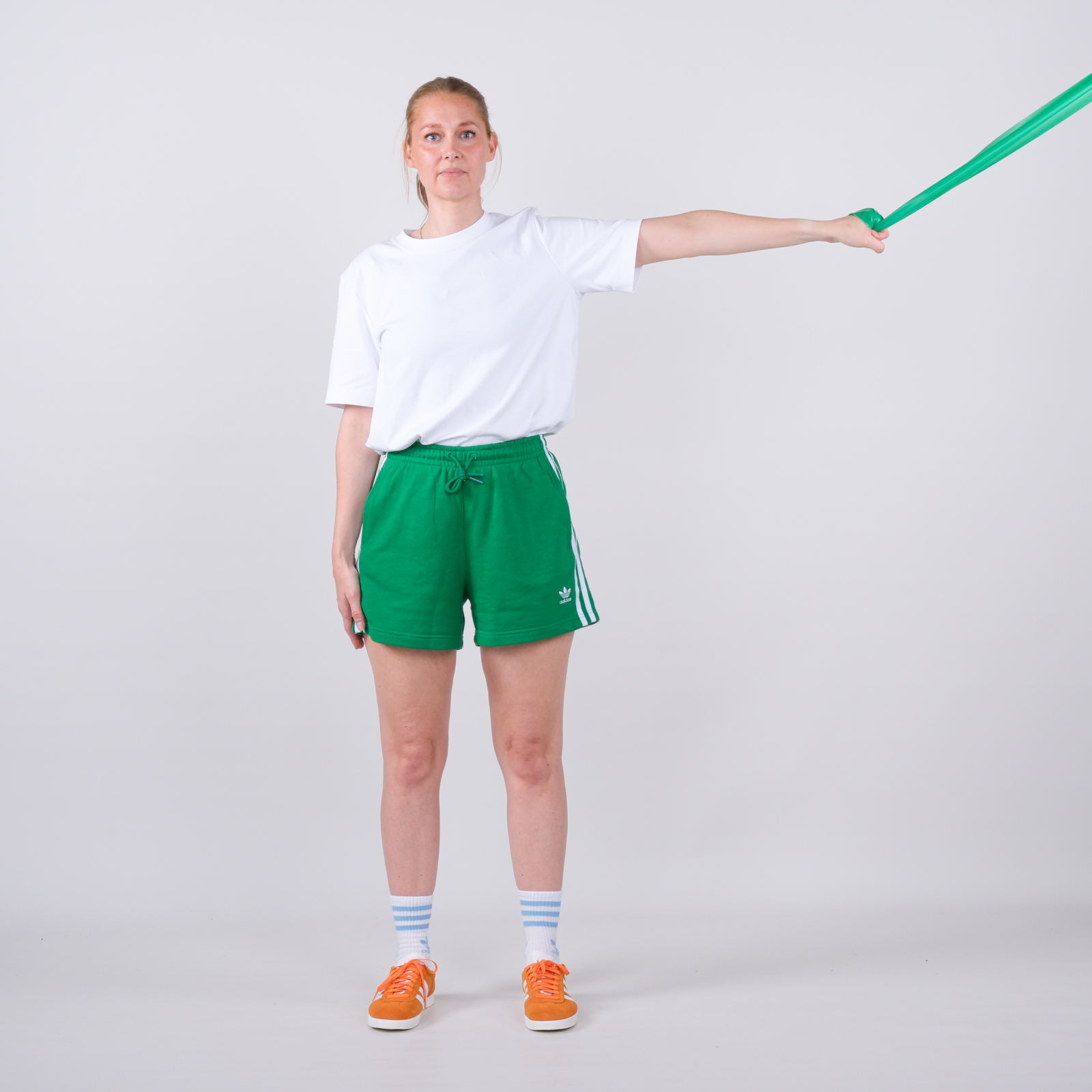
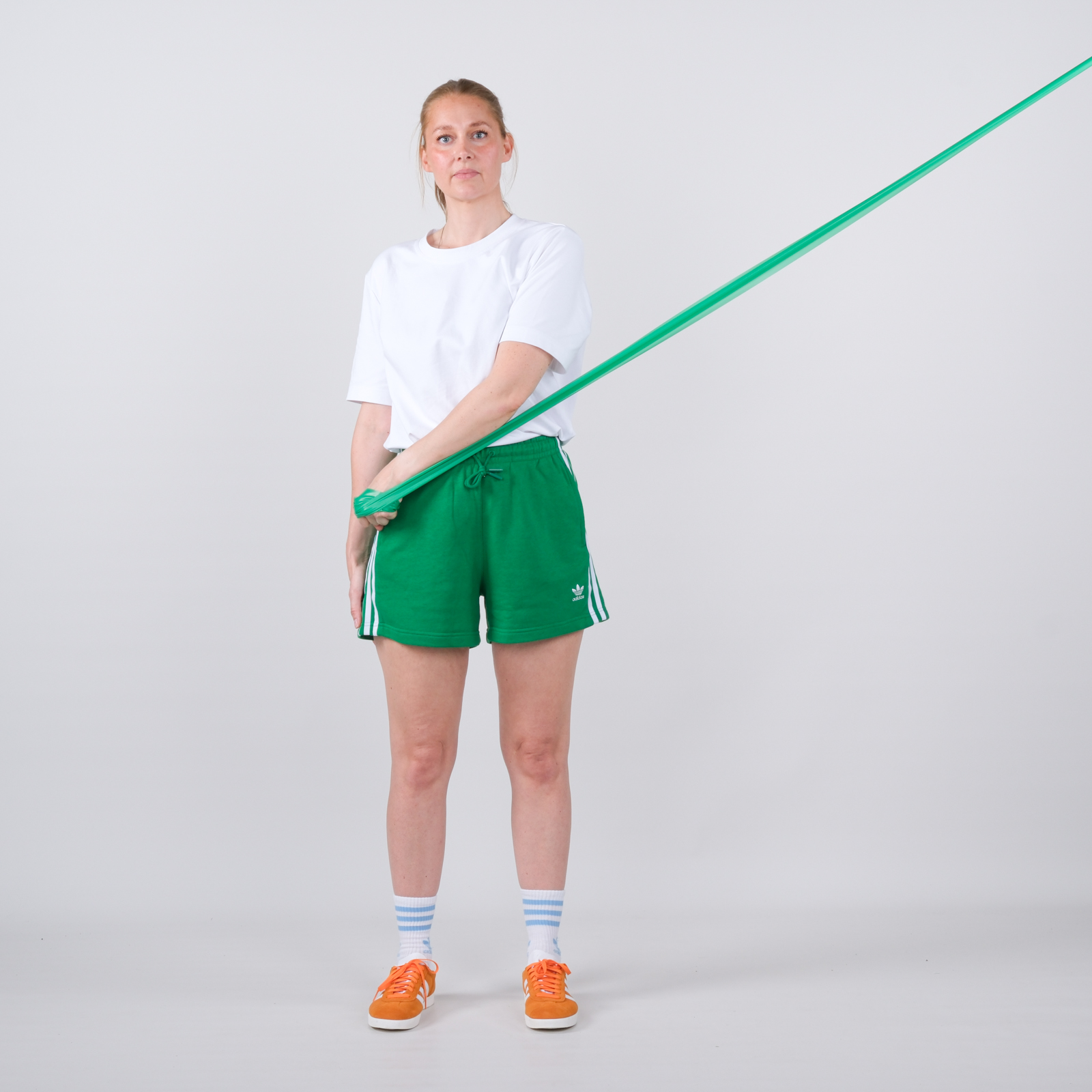
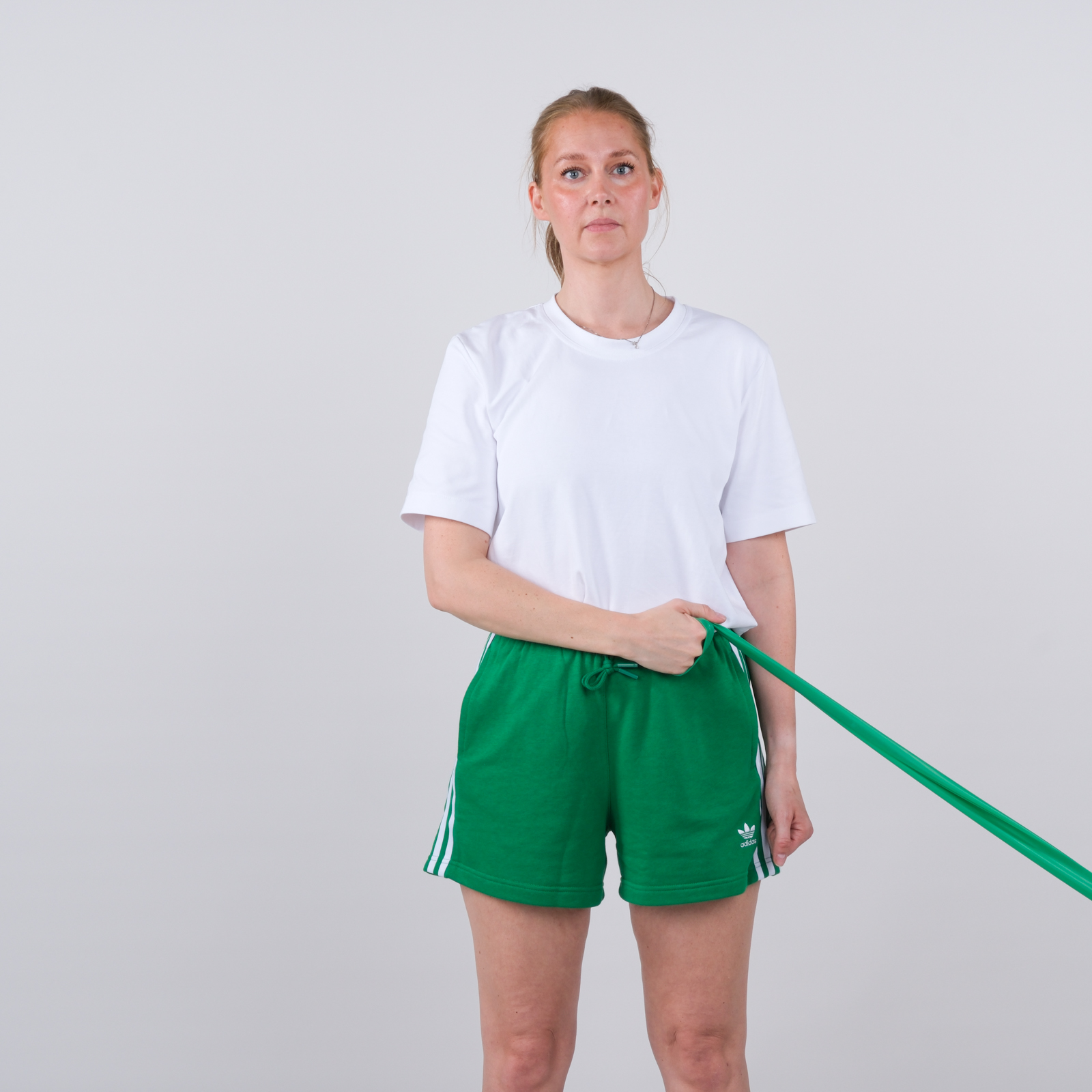
Secure an exercise band above head height. Stand with your side facing the exercise band. Grasp the band with your working arm, keeping your elbow straight, your upper arm at a 90-degree angle to your body, and your hand above shoulder level. Pull your arm downwards and inwards in front of your stomach. Hold the tension for a few seconds, then slowly return your arm to the starting position.
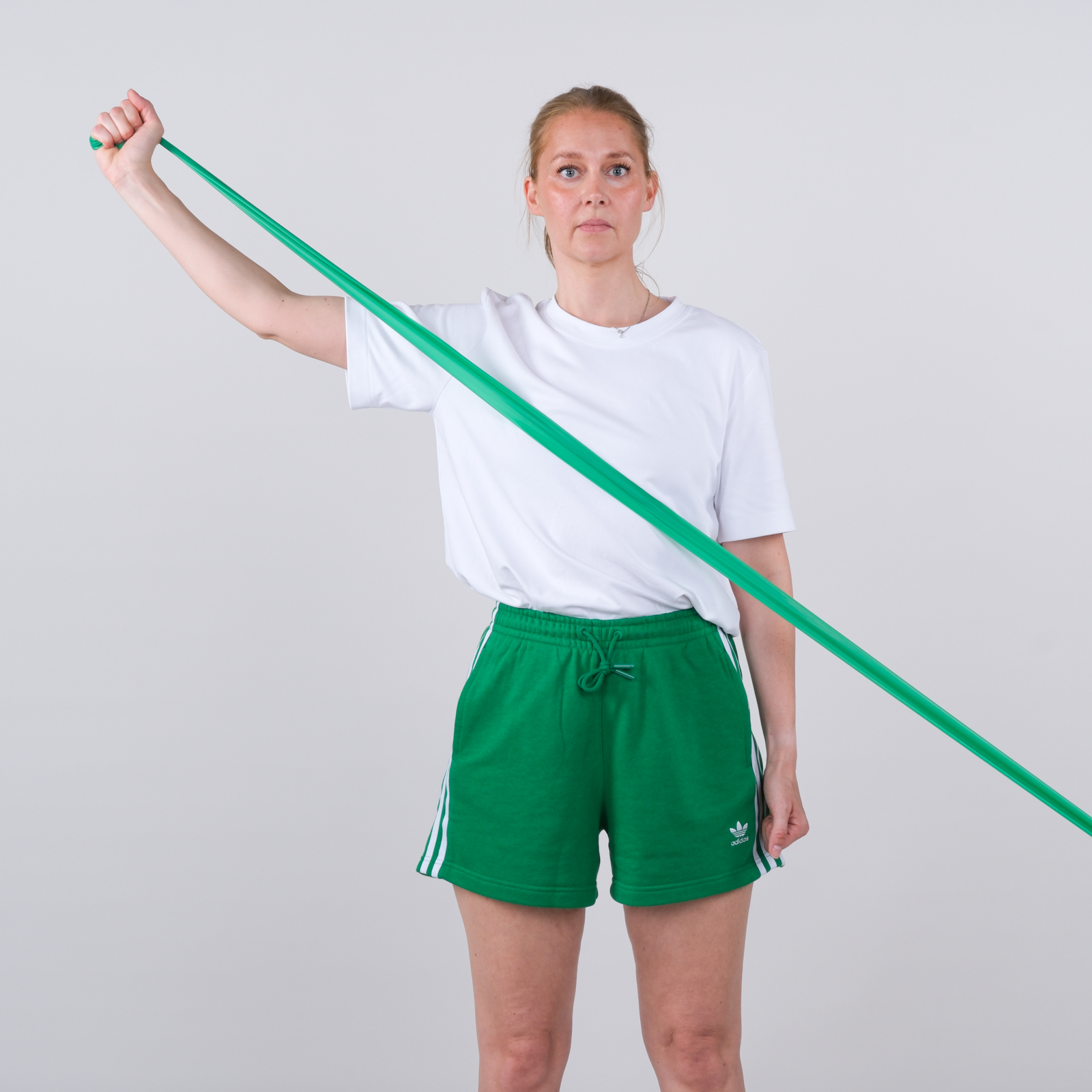
Secure the resistance band at floor level. Stand with your side facing the band. Stand with your side facing the band, with the working arm furthest from the band. Hold the band in the hand of your working arm and place your other hand on your opposite hip. Swing your arm up and back with your arm straight, so that your hand moves above head height. Hold the stretch for a few seconds and slowly release the tension as you bring your hand back to the starting position.
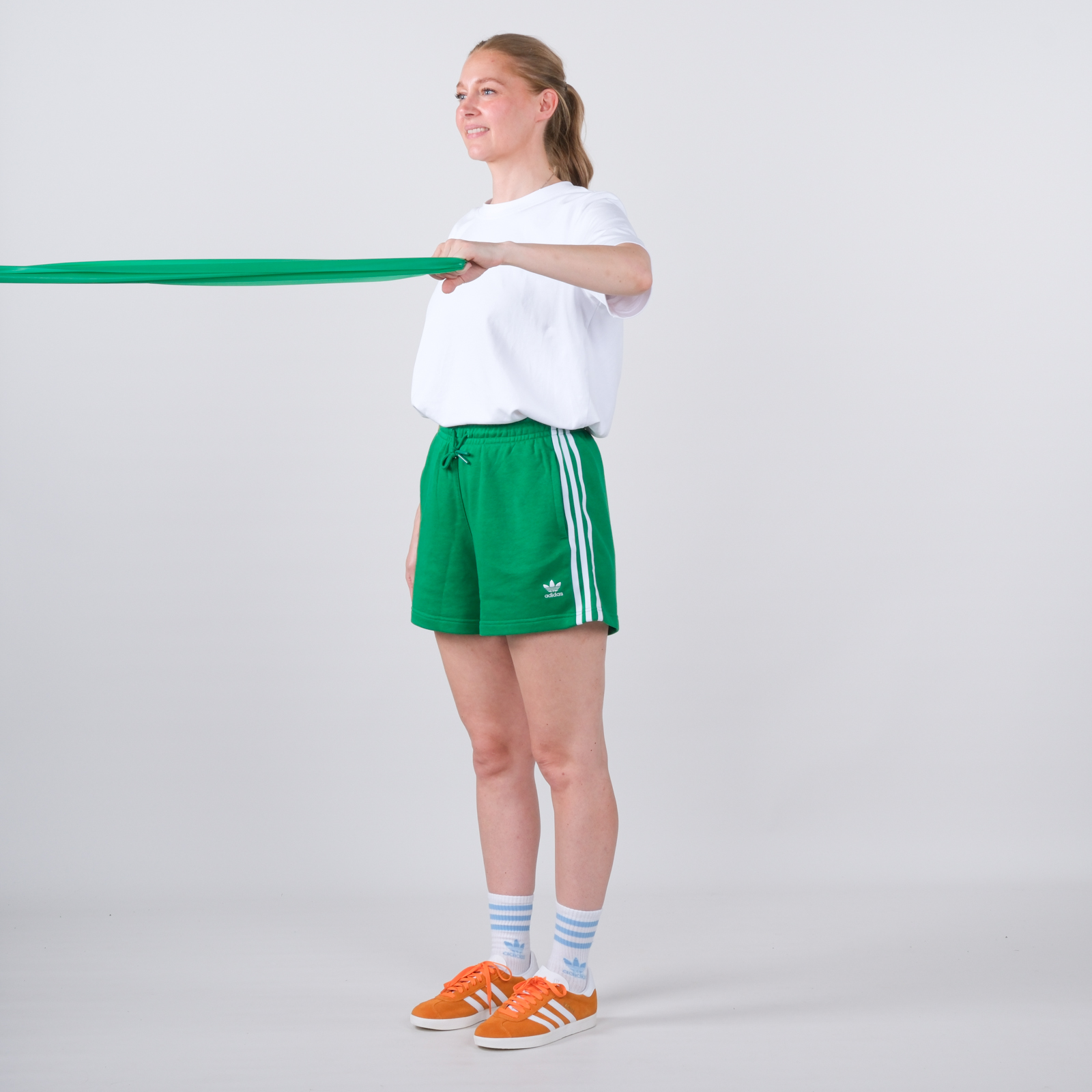
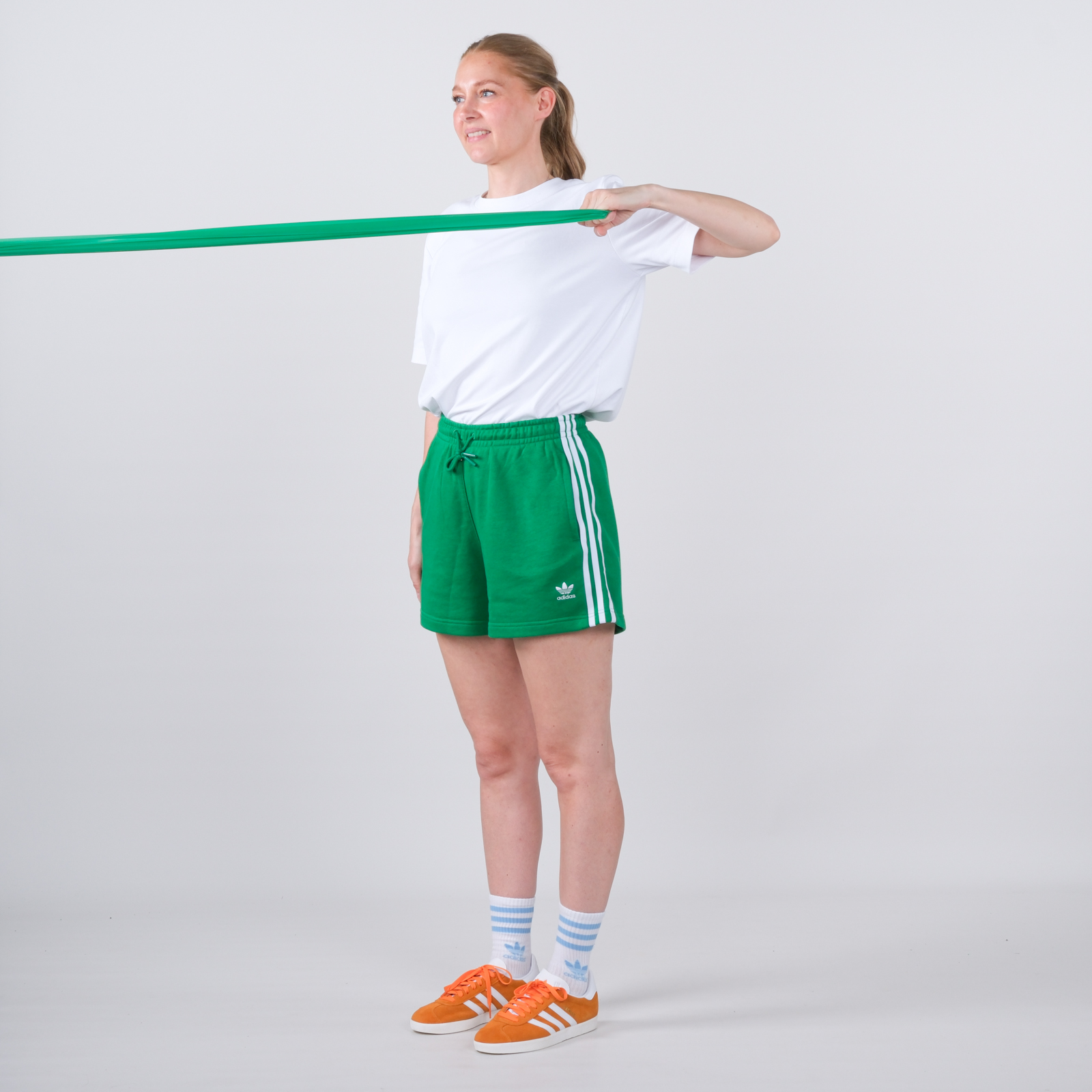
Attach an exercise band at shoulder height. Stand facing the band. Hold the resistance band in your working arm with your upper arm at a 90-degree angle to your body and your elbow bent, so that your forearm is pointing towards the resistance band. Pull slowly backwards to stretch the band. Hold the stretch for a few seconds and slowly return your arm to the starting position. Your elbow should remain bent throughout the exercise.
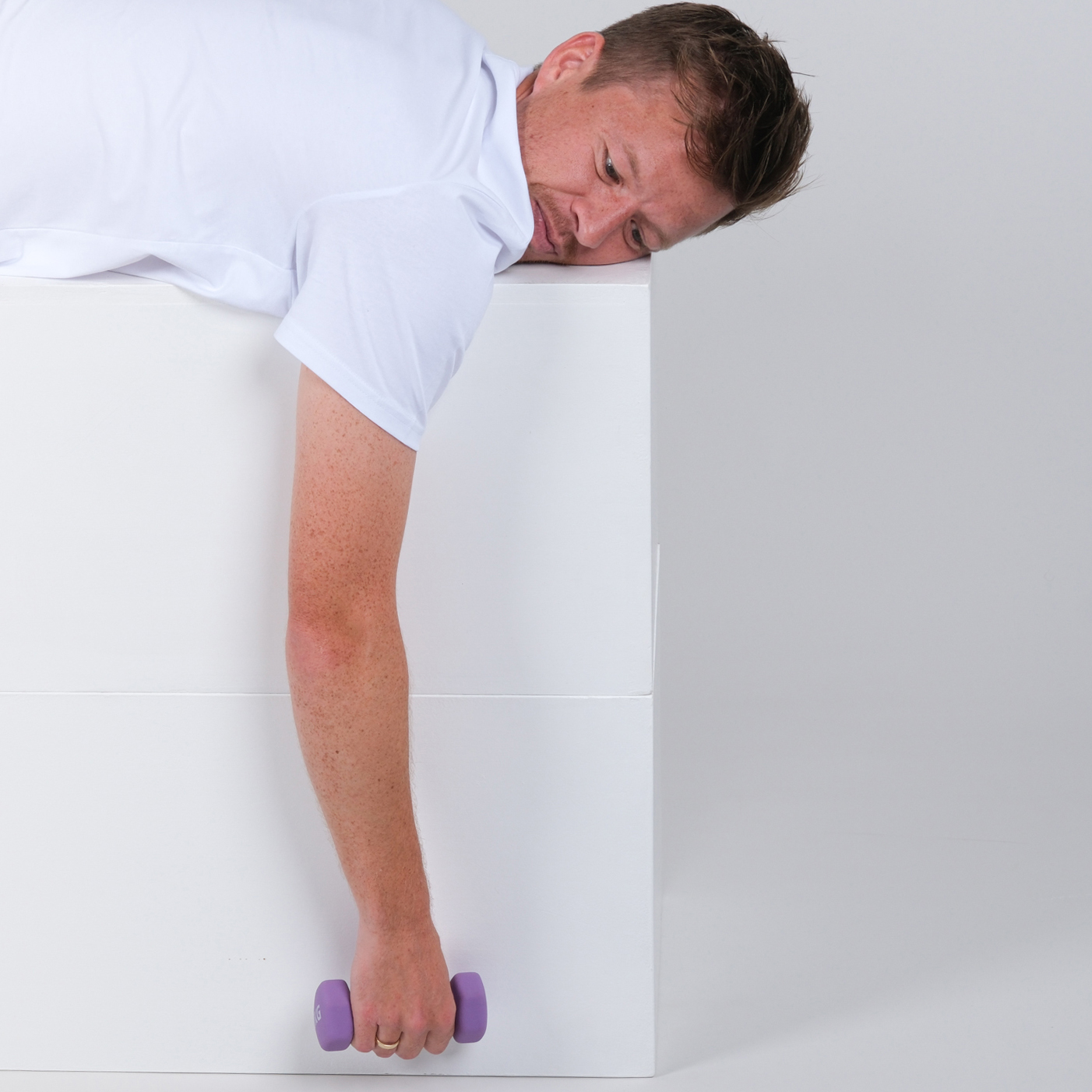
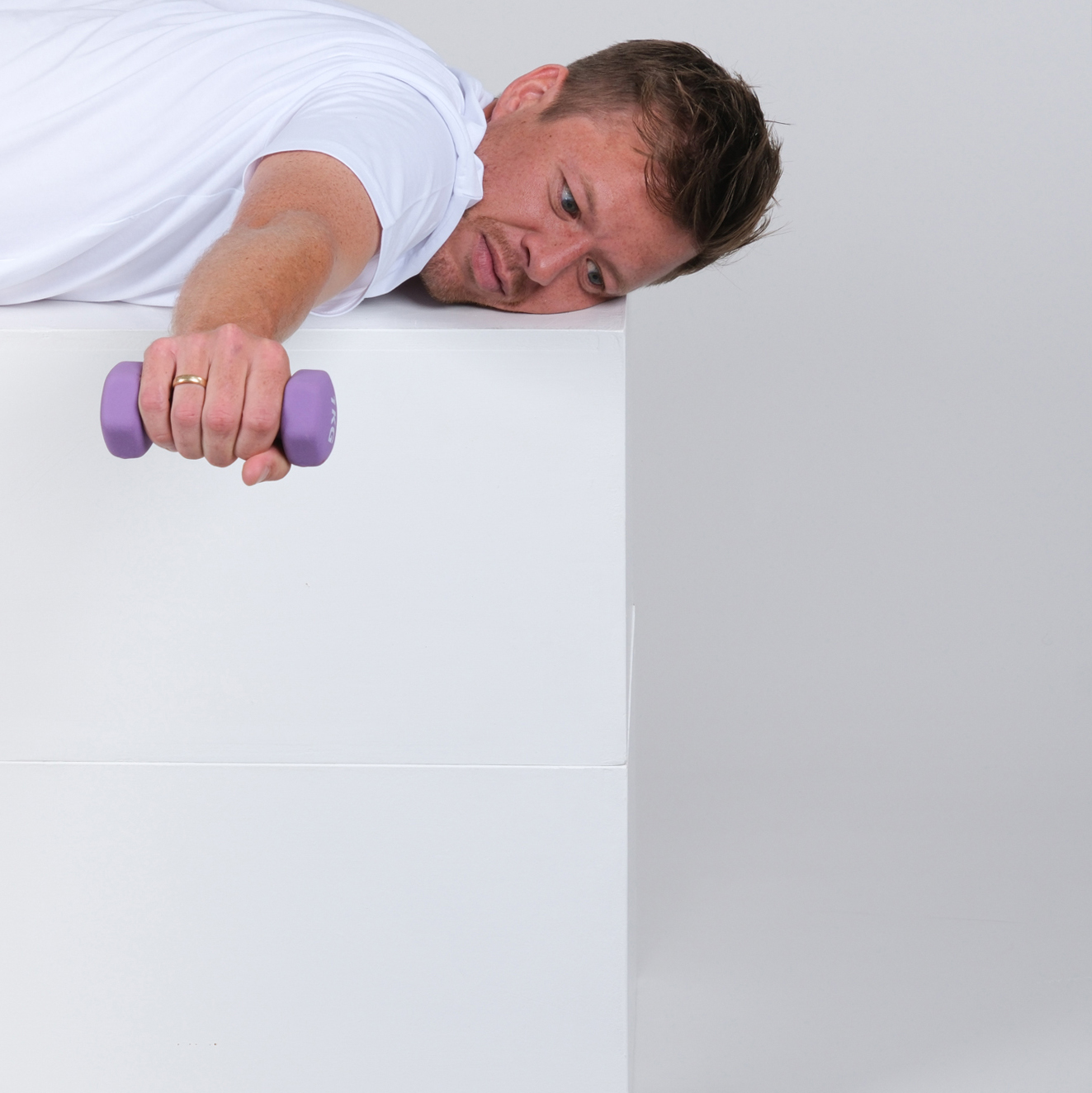
Lie face down on a table or bench. Let the working arm hang over the edge. Hold a weight or a water bottle in your hand. Slowly extend the working arm out from your body until it is horizontal, whilst simultaneously pulling your shoulder blade in towards your body. Hold the position for a few seconds, then slowly return your arm to the starting position.