Inflammation of the growth zone of the elbow (“Little league elbow”) – Step 4
Rehabilitation starts with the exercises in Step 1. When the exercises can be performed without pain, rehabilitation starts on the next step.
How often and for how long should I train? Training frequency and duration are individual. Start with about 3 repetitions per workout. exercise and at least 3 times a week. Slowly increase the number of repetitions and load without exceeding the pain threshold
Do I have to do the whole program every time? No, you can divide the exercises into different days. The most important thing is to exercise regularly and gradually increase the intensity
The time in minutes indicates the time distribution between stretching, balance and strength if you train for one hour. Whether you train for one hour or 10 minutes, for example, is adapted to your starting point – and can be increased over time.
The treatment for stress-induced inflammation of growth plates primarily involves rest, as the growth plates cannot be strengthened through exercise. It’s important to keep “all” other muscles working while the tendon attachments on the growth zone in the elbow heal up.
Exercises should not provoke known elbow pain during or after training. Throwing exercises should only be resumed when the pain has completely subsided.
Condition
Unlimited: Cycling and running
Stretching
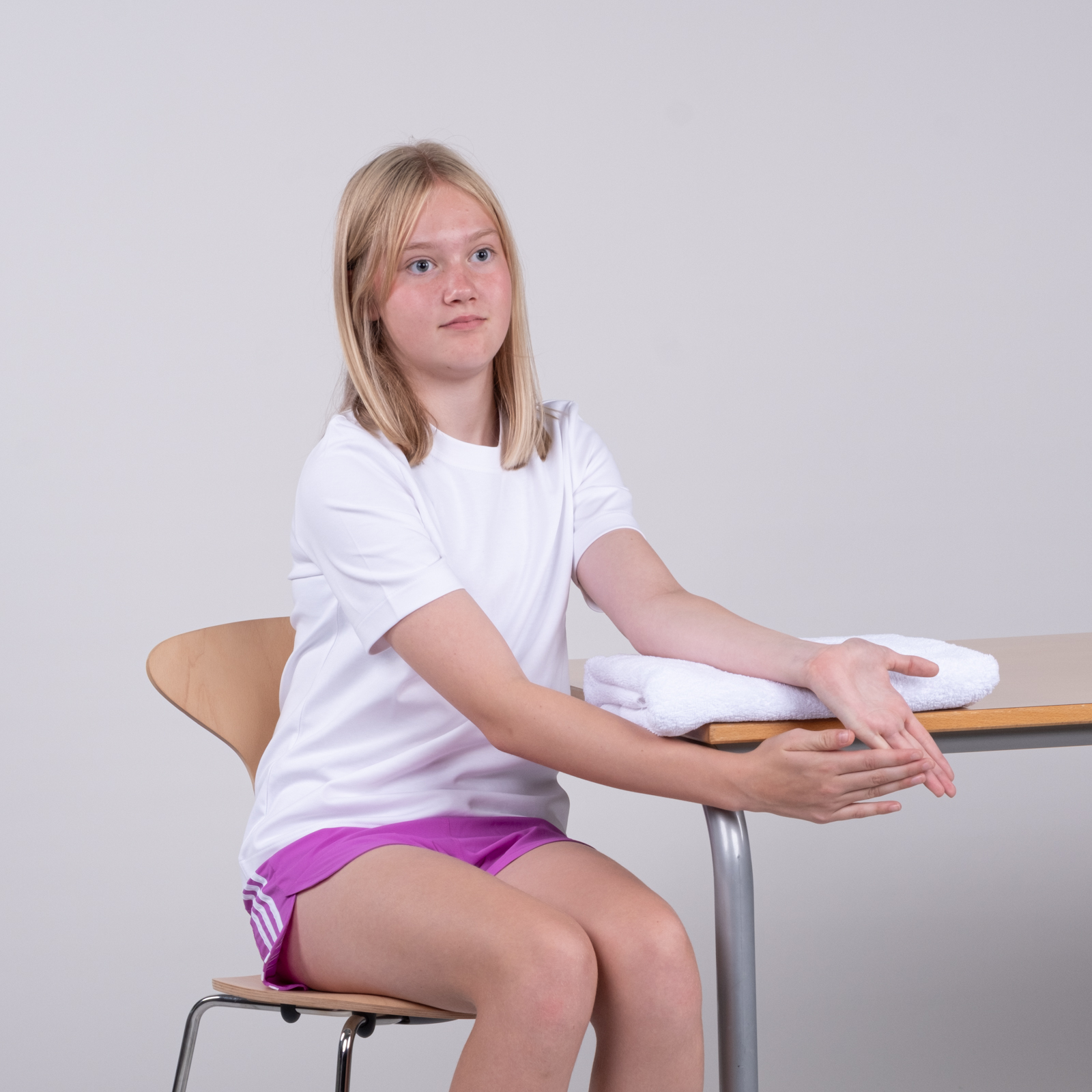
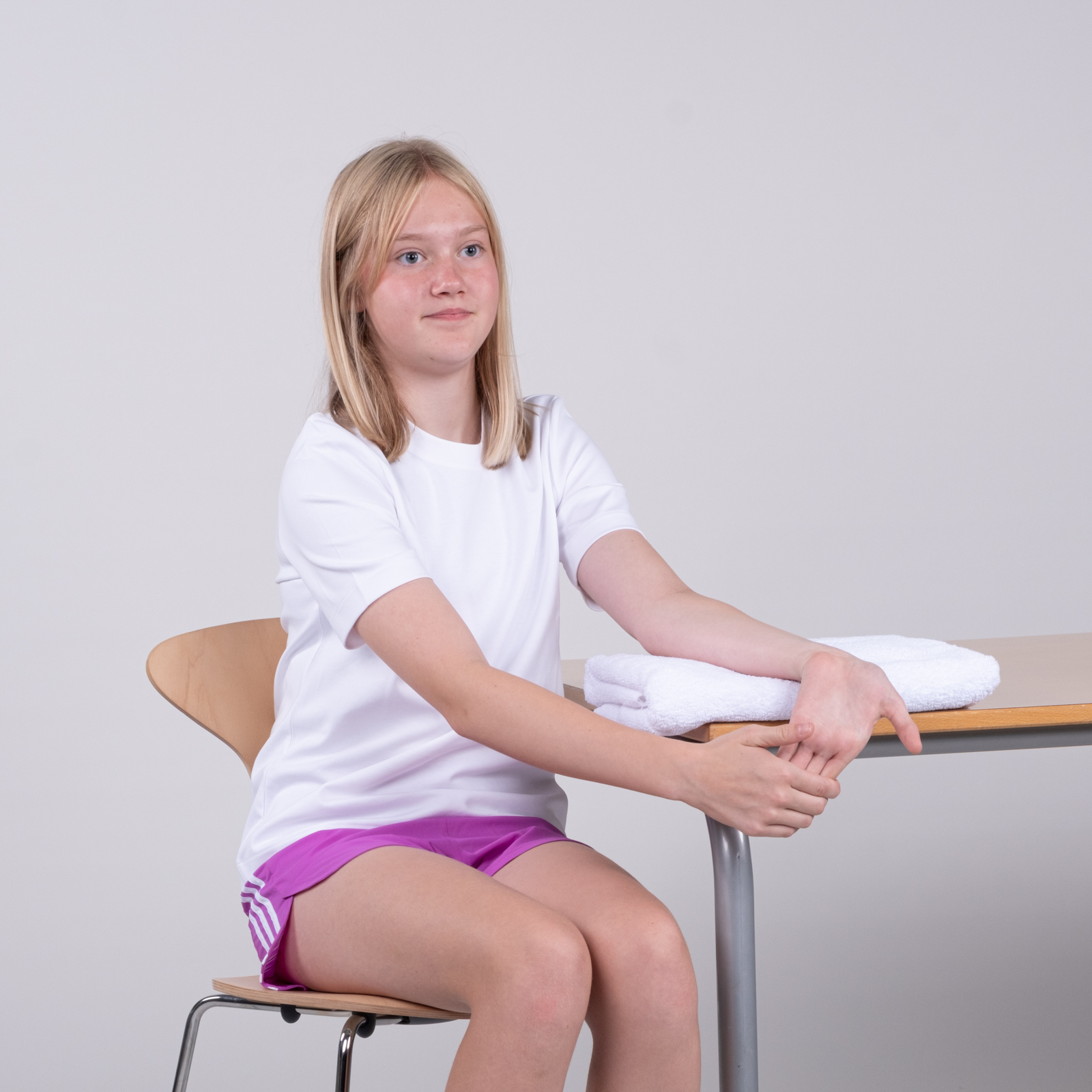
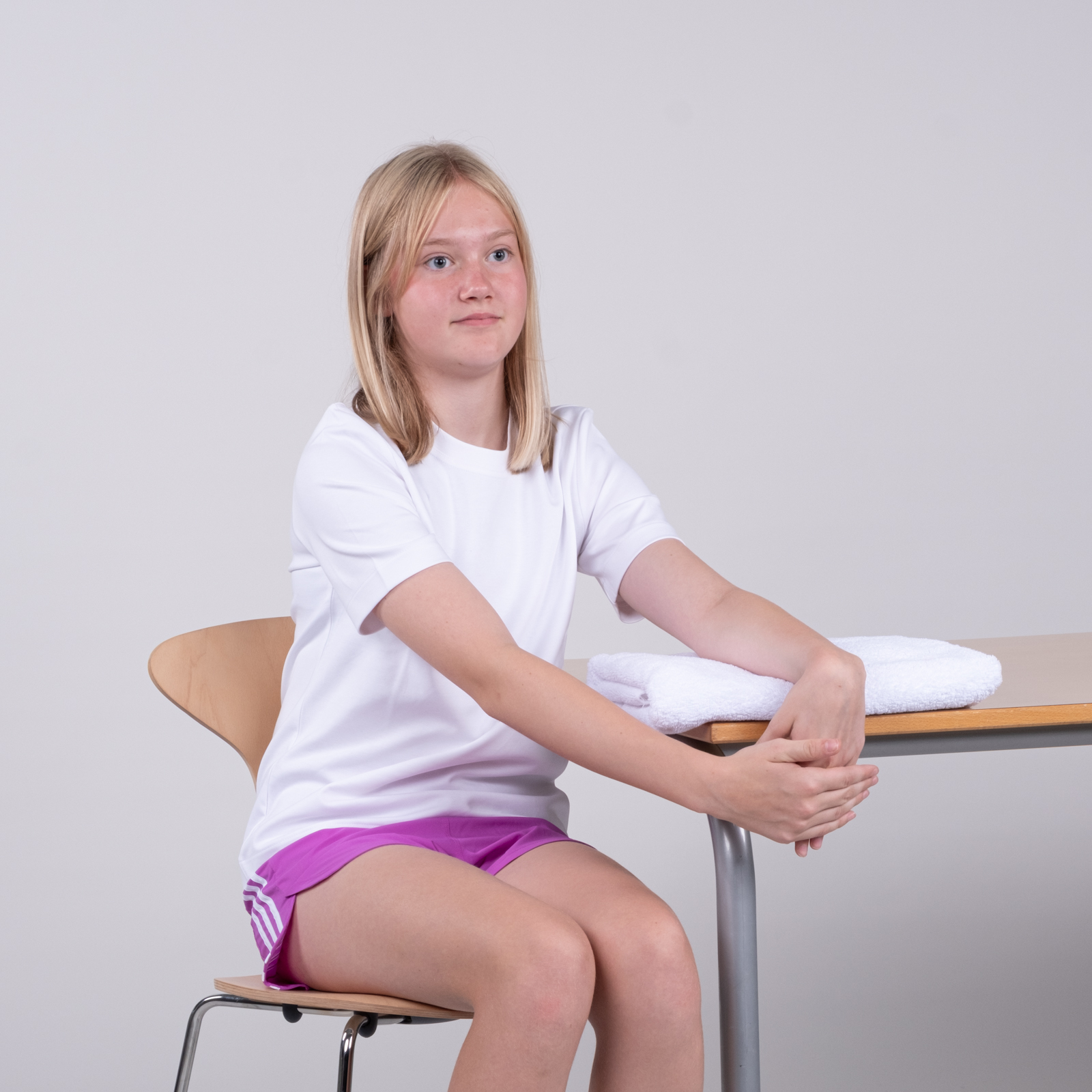
Place your training arm over the edge of a table with your palm facing down. Press with the other arm on the back of the hand so that the front of the training arm becomes increasingly stretched. Repeat the exercise, pressing the training arm hand first to one side and then to the other side. Finally, turn the arm so that the palm is facing upwards. With the healthy arm, press on the palm of the hand so that there is increasing tension on the underside of the training arm. Hold each stretch for 20 seconds and then start one of the other exercises.
Strength
Squeeze a soft ball.
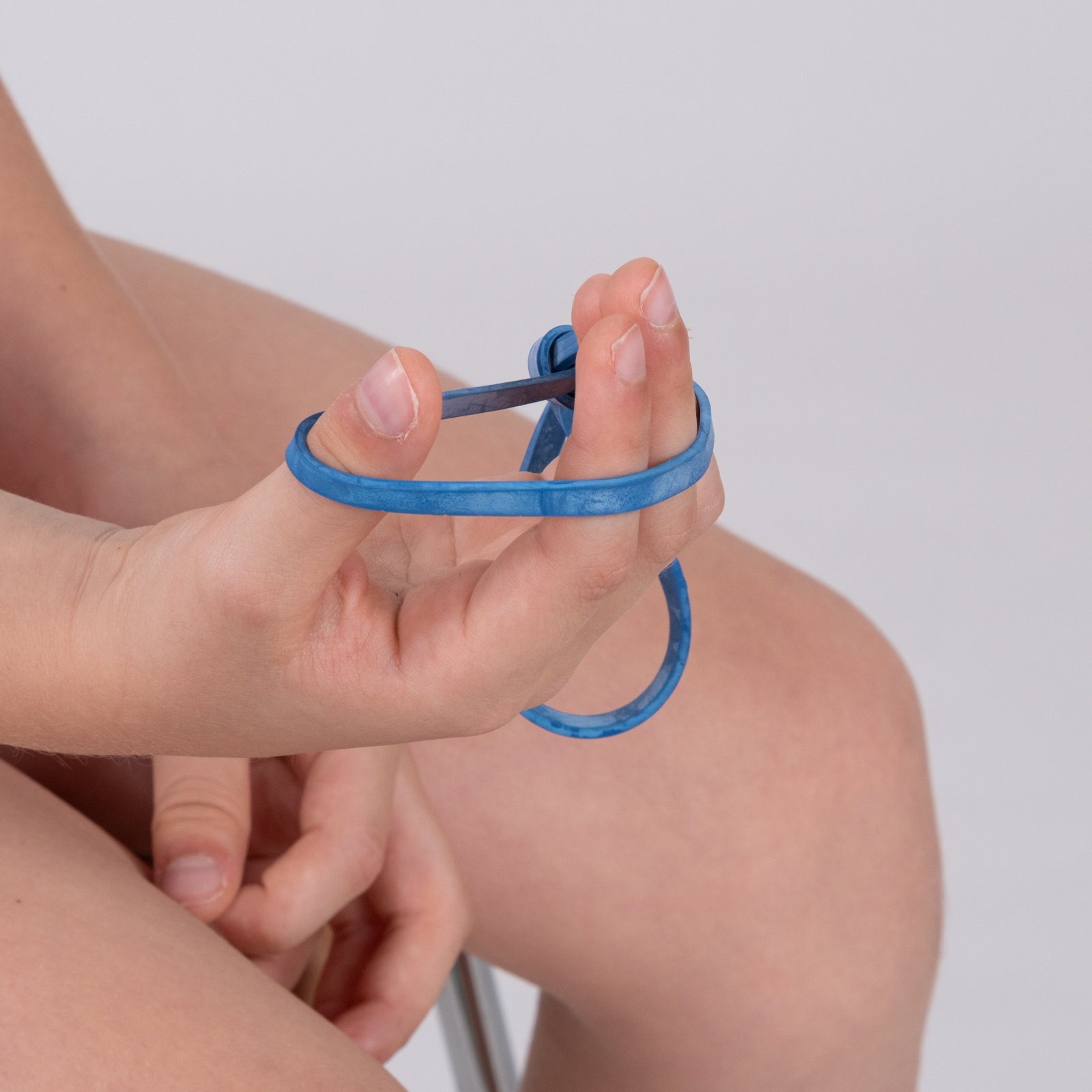
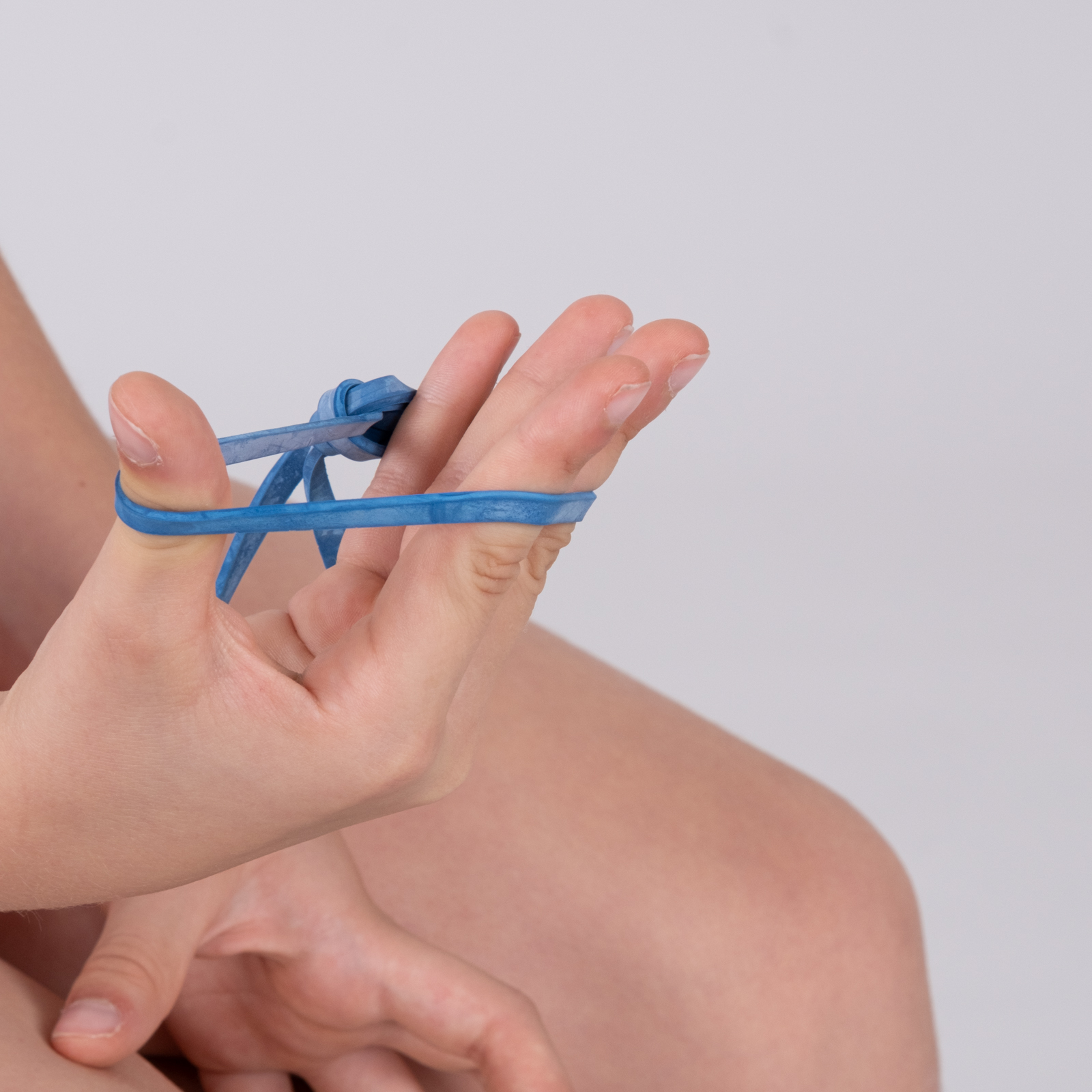
Wrap a rubber band around your fingers. Spread your fingers so that the rubber band tightens.
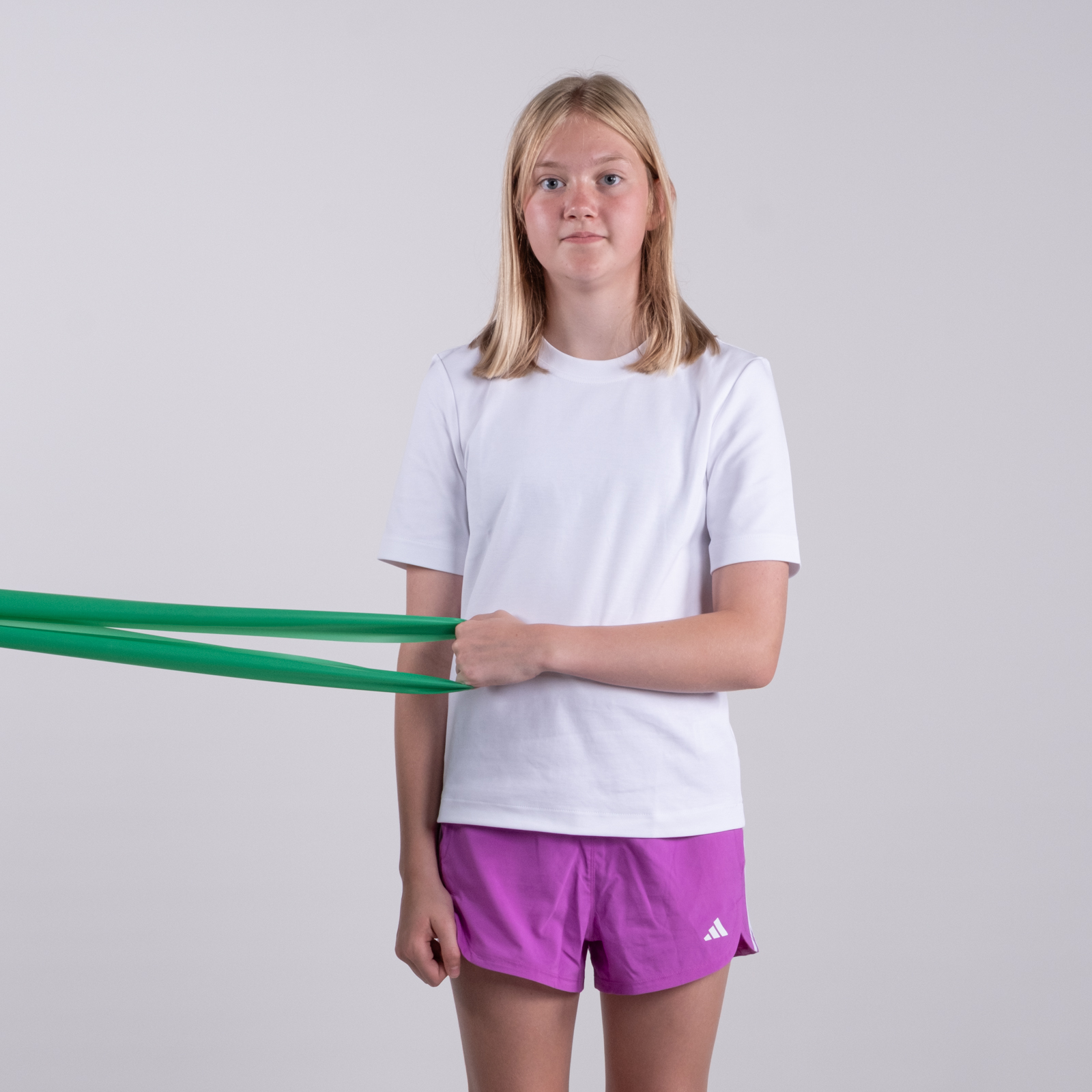
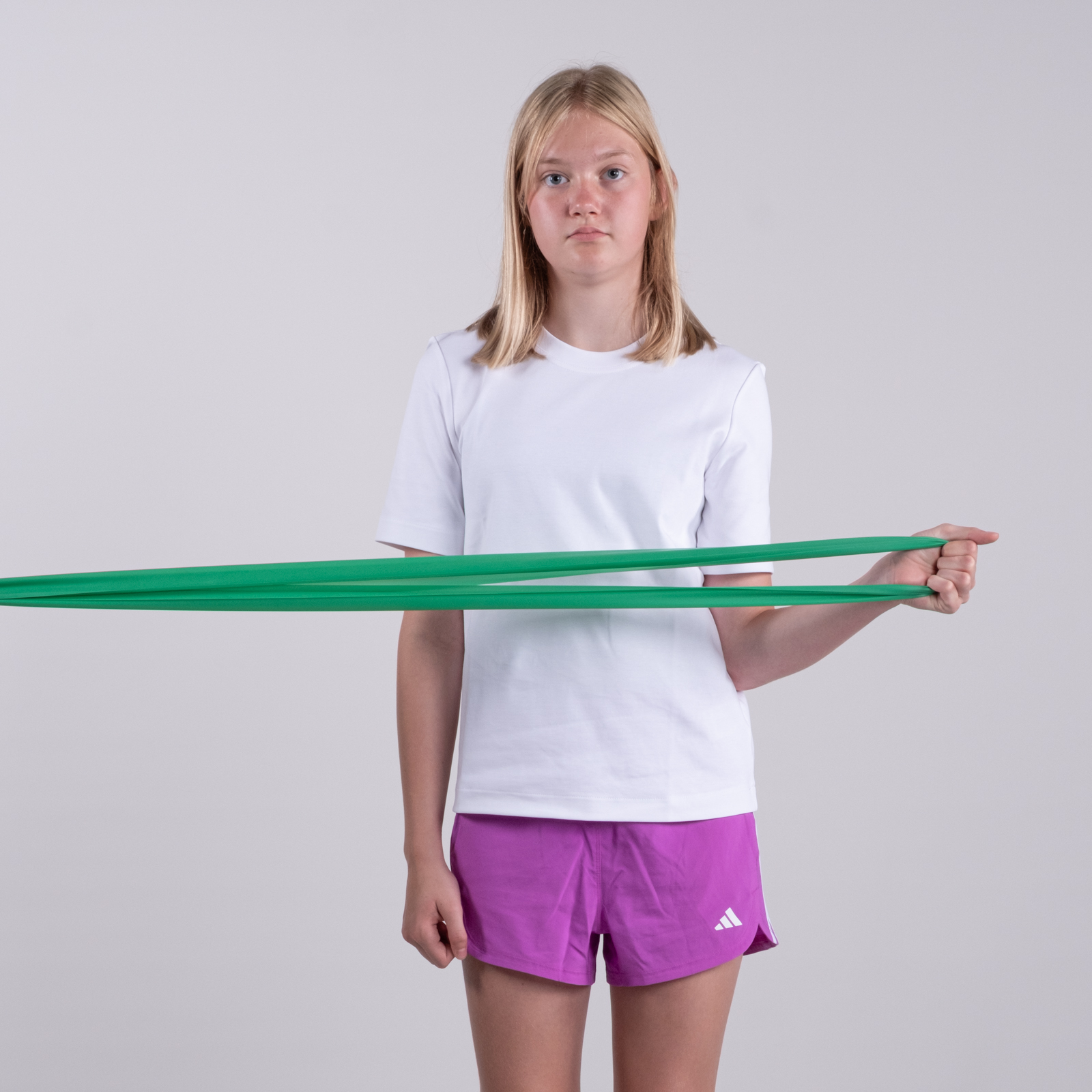
Secure an exercise band at elbow height. Stand with the working arm furthest from the band and grasp the band with the hand on the working arm. Keep your elbow bent at a 90-degree angle and held close to your body throughout the exercise. Rest your forearm and hand against your stomach. Rotate your forearm out to the side so that the resistance band is taut, and hold the position for a few seconds before slowly returning your arm to the starting position.
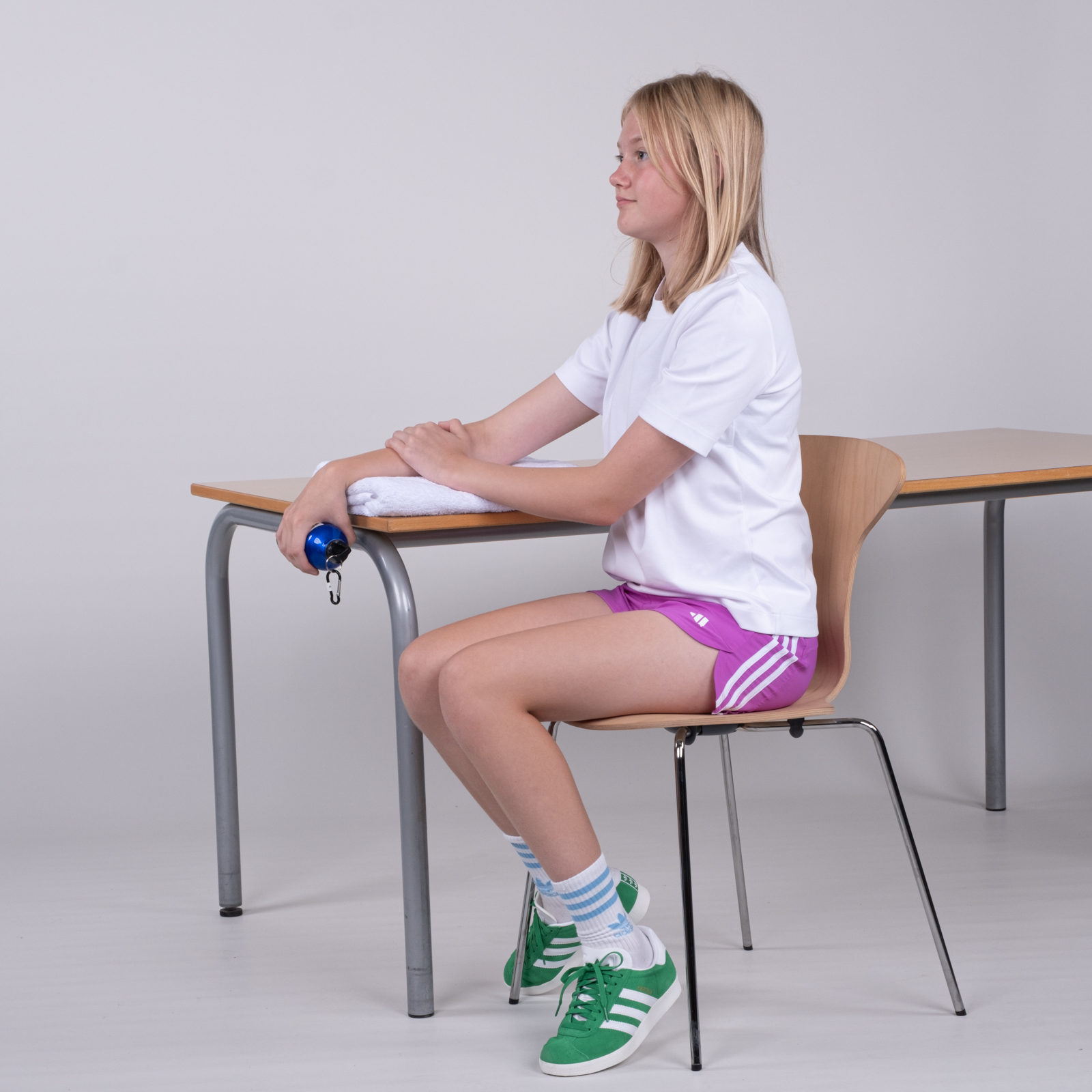
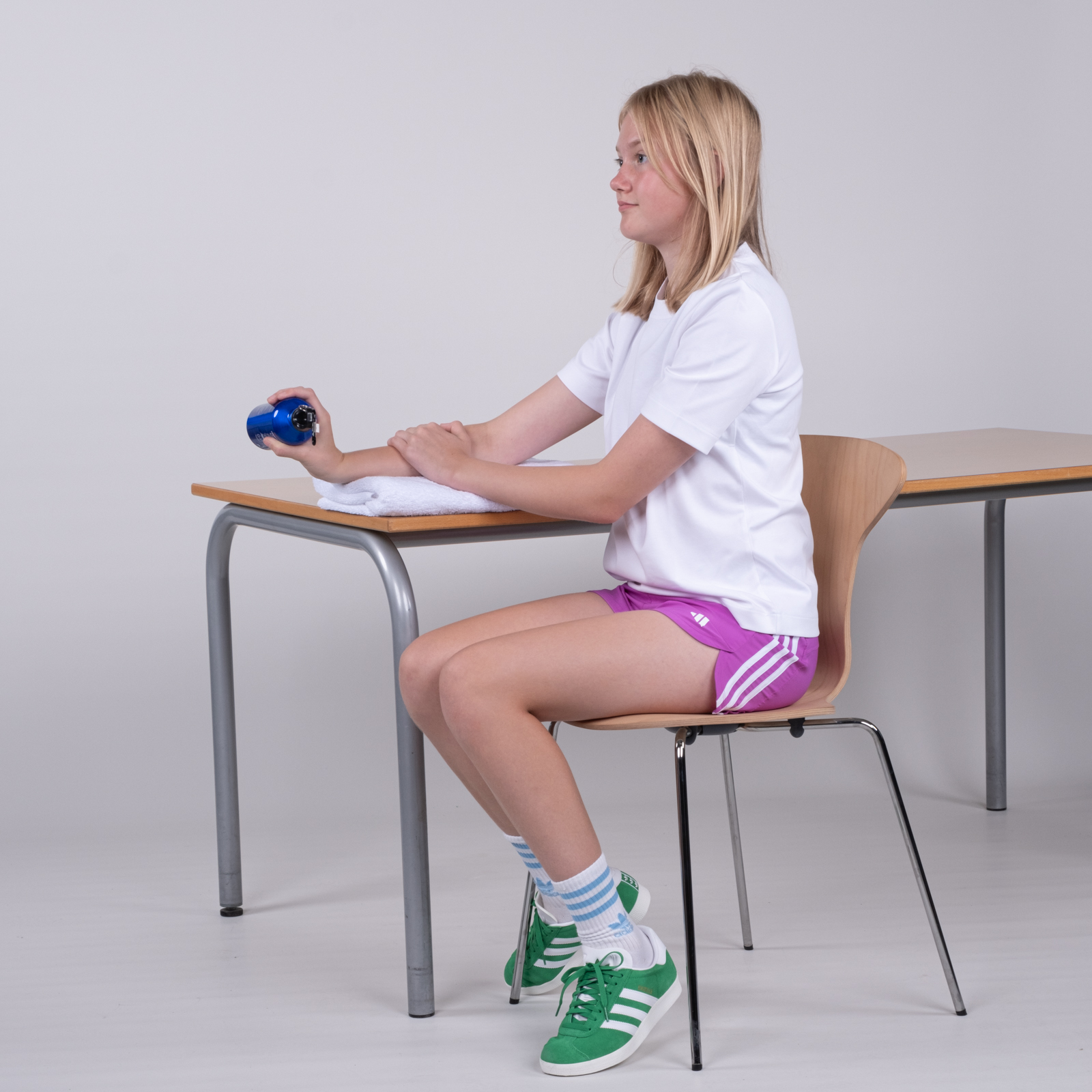
Sit with your training arm on a table, with your hand hanging over the edge. Palm facing down. Hold a weight in your hand (such as a bottle of water) and slowly move your hand up and down. If necessary, support the arm you’re exercising with your good arm.
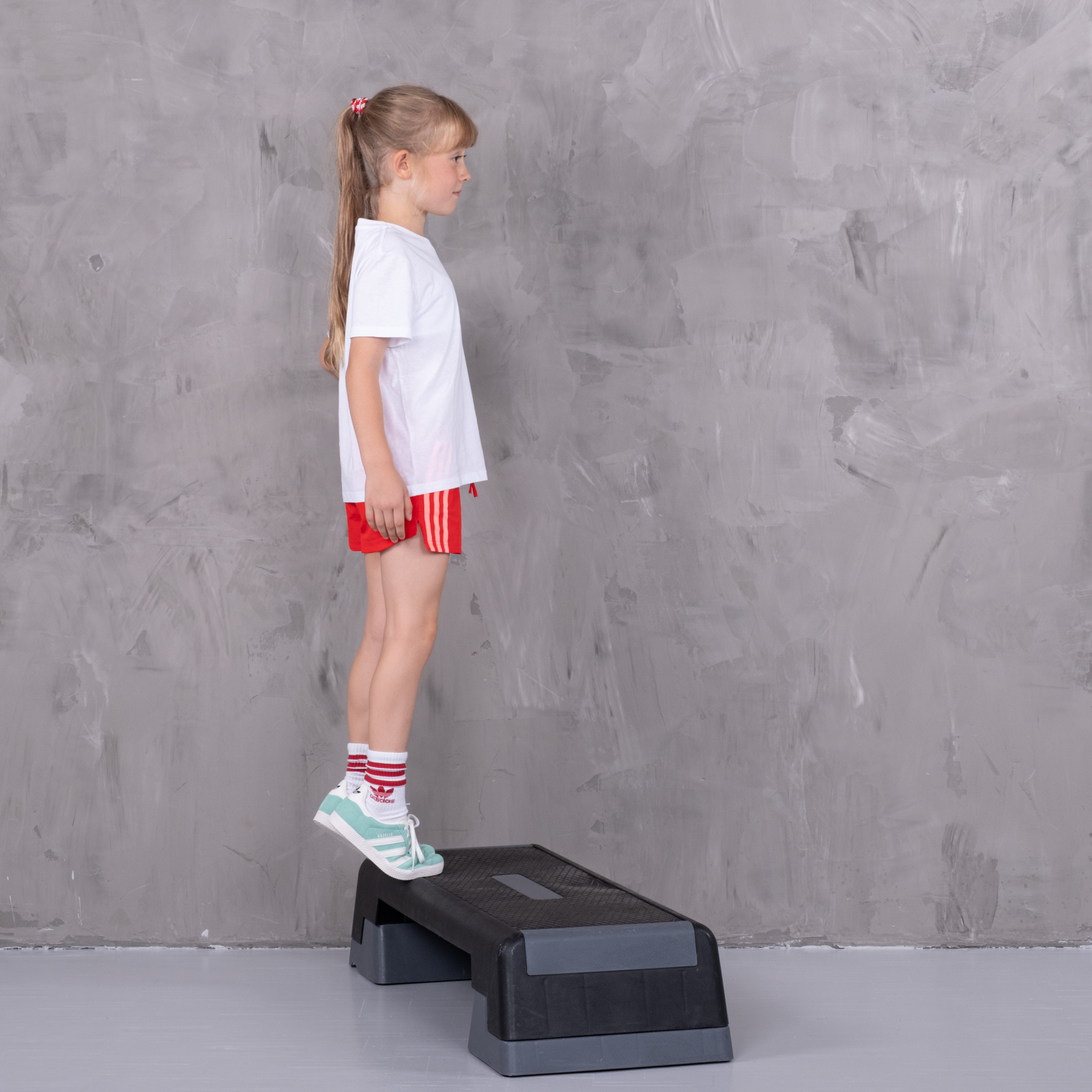
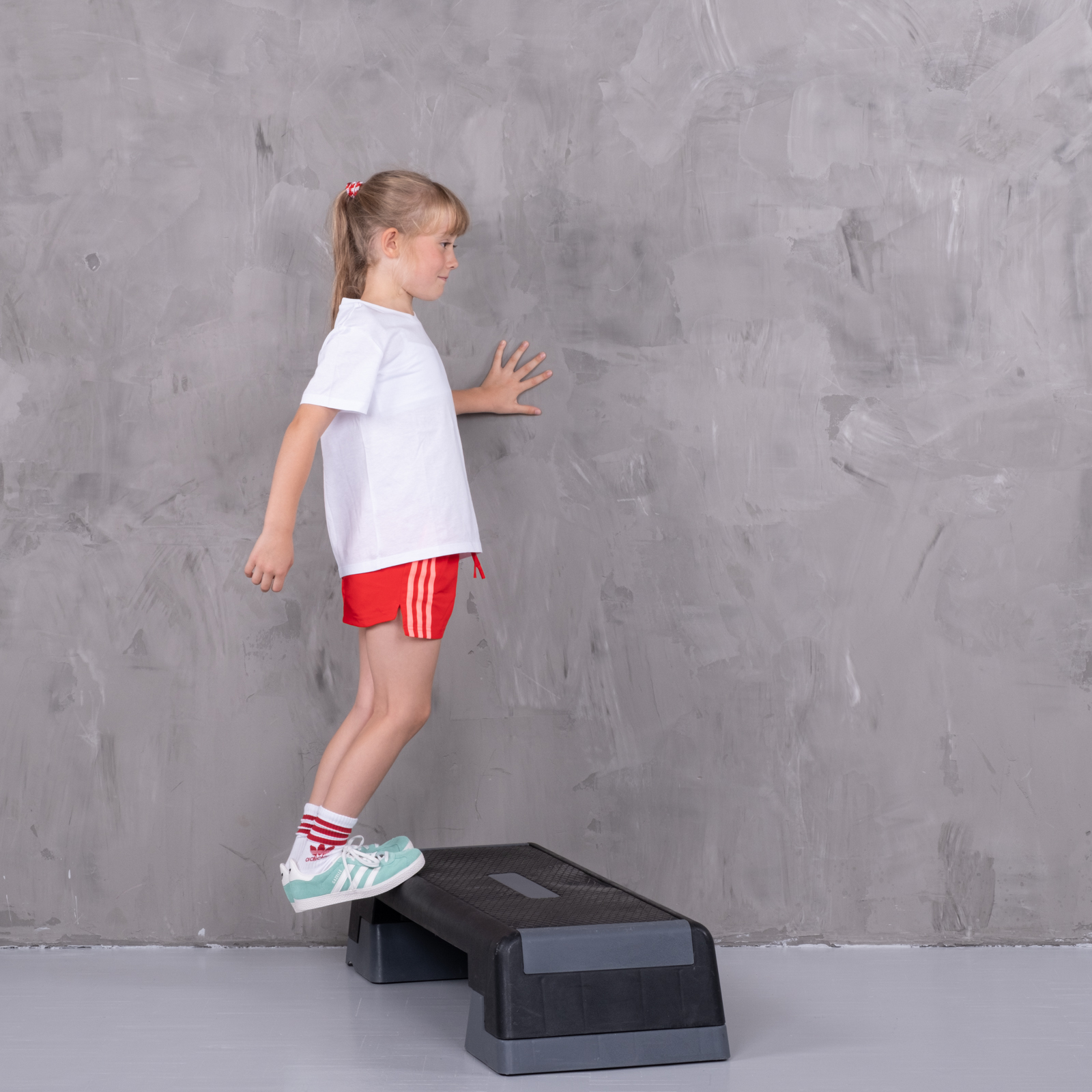
Stand with your legs straight, with the balls of your feet on a doorstep. Rise onto your toes. Hold the position for a few seconds. Slowly return to the starting position. Make the exercise more challenging by wearing a rucksack with increasing weight.